Security | Threat Detection | Cyberattacks | DevSecOps | Compliance

AI Hackers Are Dumber Than You Think (Here's Proof)

Everyone's panicking about AI-powered cyber attacks, but here's what's ACTUALLY happening... Perfect grammar in phishing emails (bye-bye typos!) AI helping write basic malware code NOT some sci-fi hacking revolution The funniest part? Researchers found hackers literally leaving AI tool COMMENTS in their malware code It's like leaving a sticky note that says "ChatGPT helped me write this virus".

Ransomware Strikes! What to Do in the First 60 Minutes: Understanding the Threat (Part 1)

Are you prepared for a ransomware attack? In this crucial first part of our "Ransomware Strikes! What to Do in the First 60 Minutes" series, we pull back the curtain on one of the most terrifying cyber threats facing businesses today. Join VISTA InfoSec, an officially empaneled organization with CREST, PCI Council, CSRO SG, SWIFT, and CERT-IN, as we dive deep into the reality of ransomware in 2024. We'll reveal staggering statistics, including the average cost of an attack ($5.13 million!) and the heartbreaking truth about small businesses.

The #1 Way Companies Get Hacked (It's Not What You Think)

Plot twist: The biggest cyber threat isn't coming from hackers breaking in... It's coming from vendors you INVITED in! Most companies only discover their third-party risks during ransomware simulations - when it's too late to fix them. Here's the uncomfortable reality: You don't know who has access to your systems You don't know what they can actually touch You're one vendor breach away from disaster.

GIFTEDCROOK's Strategic Pivot: From Browser Stealer to Data Exfiltration Platform During Critical Ukraine Negotiations

The Arctic Wolf Labs team has discovered that the cyber-espionage group UAC-0226, known for utilizing the infostealer GIFTEDCROOK, has significantly evolved its capabilities. It has transitioned the malware from a basic browser data stealer (which we’re referring to as v1), through two new upgrades (v1.2 and v1.3) into a robust intelligence-gathering tool. Analysis of early files from February 2025 suggests that the GIFTEDCROOK project began as a demo during that period.

DeepSeek Deception: Sainbox RAT & Hidden Rootkit Delivery

Netskope Threat Labs has discovered a campaign using fake installers to deliver the Sainbox RAT and Hidden rootkit. During our threat hunting activities, we encountered multiple installers disguised as legitimate software, including WPS Office, Sogou, and DeepSeek. These installers were mainly MSI files that were delivered via phishing websites. Both the phishing pages and installers were in Chinese, indicating that the targets are Chinese speakers.

Why Hackers Ignore Zero-Days (And What They Use Instead)

You'd think hackers use the latest zero-day exploits, right? WRONG! PwC's threat intelligence reveals hackers are actually exploiting OLD vulnerabilities that companies just... forgot to patch While cybersecurity teams chase shiny new threats, criminals are walking through the front door with keys we left lying around. The scariest part? Even criminal groups (not just nation-states) are making this their primary attack method.

RPM Global Streamlines Operations and Enhances Data Security with Rubrik

RPM Global, a leading ASX-listed mining advisory and software company, turns to Rubrik for operational resilience. Challenged by a phishing attack on its core business unit in the past, RPM Global now leverages Rubrik’s comprehensive product suite, including M365 Protection, Rubrik Cloud Vault, and Edge, to safeguard its most valuable asset - customer data.

Dire Wolf Strikes: New Ransomware Group Targeting Global Sectors

Dire Wolf is a newly emerged ransomware group first observed in May 2025 and Trustwave SpiderLabs recently uncovered a Dire Wolf ransomware sample that revealed for the first time key details about how the ransomware operates. Since its discovery, Dire Wolf ransomware group has launched a series of targeted attacks across multiple sectors and regions with an emphasis on manufacturing and technology sectors.

Play Ransomware Is Back: FBI Warning for Growing Enterprise Risk

In June 2025, the FBI, CISA, and the Australian Cyber Security Centre (ACSC) issued a joint cybersecurity advisory warning of a significant resurgence in Play ransomware attacks. This rare alert flagged over 900 confirmed victims across the public sector, healthcare, and SMBs – many of whom were targeted through deceptive email addresses like @web.de and @gmx.de.

Qilin Offers "Call a lawyer" Button For Affiliates Attempting To Extort Ransoms From Victims Who Won't Pay

Imagine for one moment that you are a cybercriminal. You have compromised an organisation's network, you have stolen their data, you have encrypted their network, and you are now knee-deep in the ransomware negotiation. However, there's a problem. Your target is stalling for time. Who can you, as the perpetrator of the crime rather than the innocent victim, turn to for advice? Well, if you are an affiliate of the Qilin ransomware group, you can simply hit the "Call Lawyer" button.

Ransomware Attack Simulation: Did They Survive? #cybersecurity #ransomware

Mend.io, formerly known as Whitesource, has over a decade of experience helping global organizations build world-class AppSec programs that reduce risk and accelerate development -– using tools built into the technologies that software and security teams already love. Our automated technology protects organizations from supply chain and malicious package attacks, vulnerabilities in open source and custom code, and open-source license risks.

Stories from the SOC - ClickFix and Chill, Now Here's the Ransomware Bill

ClickFix has quickly become a rampant social-engineering tactic. First observed back in October 2023, it aims to trick users into pasting commands into the run dialog box under the guise of verifying the user’s connection and authenticity to the domain. Given its ease of use and ability to bypass technical security measures, adoption of ClickFix has been growing at an alarming rate.

Cato CTRL Threat Research: WormGPT Variants Powered by Grok and Mixtral

When large language models (LLMs) became popular following OpenAI’s public release of ChatGPT in November 2022, threat actors understood the potential of such systems and how they can be used in their malicious operations. However, the main challenge that threat actors encountered a couple of years ago is that the LLMs were censored and didn’t allow the creation of malicious content. Enter WormGPT.

What Our Ransomware Simulation Taught Us #cybersecurity #ransomware

Mend.io, formerly known as Whitesource, has over a decade of experience helping global organizations build world-class AppSec programs that reduce risk and accelerate development -– using tools built into the technologies that software and security teams already love. Our automated technology protects organizations from supply chain and malicious package attacks, vulnerabilities in open source and custom code, and open-source license risks.

We're Building Cars While Driving Them" - AI's Wild West Problem

Is anyone setting standards for AI? Researcher Gabriele Hibbert delivers the perfect metaphor for our current AI moment: "We're building the cars while driving them." Her solution? Creating standardized "nutrition labels" for AI tools that can evolve with the technology. The first step toward taming the AI Wild West.

Detecting Ransomware on Networks at Scale Using Traffic Analysis

Ransomware attacks are still causing serious financial and reputational damage to organizations. In May 2024, they made up 32% of all reported cyber incidents, and 92% of industries saw them as a major threat. These attacks lock important data and ask organizations for payment to regain access. Even after paying, attackers might have already gone through the whole system and left loopholes for future attacks. In some cases, ransomware hides in a network for a long time before being noticed.

The Security Risks and Benefits of Trackable QR Codes in Marketing and Access Control

QR codes that are trackable have become a regular instrument in marketing and access control. They appear like normal QR codes, but they have tracking capabilities that gather information upon scanning a code by an individual. They are used by businesses to gain insights into user behavior, engagement tracking, and access control to secure sections or services. But along with their convenience, security and privacy issues accompany as well.
Featured Post

Arctic Wolf 2025 Cybersecurity Trends: Xalient's Expert Take

The latest release from Arctic Wolf Labs is now out, summarizing responses from 1200 IT and security decision makers worldwide, into The Arctic Wolf State of Cybersecurity: 2025 Trends Report. The research looks at the major trends in threats, mitigation and readiness and as ever, has some interesting findings.

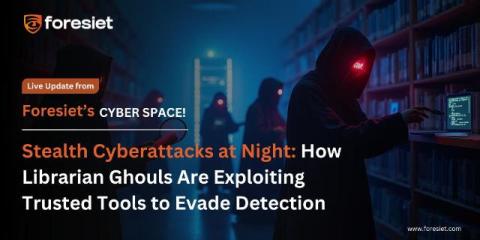
Stealth Cyberattacks at Night: How Librarian Ghouls Are Exploiting Trusted Tools to Evade Detection

The cyber threat landscape is rapidly evolving. Among the most recent and concerning trends is the use of stealth attacks that bypass traditional defenses by abusing legitimate tools. One such campaign, led by a group called Librarian Ghouls, is targeting organizations across Russia with cleverly disguised phishing emails, cryptominers, and remote-access software—often operating undetected in the middle of the night.

Cybersecurity Consulting and Ransomware Updates, May

Each month brings new evidence that cybersecurity is not just about reacting to incidents but anticipating them. The May 2025 threat landscape highlights the growing need for strategic vigilance, actionable intelligence, and timely intervention. With seventy-seven new vulnerabilities, five active exploits, and an uptick in ransomware activity, the month reinforces one clear message: the risk is real, and the window to act is now.

How Hacker Groups Exploited AI to Develop Malware and Spread Disinformation-What It Means for Digital Security

In a bold move aimed at safeguarding its AI ecosystem, OpenAI recently disabled several ChatGPT accounts linked to Russian, Chinese, and Iranian threat actors. These malicious entities exploited the chatbot’s capabilities to aid malware development, launch social media influence campaigns, and probe U.S. satellite communications infrastructure.

BlackSuit Ransomware: The Royal Evolution That's Targeting Everyone | Cyber Threats Exposed 1

Think you know ransomware? Think again. BlackSuit isn't just another encryption threat—it's an evolved monster that's putting both Windows AND Linux systems at serious risk. In this episode of our cybersecurity series, we break down.

US Offers $10 Million Reward for Tips About State-Linked RedLine Cybercriminals

How would you like to earn yourself millions of dollars? Well, it may just be possible - if you have information which could help expose the identities of cybercriminals involved with the notorious RedLine information-stealing malware. The US Department of State is offering up to US$10 million for information about the government-backed hackers believed to be behind RedLine malware attacks, which have included US critical infrastructure among their targets.

The Hidden Stress of Being a SOC Analyst. Nobody Talks About This

"You feel the weight of the organization on you" - Grant Oviatt reveals the emotional reality of being a SOC analyst that nobody talks about. When you find something bad, there's that panic moment of "what do I do?" while knowing the entire organization depends on your response speed. This is why AI agents providing instant remediation actions can be a game-changer for analyst mental health and response times.

99% False Positives. Why Security Analysts Are Burned Out

•The brutal truth about cybersecurity work: Analysts spend their days chasing 99% false positive alerts instead of doing meaningful security work. Grant Oviatt reveals why security professionals didn't get into the field to send Slack messages asking if someone is "supposed to be traveling to Mexico today." This is why AI agents are becoming essential - to let security pros focus on what they actually signed up for!

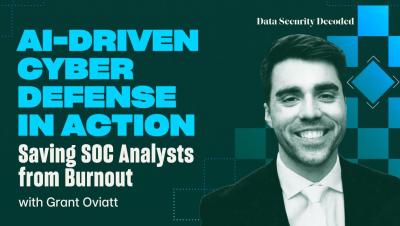
AI-Driven Cyber Defense in Action: How AI Agents Are Saving SOC Analysts From Burnout

AI-powered SOC platforms are revolutionizing cybersecurity by dramatically reducing false positives and enabling analysts to focus on high-value security work. In this episode of Data Security Decoded, join Caleb Tolin as he sits down with Grant Oviatt, Head of Security Operations at Prophet Security, to explore how AI agents are transforming security operations centers (SOCs) and reshaping the future of cyber defense.

Security Bulletin: Revolver Rabbit and the Rise of RDGAs

Their domains typically follow repeatable patterns, such as dictionary words plus numeric suffixes (e.g., private-jets-99557bond). Additional variants use short alphanumeric suffixes or double dashes, complicating rule-based detection (Infoblox Blog, 2024). These syntactic variations often evade traditional string-matching techniques, requiring DNS-layer telemetry and clustering for full visibility (Infoblox Research Report, 2024).

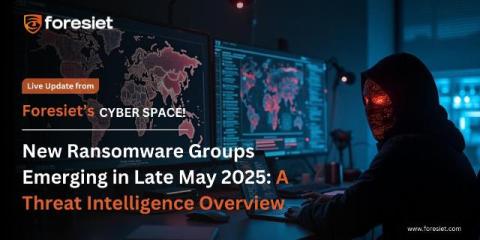
New Ransomware Groups Emerging in Late May 2025: A Threat Intelligence Overview

As of the end of May 2025, seven new ransomware groups have surfaced with active leak sites and confirmed victim postings. These groups—Silent Ransomware, Gunra Ransomware, JGroup Ransomware, IMN Crew, DireWolf Ransomware, DataCarry Ransomware, and SatanLock Ransomware have demonstrated early signs of active targeting and data exfiltration campaigns. This blog provides a detailed breakdown of their activity, initial victimology, and attribution by geography where applicable.

How Corelight Helped a Customer Reject a $10M Ransomware Demand

Corelight CEO Brian Dye shares the high-stakes story of a customer under a $10 million ransomware attack. The attackers claimed to have stolen sensitive IP—but with Corelight, the customer had the network visibility to verify exactly what was taken. The result? They confirmed the stolen data was limited and non-critical, enabling them to confidently deny the ransom demand. This powerful story illustrates the difference between “I think” and “I know”—and how that clarity can drive executive confidence, legal defensibility, and real-world savings.

AI Agents Never Sleep. The Future of Cybersecurity SOC Operations

AI agents are revolutionizing cybersecurity by handling the tedious false positive alerts that drain SOC analysts. As our security perimeter expands to the cloud, we're drowning in red blinking lights - but AI agents never tire and never sleep! Grant Oviatt from Prophet Security explains how AI is solving the alert fatigue problem that's plaguing security teams worldwide. Key Points: AI agents handle repetitive security tasks False positive alerts are overwhelming analysts Cloud expansion = more security alerts AI works 24/7 without fatigue.

Inside RansomHub: Tactics, Targets, and What It Means for You

Ransomware attacks are undeniably on the rise—but just how significant is the increase? According to Bitsight CTI researchers, ransomware attacks (as measured by unique victims listed on leak sites) rose by almost 25% in 2024, and the number of ransomware group leak sites rose by 53%. Ransomware is becoming the go-to tactic for financially driven threat actors seeking quick and substantial payouts.

The Most Concerning CyberSecurity Statistics From Recent Data

If you've been paying attention to cybersecurity lately, it's hard not to notice just how fast the landscape is shifting. Threats that were once rare a few years ago are now occurring weekly-sometimes daily-and they're targeting larger targets with more severe consequences. It's not just about data theft anymore. Whole systems are being locked up, leaked, or dismantled in hours. The most recent statistics show just how aggressive and sophisticated these attacks have become, and 2025 is shaping up to be a pivotal year for digital security.