Security | Threat Detection | Cyberattacks | DevSecOps | Compliance

What is a dictionary attack, and how do you protect yourself from it?

Have you ever heard the cybersecurity term “dictionary attack”, and wondered what it means? You’re not alone. Here, we’ll break down what a dictionary attack is, and explain what steps you should take to protect yourself from this threat.

How Banks Around the World Can Prevent Cyber Attacks

As both consumer and commercial banking clients shift to primarily utilize online banking, they still have high expectations that their financial assets will be secure. In 2021, the banking industry reported 703 cyberattack attempts per week — a 53% increase from 2020. And the cost of cyberattacks in the industry has reached $18.3 million annually per breach.

Guacamaya Group

The Guacamaya group is a fairly new hacktivist group based in Latin America. The group was first seen around March 2022 as they released sensitive data of several companies based in Chile, Ecuador, Brazil and Colombia. As mentioned, the group is mainly focusing on LATAM but dabbles every now and then with campaigns in Russia. The group is defined as a data leakage threat group, which means they do not encrypt but only leak the stolen data, often they do it for free.

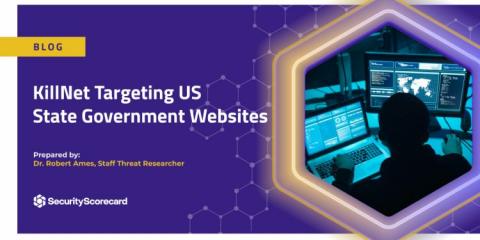
KillNet Targeting U.S. State Government Websites

On October 5, a cyber incident disrupted the availability of three state government websites. The Russian-speaking KillNet group claimed responsibility. As discussed in previous SecurityScorecard research, KillNet began as a financially-motivated operation offering a botnet for hire. It has since remodeled to a hacktivist collective, conducting a series of relatively low-sophistication DDoS attacks against targets linked to entities perceived to oppose the Russian invasion of Ukraine.

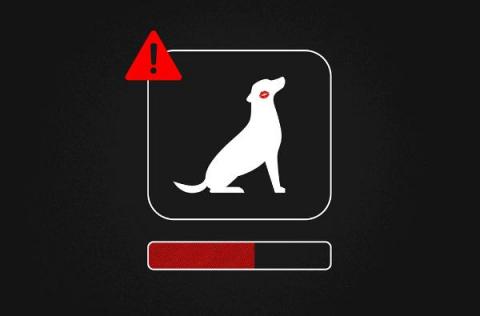
CrowdStrike Identifies New Kiss-a-Dog Cryptojacking Campaign Targeting Vulnerable Docker and Kubernetes Infrastructure

CrowdStrike has identified a new cryptojacking campaign targeting vulnerable Docker and Kubernetes infrastructure. Called “Kiss-a-dog,” the campaign targets Docker and Kubernetes infrastructure using an obscure domain from the payload, container escape attempt and anonymized “dog” mining pools.

Sysdig TRT uncovers massive cryptomining operation leveraging GitHub Actions

The Sysdig Threat Research Team (Sysdig TRT) recently uncovered an extensive and sophisticated active cryptomining operation in which a threat actor is using some of the largest cloud and continuous integration and deployment (CI/CD) service providers; including GitHub, Heroku, Buddy.works, and others to build, run, scale, and operate their massive cloud operation. Because no one has yet reported on this activity and its techniques, we are going to refer to this cluster of activity as PURPLEURCHIN.

New Canadian Cyberattack Data Says 80% of SMBs Are Vulnerable

If you were to take a look at the cybersecurity news cycle, you’d be forgiven for thinking that it’s only large enterprises with expansive customer bases and budgets that are the most vulnerable to attacks. But that’s not entirely true. Even if it’s at a much smaller scale, small- and medium-sized businesses (SMBs) still have stores of sensitive information that’s appealing to bad actors — and they’re often much less equipped to protect that data.

4 Active Directory Attacks and How to Protect Against Them

I was speaking with an Active Directory security engineer at a global pharmaceutical company recently, and I asked him the most classic question in the product management handbook: “What keeps you up at night?” So cliché (I know), but sometimes instead of an eye roll, you get a real gem, which is exactly what happened.

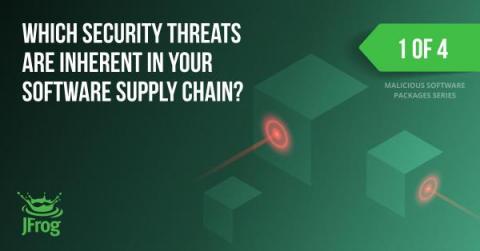
Malicious Packages Are a Rising Threat in Software Supply Chain Attacks

Welcome to the first post of the malicious software packages series for the DevOps and DevSecOps community. Each Monday, this technical series will focus on various malicious packages and their effects on the software supply chain, all published over the next four weeks. We’ll dive deeper into malicious packages in each post, including Here we go. Let’s discuss malicious software packages in your software supply chain.

What is an Impersonation Attack?

An impersonation attack is a type of targeted phishing attack where a malicious actor pretends to be someone else or other entities to steal sensitive data from unsuspecting employees using social engineering tactics. Hackers attempt to trick the victim into transferring money, giving up sensitive information, or providing business login credentials to leverage cyberattacks and gain unauthorized access to systems and networks.

Do the recent DDoS attacks signal future web application risks?

Multiple reports in the media, including in Bloomberg US Edition, allege that Russian-associated cybercrime group Killnet is responsible for a series of distributed-denial-of-service (DDoS) attacks during the week of October 6 that took several state government and other websites offline. While most of the websites were restored within 48 hours, these volumetric attacks can leave even the most secure sites paralyzed and susceptible to further damage.

Alarming attacks on Internet of Medical Things (IoMT)

The impact of ransomware attacks on healthcare is as alarming as it is under-addressed. The United States healthcare system alone faces an annual burden of nearly $21 billion due to these attacks. It pays well over $100 million in ransoms, and is beginning to acknowledge the tragic realities of impacted patient care, including higher patient mortality rates. For every headline related to cyberattacks, there are likely hundreds more that go unreported.

Proactively reduce risks with Attack Surface Custom Policies

If you’re responsible for security, then you know how useful it is to have clearly-defined security policies that are simple to implement, scale, and verify. Product and AppSec teams know that great security policies empower teams to work autonomously so that work moves forward as it should. However, validating that your security policies are actually implemented is difficult.

How to set up Attack Surface Custom Policies

Not everything on your attack surface is a vulnerability. Every organization has their own internal security policies that align with the risk tolerance of their business context. While industries like SaaS are often deploying several daily releases to production from multiple geographies, other industries might not tolerate this level of risk due to internal or external factors like complex regulatory requirements.

90% of MSPs have suffered a cyberattack in the last 18 months

MSPs are being targeted by cybercriminals, as a single successful attack opens the door to multiple victims. This puts additional pressure on cybersecurity partners to step up the security services they offer their customers. The figures are worrying, as 9 out of 10 managed service providers state they have suffered a successful cyberattack since the start of the pandemic. This means MSPs are overtaking end users as the main target of malware, ransomware, phishing and other threats.

Must-Know Facts About Evil-Colon Attacks

In a new article for HelpNet Security, Leon Juranic, security research team lead at Mend, states the case for taking proactive defensive steps against a new attack called Evil-Colon. Evil-Colon works similarly to the now defunct Poison-NULL-Byte attacks, and it has the potential to cause severe disruption to your code if not properly addressed. What does all this mean? In a nutshell, it’s possible to exploit applications that are performing path-based operations with user input in various ways.

Cyber Risk Intelligence: County Government Cyber Incident May Have Involved Social Engineering and Targeting of Vulnerable SSH Services

The government of a U.S. county announced on September 11 that a recent cyber incident had disrupted its online services. Subsequent coverage of the event has noted that it strongly resembles a ransomware attack. The disruption comes against a backdrop of frequent ransomware activity targeting state and local governments and the education sector.

How to Boost Cybersecurity in Fintech and Banking?

Globally, fintech firms saw 2.5 times more attacks in Q1 2022. The BFSI industry is prone to cyberattacks every day. Fintech firms carry some vital data. Cybercriminals know it. They aim to exploit your system’s flaw to access the data. The worst part is they will use it for financial fraud. A successful data breach causes penalties and reputation losses. It scares away your customers. It is even motivating cybersecurity in Fintech. How do you make a secure financial platform?

It's time to change the playbook: Prepare for uncorrelated surprises

Investors came into 2022 feeling good, with a three-year average annual return for the S&P 500 of 24%. In March, things changed. The Federal Reserve raised interest rates, signaling it was time to switch to bonds. The playbook said bonds were the much safer play. Then Russia invaded Ukraine. Commodity prices, especially energy and food, spiked. Supply chains broke. The E.U. faced a winter without enough energy to heat homes or power businesses.

Preventing DoS attacks in Kubernetes using Falco and Calico

A Denial-of-Service (DoS) is an attack meant to shut down a machine or network, making it inaccessible to its intended users, so dos Kubernetes is a potential target. In the case of Distributed Denial-of-Service (DDoS), the attacker will look to maintain some form of anonymity so their activities cannot be traced. They can route traffic through Tor and VPN infrastructure to scan, attack, or compromise the target, while maintaining anonymous communications.

External Attack Surface Management (EASM): What it is and what it isn't

The External Attack Surface Management market category only emerged in mid-2021 but is already seeing significant product development and evolution growth. This e-book demystifies some of the information around EASM - especially its relation to other attack surface management (ASM) product categories and how product security teams can leverage EASM to go beyond asset discovery and inventory.

Five worthy reads: Who let the stranger in? Video conferencing attacks

Five worthy reads is a regular column on five noteworthy items we’ve discovered while researching trending and timeless topics. In this edition, we’ll learn about the evolution of video conferencing since the 2020 pandemic, the security challenges faced by video conferencing tools, how companies and governments have acknowledged the risks, and the best practices to avoid such attacks.

New M365 Business Email Compromise Attacks with Rclone

Rclone is a data syncing tool often used by threat actors to exfiltrate data during a ransomware attack. Typically, the actors deploy Rclone after gaining remote access to the victim’s network. However, recently, Kroll experts have noted the use of Rclone in M365, using credentials stolen through network compromises or phishing attacks with minimal privileges to stealthily exfiltrate large amounts of SharePoint/OneDrive data.

3x more subdomain takeovers now discovered

Today, we have over 600+ unique techniques to discover subdomain takeovers in over 2,000 Detectify customers. Identifying subdomain takeovers is tricky business as they rely on signature-based tests which are prone to false positives due to outdated signatures. That’s why we run our subdomain takeover tests on hundreds of thousands of customer assets every day.

DDoS Attacks in the Financial Industry: How to Protect Your Infrastructure and Payments

While Distributed Denial of Service (DDoS) attacks have been around for over a decade, they still continue to evolve and escalate, particularly during 2022. The tense geopolitical situation caused by the Russian invasion of Ukraine has affected the nature and intensity of these types of attacks, making states official participants in the DDoS mitigation market.

Compromising Plaintext Passwords in Active Directory

A lot of attention gets paid to preventing pass-the-hash and pass-the-ticket attacks, but these tactics limit adversaries to what they can perform from the command line. Compromising a plaintext password gives an attacker unlimited access to an account — which can include access to web applications, VPN, email and more. One way to extract plaintext passwords is through Kerberoasting, but this brute-force technique takes a lot of time and patience.

Overpass-the-Hash Attack: Principles and Detection

The overpass-the-hash attack is a combination of two other attacks: pass-the-hash and pass-the-ticket. All three techniques fall under the Mitre category “Exploitation of remote services.” In an overpass-the-hash attack, an adversary leverages the NTLM hash of a user account to obtain a Kerberos ticket that can be used to access network resources.

The Top Cyber Attacks of September 2022

Maybe it’s the changing of the seasons, the start of a new school year, or just something in the air, but September’s cybersecurity landscape was marked with high-energy hacks that seem to have served as twisted amusements for their perpetrators. This month’s round-up is full of criminals who weren’t content just to collect a ransom or sell some private data. These hackers wanted to scorch the earth and hurt their victims with an extra layer of malice and humiliation.

What's Hiding in Your External Attack Surface?

Cybersecurity teams need to develop and maintain a set of practices around their online attack surface. These practices must include attack surface visibility and mapping of third-party connections as well as constant assessment of the risks of these connections. Controls must include the ability to detect and alert on risky or broken connections, coupled with automated remediation when feasible.