From ITDR to MCP, LASCON XV in Austin showed how AppSec must evolve to address identity threats, AI challenges, and the complexity of modern production systems.
In H1 2025, Indusface AppSec data recorded over 742 million attacks on banking and financial websites, a 51% surge from last year. 77% exploited known vulnerabilities, bots hit 95% of sites, and DDoS attacks spiked by over 500% on APIs. To counter these threats, the RBI’s Digital Payment Security Guidelines mandate stronger defenses across web apps, APIs, and data systems.
Application security in financial services is essential to maintaining trust, compliance, and operational resilience in a rapidly evolving digital landscape. Financial services organizations must balance innovation with holistic security controls, especially as the pressure to launch new digital solutions grows. The evidence is clear: challenges around “security debt,” unresolved flaws left in production for over a year, pose material risk to the sector.
Security leaders often face challenges that extend beyond the firewall: a major gap in communication between the security function and executive leadership. This misalignment can have severe consequences, including stalling deals, increasing organizational risk, and preventing security from being recognized as a key driver of business growth.
We see the same pattern across healthcare clients. The servers are locked down, databases encrypted, and GRC documentation is in order. Then we check the browser layer and find a Google Analytics pixel quietly sending appointment URLs and other PHI to third-party servers without a BAA.
What happens when the dark side gets its hands on cutting-edge AI — and why might even seasoned defenders find themselves playing catch-up? Welcome back to Razorwire, where I’m joined by Oliver Rochford and Richard Cassidy to discuss how criminals are using AI, what’s actually working and how the threat landscape is changing. We explore how adversaries are using AI, what’s actually working in the wild and how professionals can prepare for the unsettling pace of change.
Repositories move as organizations evolve. Whether they merge or teams reorganize, or tool licensing changes, or compliance requires a shift in hosting regions, a change is inevitable. For IT decision-makers and admins, these transitions are less about preference. The goal here is continuity. A migration failure can stall development and corrupt history. With the latter, fracture audit trails follow. Considering the above, cross-platform support for data migration is therefore an operational demand.
With digital transformation continuing unabated, the prevalence of legacy systems, and the rising interconnectedness of complex systems and services, organizations in the public sector face a plethora of challenges and cyber risks. In this article, which is part of a series of public sector blog series that tackle ransomware trends and dark web research pertaining to government entities, the Trustwave SpiderLabs team shines a spotlight on the various threats and risks affecting government organizations.
Vulnerability scanning identifies weaknesses across systems, applications, and networks to help organizations reduce exposure and stay ahead of threats.
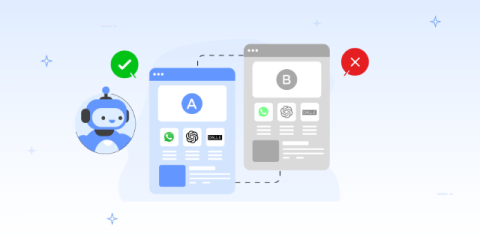
A quick search for “ChatGPT” or “DALL·E” on a mobile app store today reveals dozens of lookalikes. Each promises “AI chat,” “image generation,” or “smart assistance.” Yet beneath these polished logos lies a troubling truth — not all clones are created equal. Some are harmless wrappers that simply connect to genuine APIs. Others are opportunistic adware disguised as AI tools.