How Filling Your Cybersecurity Gaps Increases Your Bottom Line

Cyberattack prevention and remediation cost time and money. Are there ways to get a better return on your cybersecurity investments? What business processes or technologies will not only reduce those cyber risks but also save you time or money? This piece addresses those questions with a focus on data breaches.


Ransomware Recovery: RTO and Optimizing the Recovery Process

Recovery Time Objectives (RTOs) are on everyone’s mind. It bears repeating, one of the most fundamental ways to reduce recovery time from a ransomware or cybersecurity attack is being well prepared and ready to take actions quickly and effectively. This is one of the many variables firmly within a customer’s control and key to a faster and more efficient recovery process. A ransomware attack can be one of the most stressful events an organization and its employees will encounter.

Automation in Identity and Access Management and what it means for businesses

As organizations are looking to streamline processes and enhance security, pursuing automation in identity and access management is a key area businesses can target. By pursuing automation in identity and access management, IT teams can free up time to work on more important tasks, and reduce the friction required in managing team member and vendor access across necessary accounts, data and applications.

Corelight for the everywhere cloud

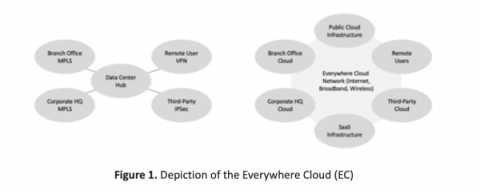
Editor's note: This is the first in five-part series authored by Ed Amoroso, founder and CEO of TAG Cyber, which will focuses on how the Corelight platform reduces network security risks to the so-called Everywhere Cloud (EC). Such security protection addresses threats to devices and assets on any type of network, including both perimeter and zero-trust based.

CVE-2022-47966: Researchers to Release PoC Exploit for Critical Vulnerability Affecting ManageEngine Products

Later this week, Horizon3 researchers plan to release a Proof of Concept (PoC) exploit for CVE-2022-47966, a critical unauthenticated, remote code execution vulnerability in multiple ManageEngine products. Note: CVE-2022-47966 is dependent on the specific ManageEngine product. Some products are vulnerable if SAML single-sign-on is enabled OR has ever been enabled, while others require SAML single-sign-on to be currently enabled.

Introducing PostgreSQL and Microsoft SQL Server Connectors in Keeper Connection Manager (KCM) 2.11.0

Keeper Connection Manager 2.11.0 introduces new connections with PostgreSQL and Microsoft SQL Server, plus other enhancements noted below. Keeper Connection Manager allows organizations to connect to endpoints without the need for VPN.

Bossware and the Future of Work

Recently, there has been considerable coverage of “bossware” and a focus on draconian types of “surveillance” some companies are using to stay on top of remote and flexible workforces. Articles claim companies are accessing the camera on laptops and tracking every movement so that employees can’t even go to the bathroom. In 1992, the New York Times ran a long article about Caller ID and how the new technology was an invasion of privacy.

Visibility Helps Global Energy Company AES Assess Risk and Secure its OT Networks

With 70 international plants spanning 15 different countries, the AES Corporation is a next-generation energy company helping lead the way to a carbon-neutral future. Like many organizations, AES wanted to improve the security posture within their OT networks with technology spanning multiple vendors. Recently I sat down with Kyle Oetken, Director of Cyber Defense, and Andrew Plunket, Sr. Cybersecurity Engineer (OT), at AES to discuss the challenges and lessons learned for securing OT environments.

The prevalence of RCE exploits and what you should know about RCEs

Recent headlines have indicated that some major companies were affected by Remote Code Execution (RCE) vulnerabilities, just in the month of October. RCE flaws are largely exploited in the wild, and organizations are continually releasing patches to mitigate the problem. RCE is a type of an Arbitrary Code Execution (ACE) attack where the threat actor executes malicious commands on the target’s device.

A Guide To Container Security - Best Practices

With over 7.3 million docker accounts created in 2021, Docker’s popularity has seen a meteoric rise since its launch in 2013. However, more businesses using it also means attackers are incentivized to target docker vulnerabilities. As per a 2020 report, 50% of poorly configured docker instances were subjected to cyber-attacks. And it’s not that easy to spot these poor configurations either because you must conduct checks at multiple levels.