Pen Testing: The "Aha" Moment That Changed Everything! #cybersecurity

Mend.io, formerly known as Whitesource, has over a decade of experience helping global organizations build world-class AppSec programs that reduce risk and accelerate development -– using tools built into the technologies that software and security teams already love. Our automated technology protects organizations from supply chain and malicious package attacks, vulnerabilities in open source and custom code, and open-source license risks.
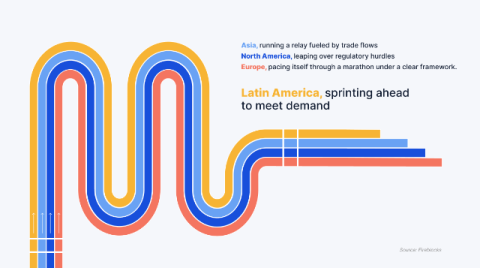
Execution in Motion: How Latin America is Leading Stablecoin Adoption

Confidence in Latin America is not just high—it’s active. Only 29% of institutions cited regulatory uncertainty as a barrier (compared to a global average of 41%), and just 7% mentioned lack of internal expertise—the lowest of any region. Over 70% say their infrastructure, including APIs and wallets, is already ready for stablecoin integration, and 86% have partnerships in place to support this shift. This foundation is what enables institutions to move beyond experimentation.

Connecting China Without the Complexity - The Cato Approach

What if connecting China didn’t mean rebuilding your architecture, navigating telco red tape, or managing endless compliance workarounds? For global enterprises, China isn’t optional—it’s essential. From sourcing and manufacturing to logistics and go-to-market, your business depends on fast, secure, and compliant access through and across China. But most legacy architectures treat China like an exception—introducing latency, risk, and inconsistency right where you can least afford it.

The Future of Developer Upskilling Is Human-Led, AI-Supported

In the last year, generative AI has dramatically accelerated how software is written. Developers can generate entire functions with a prompt, automate repetitive logic, and offload everything from boilerplate code to documentation. But with this newfound speed comes a deeper, more complex challenge: ensuring that what’s being created is secure, trustworthy, and production-ready.

Shadow AI: Managing the Security Risks of Unsanctioned AI Tools

The explosion of generative artificial intelligence tools is sparking a wave of enthusiasm in workplaces, with employees eagerly embracing new applications to boost productivity and innovation. However, this adoption often leads to a new phenomenon known as shadow AI—the use of artificial intelligence tools within an organization without explicit approval or oversight from IT and security teams. Unsanctioned use of AI creates significant (and often invisible) security blind spots.

CrowdStrike Named a Customers' Choice in 2025 Gartner Peer Insights Voice of the Customer for User Authentication Report

CrowdStrike has been named a Customers’ Choice in the 2025 Gartner Peer Insights “Voice of the Customer for User Authentication” report. We have the most five-star ratings of any vendor evaluated in the report and a 97% Willingness to Recommend rating, based on 206 overall responses as of February 28, 2025.

Data Leakage and Other Risks of Insecure LlamaIndex Apps

Similar to Ollama and llama.cpp, LlamaIndex provides an application layer for connecting your data to LLMs and interacting with it through a chat interface. While LlamaIndex is an open source project like other LLM application frameworks, LlamaIndex is also a company, with a recent Series A, a commercial offering, and a more polished aesthetic than their strictly DIY counterparts.

Your Infrastructure Has a Non-Human Trust Problem

Modern infrastructure is increasingly run by automated systems, not people. Bots push code. Runners deploy to prod. Agents orchestrate cloud resources. And increasingly, AI models trigger actions directly through prompt-driven automation. Welcome to the era of non-human identities (NHIs): the invisible workforce operating behind modern digital systems.

Beyond Compliance: How Cyber Threat Intelligence Fortifies Third-Party Risk Management

Third-Party Risk Management (TPRM) is a critical function for modern organizations, given the reliance on external vendors and partners. The interconnectedness of digital ecosystems means that a breach at a third party can have severe repercussions for your organization. In a recent Dark Reading survey, 30% of organizations experienced some or many supply chain attacks over the past 12 months, and only 14% of respondents reported themselves confident their supply chain is completely secure.