Security | Threat Detection | Cyberattacks | DevSecOps | Compliance

The Latest Cybersecurity News & Insights From Around The World


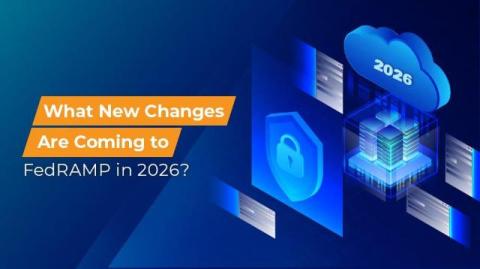
What New Changes Are Coming to FedRAMP in 2026?
One thing is certain: every year, the cybersecurity threat environment will evolve. AI tools, advances in computing, the growth of high-powered data centers that can be weaponized, compromised IoT networks, and all of the traditional vectors grow and change. As such, the tools and frameworks we use to resist these attacks will also need to change. While in some years, the evolution of protection is slow and steady, some promise larger shakeups.

New in Vanta | December 2025
This past month, the Vanta team launched new features to help you:
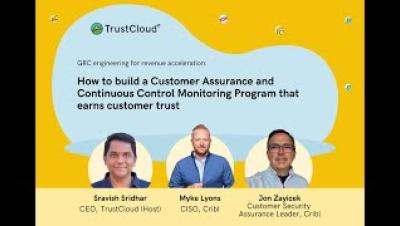
GRC Engineering for Revenue Acceleration | TrustCloud
How to build a Customer Assurance and Continuous Control Monitoring Program that earns customer trust. Join us for a practical and insightful conversation on how transparent security and compliance posture sharing , high-confidence AI-assisted security questionnaire completion, and continuous control monitoring (CCM) translate directly into customer assurance, revenue acceleration, faster sales cycles, and higher buyer confidence.

CMMC Level 1 & 2 Compliance Guide: Endpoint Security & Access Control
The Cybersecurity Maturity Model Certification (CMMC) is more than a checkbox, it’s a mandatory requirement for contractors doing business with the U.S. Department of Defense (DoD). In both Level 1 and Level 2, endpoint security, device control, and monitoring play a critical role in preventing unauthorized access and data leakage of Federal Contract Information (FCI) and Controlled Unclassified Information (CUI).
Why AI Privacy is a Competitive Advantage (Not Just Compliance)
In most startups building or using AI, privacy often gets treated like a checkbox that legal or security will “handle later.” That mindset quietly kills deals, scares off enterprise buyers, and limits your access to the very data your models need. Here is the truth that more founders and CTOs are embracing. Privacy makes your product easier to buy, models better to train, and business more valuable.
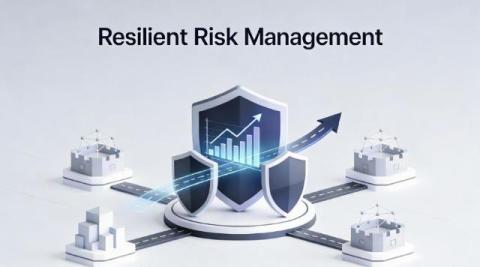
Unlock resilient risk management strategies for 2026 success
Resilience is not a metric. It is the ability of an organization to anticipate, absorb, and adapt to disruption without disintegration. In 2026, risk management will be less about identifying what might go wrong and more about designing systems that endure what inevitably will. The pace of change has erased the illusion of stable baselines. Risk is dynamic, spreading faster through digital ecosystems, third-party dependencies, and regulatory uncertainty than most governance models were built to handle.

Best Tools for Automated GDPR Compliance Monitoring
Most websites today are more complex than their owners realise. A single page can load a mix of analytics, pixels, and vendor scripts, all shaping how personal data flows through the browser. And because GDPR now treats this browser activity as processing, it becomes part of the compliance picture even when it comes from third-party tools. Which means regulators naturally expect organizations to understand this activity as it happens.

How to Choose a Script Monitoring Tool for PCI DSS Compliance
How do you choose a tool that can actually show what third-party scripts are doing on your payment pages? It starts with recognizing the scale of what runs there.
CVE-2025-55182: The critical React RCE and the hidden risk in your supply chain
On December 3rd, the React team disclosed a critical security flaw in React Server Components known as CVE-2025-55182. With a CVSS score of 10.0, this issue is extremely severe. React and Next.js are the backbone of the modern web. Consequently, this vulnerability likely sits deep within your third-party vendor ecosystem in addition to your own codebase.