Security | Threat Detection | Cyberattacks | DevSecOps | Compliance

HIPAA Disaster Recovery Requirements: What Healthcare Organizations Really Need

What are HIPAA disaster recovery requirements? Healthcare data breaches exposed over 276 million patient records in 2024, representing more than 80% of the US population according to the HHS Office for Civil Rights. For healthcare organizations, the question is no longer whether a disruption will occur, but when. The HIPAA Security Rule addresses this reality directly through its contingency planning requirements, yet many organizations still operate with significant compliance gaps.

Top 5 2026-Ready Data Masking Solutions for Regulated Industries

In regulated industries, organizations are dealing with more sensitive data than ever before. This includes consumer IDs, financial and health-related data, and even behavioral insights. However, when this sensitive data finds its way into test, analytic, or development environments, it poses a direct compliance and security threat. This is where data masking comes in. It enables the use of realistic data by removing or modifying personal identifiers.

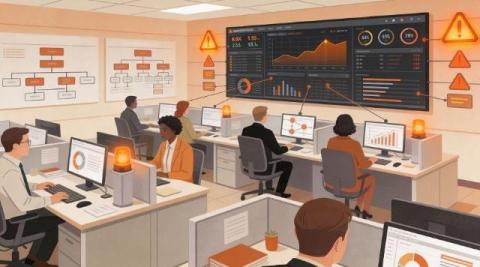
Empowering crisis management governance lessons from 2026

The year 2025 proved to be a turning point in how governments, organizations, and communities manage the unpredictable nature of modern crises. With the accelerated pace of technology, significant shifts in global politics, and an increasingly interconnected world, the lessons learned from the recent period have provided a rich roadmap for crisis management governance.

How Engineering and Security Teams Can Meet DORA's Technical Requirements

Every financial entity operating in the European Union must comply with the Digital Operational Resilience Act (DORA). DORA focuses on whether systems can withstand, respond to, and recover from ICT-related disruptions and whether this can be demonstrated with evidence. For engineering, security, and risk teams, this introduces a practical requirement. Operational resilience must be observable in live systems, continuously tested, and traceable over time.

Dominate IoT data privacy: Strong safeguards for connected devices in 2026

Everywhere you look, your wrist, your home, your car, smart devices quietly gather data. The Internet of Things (IoT) has evolved from a novelty into the backbone of daily life. From smart thermostats that learn your schedule to industrial sensors tracking performance in real time, connected devices are reshaping how we live, work, and interact. But with that progress comes peril. Each device represents a potential breach point; every upload, update, or firmware oversight can expose personal information.


Single-Tenant vs Multi-Tenant FedRAMP Deployments

Across the ecosystem of federal contractors, a majority of deployments tend to be relatively standard. 80% of them will be FedRAMP impact level Moderate, for example, and most will have a standard set of considerations and concerns, such that a lot of security controls can be automated. It’s those outliers that make FedRAMP challenging.

How Threat Intelligence Builds Shared Responsibility in Cybersecurity

Recent high-profile incidents, such as attacks in the retail sector or the closure of KNP following a devastating breach, have pushed cybersecurity onto the boardroom agenda. However, as it rises in visibility, a fundamental misunderstanding persists about how protection works. Responsibility for security is frequently concentrated on a few individuals.

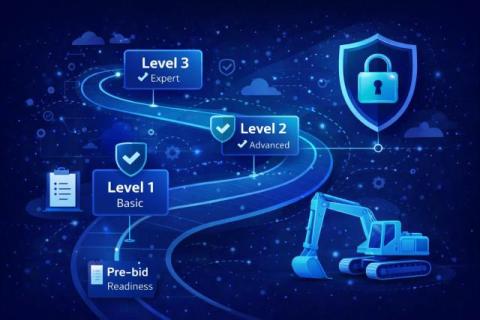
What The New CMMC Rules Mean For DoD Contractors

If your organization does business with the U.S. Department of Defense, or plans to, you need to know about a major change that just went into force. CMMC, or Cybersecurity Maturity Model Certification, is the Department of Defense’s standard for ensuring contractors meet basic cybersecurity requirements. It was designed to protect sensitive government data across the entire defense supply chain. As of November 2025, CMMC is no longer optional.