Security | Threat Detection | Cyberattacks | DevSecOps | Compliance

Juice Jacking Explained: Stay Safe at Public USB Chargers

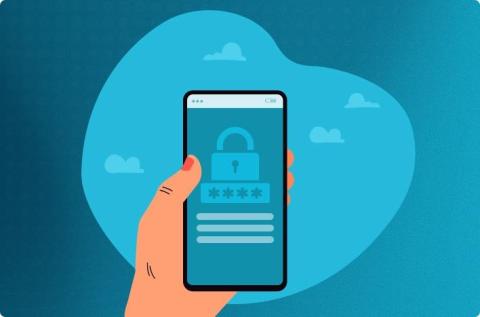
Recharging the battery of phones, tablets, or laptops in public places such as airports, stations, hotels, or cafés is quite normal and convenient. Everybody does it while traveling or working on the go. Most of these charging points rely on USB ports, which not only deliver power but also support data transfer. In recent years, cybersecurity authorities such as the FBI and the Federal Communications Commission (FCC) have warned users about a rising cyber threat known as juice jacking.

The Return of the Invisible Threat: Hidden PUA Unicode Hits GitHub repositorties

It wasn’t long ago that we uncovered compromised extensions on Open VSX. Now, a new wave of attacks is emerging, and all signs point to the same threat actor. The technique will sound familiar: hidden malicious code injected with invisible Unicode Private Use Area (PUA) characters. We first saw this trick back in March when npm packages used PUAs to conceal payloads. Then came Open VSX. Now, the attacker seems to have turned their sights on GitHub, and their methods are evolving.

Advanced Threat Hunting Demo: Brickstorm APT

Is your VMware environment secure? A sophisticated backdoor called BRICKSTORM, used by espionage actor UNC5221, could be hiding in your vCenter backups right now. Restoring from a compromised snapshot means letting the attackers right back in. But what if your backups could be your best defense? In our new 4-minute demo, we walk through the exact steps to: Proactively hunt for BRICKSTORM within your backups using YARA rules. Instantly quarantine infected snapshots to stop the threat from spreading. Identify a guaranteed 'Gold Copy' for a fast, safe, clean-room recovery.

How Cybercriminals Bypass Your Defenses (And How to Stop Them)

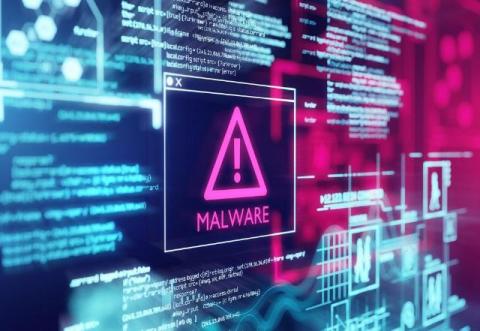
Malware can seriously disrupt a computer's functionality. Performance issues are only the beginning, with the worst cases involving credential theft, data theft, or monetary theft. Malware is annoying, but it can also be dangerous. Simply put, you don't want malware to make its way onto your devices. That's what antivirus software is for.

Widespread Installation of Calendaromatic Adware Includes Homoglyph Channel

Kroll has recently seen a widespread installation of an application called Calendaromatic, that Kroll Threat Intelligence (TI) is currently classifying as a potentially unwanted program (adware) but displays some functionality that gives it the potential to conduct more malicious behaviors.

Agentic AI Ransomware: What You Need to Know

Brace yourself for agentic AI ransomware. It's a terrifying fusion of cutting-edge tech and malicious intent that's set to redefine cyber threats as we know them. Unlike traditional ransomware, which follows pre-programmed rules, agentic AI ransomware can adapt its behavior in real-time based on its environment and the defenses it encounters.

AI Sidebar Spoofing Attack: SquareX Uncovers Malicious Extensions that Impersonate AI Browser Sidebars

SquareX released critical research exposing a new class of attack targeting AI browsers. The AI Sidebar Spoofing attack leverages malicious browser extensions to impersonate trusted AI sidebar interfaces, which is used to trick users into executing dangerous commands that can lead to credential theft, device hijacking, and password exfiltration.

Dual-Platform Backdoor from a South Asian Threat Group: StealthServer

In my ongoing monitoring of cyber threats in South Asia, I’ve encountered a series of advanced persistent threat (APT) activities. This region has long been a hotspot for sophisticated cyberattacks, with various groups ramping up their operations in terms of frequency and technical complexity. Starting from early July, I’ve captured multiple new malware samples targeting both Windows and Linux platforms.

Why Infostealer Malware Demands a New Defense Strategy

Modern breaches rarely begin with a brute-force attack on a firewall, they now start with a user login. Valid account credentials are now a top initial access vector, responsible for 30% of all intrusions. In this post, we address a common misconception surrounding the inforstealer malware that may be putting you at risk of a data breach.

Minimizing liability is not the same as security: Lessons from Recent Airport Cyber Disruptions

Blog post updated for clarity. In late September 2025, several European airports reported significant delays and flight cancellations due to disruptions with their check-in and passenger systems. As a global leader in aviation technology and the backbone of passenger travel, protection of systems and customer operations is paramount for Collins Aerospace. Nonetheless, the vendor of the vMUSE check-in system had been hit by a ransomware attack.

Resilience After the Breach: 6 Cyber Incident Response Best Practices

In its 2025 State of the Underground report, Bitsight TRACE found that ransomware activity continued to escalate in 2024, with a 25% increase in unique victims listed on leak sites and a 53% increase in the number of ransomware group-operated leak sites. The report also observed a 43% increase in data breaches shared on underground forums, with nearly one in five victims based in the United States. These findings highlight a continued upward trend in cyberattack activity.

Public Sector Ransomware Attacks Relentlessly Continue

In 2025, 36 years after the first ransomware attack was recorded, actors continue to zero in on the public sector, and there is no evidence they will slow down any time soon. In fact, our numbers suggest that ransomware attacks against government organizations are ramping up, causing crippling service outages, massive data loss, reputational damage, public distrust, and financial harm.


The Next-Level Threat: Defending Against BrickStorm and the 393-Day Dwell Time

A new threat campaign, codenamed BrickStorm and attributed to a China nexus group tracked as UNC5221, has security researchers sounding the alarm. This is a highly sophisticated espionage operation, and its most staggering feature is the adversary’s patience. The astonishing average time they remain inside a victim’s network before being detected is well over a year—393 days to be exact.


Evasive Malware Surges 40% in WatchGuard's Latest Internet Security Report

Cybercriminals are taking stealth to new levels. According to WatchGuard Technologies’ latest Internet Security Report, evasive malware attacks jumped 40% in Q2 2025, driven by a sharp rise in threats delivered over encrypted connections. While Transport Layer Security (TLS) encryption is essential for protecting users, attackers are increasingly exploiting it to conceal malicious payloads and evade traditional detection methods.

Why Law Firms Are Ransomware's Favorite Target

Law firms are getting hit with ransomware at an alarming rate, and most don’t realize how exposed they actually are until it’s too late. The American Bar Association reports that 29% of law firms experienced a successful security breach in 2023. The average ransom demand for professional services firms runs between $200,000 and $500,000.

Brazilian Caminho Loader Employs LSB Steganography and Fileless Execution to Deliver Multiple Malware Families Across South America, Africa, and Eastern Europe

Arctic Wolf Labs has identified and analyzed a new malware loader we’re calling Caminho, a Brazilian-origin Loader-as-a-Service (LaaS) operation employing Least Significant Bit (LSB) steganography to conceal.NET payloads within image files hosted on legitimate platforms.

[Cybersecurity Awareness Month]: Keeping Enkryptor at Bay: How We All Can Help Beat Back Ransomware

Ransomware is the gift that keeps on giving… and taking. I’ve been tracking ransomware for almost nine years now, and I’ve seen it progress from simple and annoying malware to an organization-ending threat for many. I’m not big on pushing FUD (Fear, Uncertainty and Doubt), so when I say that it is one of the biggest cyberthreats to organizations in the small and medium-sized business space, I am not exaggerating.

Exposing Salt Typhoon on the network using the PEAK Threat Hunting Framework

How do you find an adversary who lives where you can't easily look? A recent CISA advisory on the state-sponsored actor "Salt Typhoon" highlights this exact challenge. These actors aren't just breaking in; they're moving in. They persist on network edge devices like routers and firewalls—critical infrastructure that often sits outside the view of traditional endpoint security. From this vantage point, they capture traffic, steal credentials, and plan their next move.

GlassWorm: The First Self-Propagating VS Code Extension Worm

Oct 16, 2025 How AI is Transforming Application Security Testing Read More Natalie Tischler Oct 14, 2025 Veracode Named a Leader in Gartner Magic Quadrant for AST for 11th Consecutive Time Read More Joe Ariganello Oct 9, 2025 The Business Case for Investing in AppSec Tools Read More Natalie Tischler.

PhishinGit - GitHub.io pages abused for malware distribution

This blog discusses PhishinGit, a phishing campaign uncovered by CYJAX that abuses GitHub.io pages to distribute malware disguised as Adobe downloads. It explains how threat actors used Browser-in-the-Browser (BitB) techniques, Dropbox-hosted payloads, and anti-analysis JavaScript to evade detection. The blog also explores the attack chain, observed mitigations, MITRE ATT&CK mapping, and indicators of compromise (IOCs) to help organisations identify and defend against similar threats.

Ready or Not?? New 11:11 Ransomware Report

The statistics in our Ransomware Report are sobering: ransomware attacks occur roughly every 11 seconds, with 85% of organizations suffering at least one attack within a 12-month period. For IT professionals managing critical infrastructure, the question isn’t if you’ll face a cyber incident—it’s when. The numbers are staggering: cybercrime damages are projected to reach $23 trillion annually by 2027.

CVE-2025-61882: Oracle E-Business Suite Under Mass Exploitation by Cl0p Ransomware

A critical CVE-2025-61882 Oracle E-Business Suite vulnerability is under active exploitation by the Cl0p ransomware group. This unauthenticated remote-code-execution (RCE) vulnerability — CVE-2025-61882 — in Oracle E-Business Suite (EBS) was patched by Oracle in October 2025 and is being actively exploited in the wild. Multiple security vendors attribute attacks to Cl0p/associated ransomware extortion campaigns and Oracle has published an emergency Security Alert.

Advanced Banking Trojan Maverick Uses WhatsApp to Prey on Brazilian Users

The BlueVoyant Security Operations Center (SOC) and Threat Fusion Cell (TFC) researchers recently analyzed attacks of an adversary targeting users based in Brazil via WhatsApp. The attack lures users into downloading a zip archive. The zip archive contains a shortcut file (.lnk) which ultimately downloads and executes a banking trojan which BlueVoyant researchers have dubbed Maverick internally based off the naming convention used by the attackers.

CTI Roundup: SystemBC, ShinyHunters, AI-obfuscated Phishing

This week, Tanium’s Cyber Threat Intelligence (CTI) team investigates SystemBC, a large-scale proxy botnet that’s leveraging compromised virtual private server (VPS) infrastructure to support cybercriminal operations, including ransomware and credential theft. Next, the team looks at ShinyHunters—a financially motivated data extortion group that’s now targeting enterprise cloud applications.