Security | Threat Detection | Cyberattacks | DevSecOps | Compliance

The Latest Cybersecurity News & Insights From Around The World

Remediating new DNSSEC resource exhaustion vulnerabilities
Cloudflare has been part of a multivendor, industry-wide effort to mitigate two critical DNSSEC vulnerabilities. These vulnerabilities exposed significant risks to critical infrastructures that provide DNS resolution services. Cloudflare provides DNS resolution for anyone to use for free with our public resolver 1.1.1.1 service. Mitigations for Cloudflare’s public resolver 1.1.1.1 service were applied before these vulnerabilities were disclosed publicly.

ALPHV Blackcat, GCP-Native Attacks, Bandook RAT, NoaBot Miner, Ivanti Secure Vulnerabilities, and More: Hacker's Playbook Threat Coverage Round-up: February 2024
In this version of the Hacker’s Playbook Threat Coverage round-up, we are highlighting attack coverage for newly discovered or analyzed threats, including those based on original research conducted by SafeBreach Labs. SafeBreach customers can select and run these attacks and more from the SafeBreach Hacker’s Playbook™ to ensure coverage against these advanced threats.

Snyk documentation: Our journey so far
As the manager of Snyk user documentation for the past three years, I’ve overseen many improvements in our user docs.

Visualizing Vulnerability Management: What Does a Single Pane of Glass Really Look Like?
Single Pane of Glass (SPOG) is a common buzzword that sends shivers down the spines of technical folks everywhere. Yet, executive teams ask for it, especially in vulnerability management. At the same time, the complex and fragmented nature of modern IT environments wreaks havoc on organizations aiming to understand their current location related to remediating and patching risks. So, what exactly is a single pane of glass, and what does it look like for enterprises today?
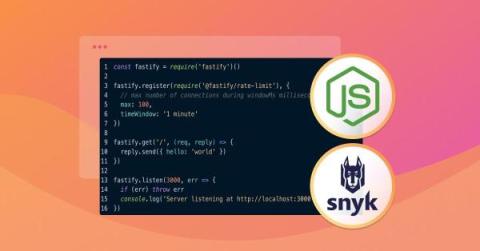
5 Node.js security code snippets every backend developer should know
As backend developers, we are tasked with the crucial role of ensuring the security of our applications. Node.js is not exempt from this responsibility and its growing popularity makes it a lucrative target for hackers, making it imperative to follow best security practices when working with Node.js. In this blog post, we will be exploring some essential Node.js security code snippets every backend developer should know in 2024.

AppSec Vulnerability Management: Uniting AppSec and CloudSec
Businesses have come a long way in their individual journeys to digital transformation, all to enhance their customer and workforce experiences. This shift elevated the importance of both Application Security (AppSec) and Cloud Security (CloudSec) in safeguarding digital assets and ensuring infrastructure resilience.
How REI built a DevSecOps culture and how Snyk helped
A few years ago, REI embarked on its digital transformation and cloud migration journey, moving on-prem development environments to AWS. But, as REI’s development teams began this transition, their security counterparts noticed that application security just wasn’t keeping up. As a result, REI began another journey: identifying the right security tooling and cultural shifts for AppSec success.
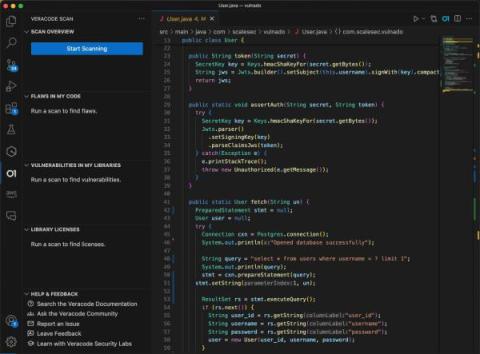
Veracode Scan for VS Code: Now with Veracode Fix
Veracode is pleased to announce the availability of Veracode Fix capability in Veracode Scan for VS Code. Now developers can discover and remediate security flaws using Veracode’s Generative AI-powered tools directly from their Integrated Development Environment (IDE). According to the Veracode State of Software Security, 45.9% of organizations have critical security debt.

Data Scientists Targeted by Malicious Hugging Face ML Models with Silent Backdoor
In the realm of AI collaboration, Hugging Face reigns supreme. But could it be the target of model-based attacks? Recent JFrog findings suggest a concerning possibility, prompting a closer look at the platform’s security and signaling a new era of caution in AI research. The discussion on AI Machine Language (ML) models security is still not widespread enough, and this blog post aims to broaden the conversation around the topic.