Modern applications are made up of more than first-party code and third-party dependencies. Even a single application links back to a vast ecosystem of cloud environments, containers, third-party base images, and automated container orchestration. Along with the ability to build applications faster, developers also need to secure code and associated dependencies, deployment configuration, and containers running in production.
This blog post series offers a gentle introduction to Rego, the policy language from the creators of the Open Policy Agent (OPA) engine. If you’re a beginner and want to get started with writing Rego policy as code, you’re in the right place. In this three-part series, we’ll go over the following: As a reminder, Rego is a declarative query language from the makers of the Open Policy Agent (OPA) framework.
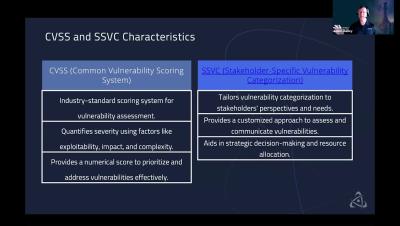
In this blog post, we will highlight Snyk’s view on the new vulnerability scoring framework, CVSS 4.0, which was released on November 1, 2023.
At CrowdStrike, we’re on a mission to stop breaches. As adversaries weaponize vulnerabilities with increasing speed, organizations must accelerate their ability to identify security gaps and proactively manage their risk exposure before an adversary breaks in.
On October 16, 2023, Kroll Cyber Threat Intelligence (CTI) analysts were made aware of an ongoing exploitation of a recently discovered vulnerability within the web user interface (UI) functionality of Cisco IOS XE (CVE-2023-20198). This security flaw is critical with a CVSS score of 10.
Whether internally developed or purchased, your applications can be exposed to a host of vulnerabilities, especially via open source components that are widely used in today’s software. A recent survey found that 60% of data breach victims were compromised due to a known but unpatched vulnerability. Effective prevention and risk management requires being able to understand the vulnerability risk profile for each component of your Software Supply Chain.