Security | Threat Detection | Cyberattacks | DevSecOps | Compliance

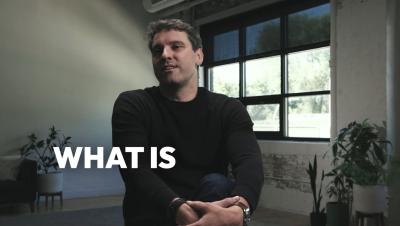
Is SailPoint's NERM the Right Tool for Managing your Non-Employee Identities?

In this video, Dave Cox, VP of Identity Services and Ryan Cluff, Director, IGA Practice at Xalient, dive into how organizations are using SailPoint's Non-Employee Resource Management (NERM) module to better manage contractors and vendors. We also explore how managed services in the identity space are evolving, especially with platforms like SailPoint.

AI Is Writing the Code - Can Security Keep Up? | How to Secure Agentic IDEs from Dev to CI/CD | Mend

AI coding agents are exploding in use—but are they quietly shipping exploitable code? In this webinar, we break down real data, real incidents, and a practical blueprint for securing AI-accelerated development.

AI Meets SAST - Reimagining the Future of Static Analysis | Webinar Mend.io

Join host Tony Morbin as he explores how AI is revolutionizing Static Application Security Testing (SAST) in this future-forward episode with Saoirse Hinksmon, Senior Product Marketing Manager at Mend.io, and Amir Shahmir, Senior Sales Engineer at Mend.io. This isn’t your average security webinar — it’s a deep dive into the convergence of AI and SAST, uncovering how GenAI is making static analysis faster, smarter, and more actionable for developers and AppSec teams alike.

Harvest Now, Decrypt Later: Why Enterprises Must Prepare Now

In Dune, Frank Herbert’s eponymous sci-fi work, there is a phrase that is often repeated – ‘fear is the mind killer’. We can juxtapose this saying with the cybersecurity landscape, as the fear of not being future-ready is what keeps CISOs up at night. The very thought that a cybersecurity strategy, created and implemented with great effort, won’t be able to keep every evolving and increasingly sophisticated threat at bay is disconcerting.

Eliminating Privileged Access Toil with Infrastructure Identity

Modern infrastructure is dynamic, ephemeral, and complex, with new technology (such as agentic AI) constantly being added. However, disjointed and unsecured AI and human identities introduce risk through social engineering, credential theft, and prompt hacking, as well as complexity and toil for engineering teams.

Olymp Loader: A new Malware-as-a-Service written in Assembly

Olymp Loader is a Malware-as-a-Service (MaaS) advertised on underground forums and Telegram since June 5, 2025. The seller, “OLYMPO”, presents Olymp Loader as fully written in assembly language and frequently markets it as FUD (Fully UnDetectable). Despite its recent appearance, many underground forum users have already posted positive reviews.

Microsoft 365: What Are Your Duties Within The Shared Responsibility Model

Microsoft operates under the Shared Responsibility Model. This means that certain areas of security tasks are your duties, as a customer, and some are the cloud provider’s while others may be a shared responsibility. Most importantly, Microsoft is responsible for its global infrastructure, including each data center and the uptime of the Microsoft 365 service. Your responsibility as the user is to manage and protect your customer data within the Microsoft ecosystem.

Still Using RBAC in AI? You're Already Behind.

Traditional role-based access control (RBAC) was built for structured systems - not for the messy, unstructured data that powers today’s AI workflows. In this video, we explore real-world healthcare scenarios where RBAC breaks down like mental health notes, lab results, and substance use histories buried in clinical documents. You’ll see how Protecto’s Context-Based Access Control (CBAC) solves this by understanding the user, prompt, and context - and enforcing policies in real time, without breaking AI functionality.

Is AI really new-or just automation with better branding?

“AI is just automation by a different name.” It’s a bold claim—but one that Brandon Heller, CTO and co-founder of Forward Networks, and Howard Holton, CEO of GigaOm, unpack in a way that will make you think. In their recent conversation on Discovering Disruptions in Tech, they make the case that artificial intelligence, especially generative AI, is not delivering brand-new capabilities.

Navigating the EU Data Act: Why orchestration helps

Over the past decade, data has evolved from being an operational byproduct to becoming one of the most valuable assets of any business. The explosion of IoT devices, cloud applications, and AI-driven systems has generated unprecedented volumes of personal and non-personal data. Alongside this growth, regulations in the EU have progressed in step.