What's new in UpGuard // Cyber Vendor Risk Management Product Releases
Check out the latest product releases from UpGuard!

Discover how to manage cloud permissions and configurations, detect threats in the cloud, and apply a unified approach for cloud and container threat detection.
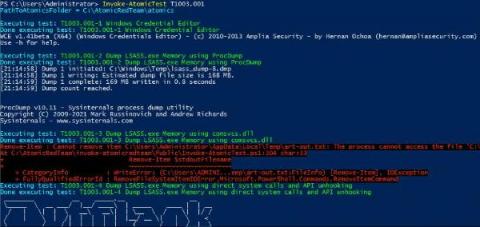
One of the most commonly used techniques is to dump credentials after gaining initial access. Adversaries will use one of many ways, but most commonly Mimikatz is used. Whether it be with PowerShell Invoke-Mimikatz, Cobalt Strike’s Mimikatz implementation, or a custom version. All of these methods have a commonality: targeting LSASS.
What's frustrating security analysts on a daily basis? When we asked that question in our recently published 'Voice of the SOC Analyst' survey, the number one answer was "spending time on manual work" like reporting, monitoring, and detection. Why would that frustrate them? Manual tasks are repetitive, mundane, and tedious, and force analysts to spend most of their day or week chasing down answers or following up on alerts, only to do it again the next day.
Introducing the newest member of the JFrog ecosystem team – Frogbot. This new git bot tool works for you by protecting your git projects, as they are being developed, from security vulnerabilities. Register for my talk “Bots to Protect your Source Code” swampUP 2022.
What matters most in a criminal trial? Evidence. Everything depends on the quality and depth of facts deployed to build a case for innocence or guilt. Without compelling evidence, no jury can draw accurate conclusions.
Analysts are being weighed down by mundane, tedious tasks, preventing them from doing their best work, causing burnout, and leading them to the point of wanting to leave their jobs. SOC analysts' biggest frustration and one of their top challenges is having to spend time on manual tasks, according to our recent report, 'The Voice of the Analyst.' These tasks are not only repetitive, but they're taking them away from more engaging, higher-impact work.
From restaurant menus to sporting tickets, using a QR code has become a regular part of life for many. They’ve been widely used in some countries for years, and during the pandemic they finally hit mass adoption in North America and the UK.