Building Security into Your M&A Process Part 3: Merger or Acquisition Close ("Day One")

This is the third part of a four-part blog series covering each of the four phases of the merger & acquisition (M&A) process and how you can build security into each phase. In case you missed it, Part 1 covered the why it’s important to integrate security into the due diligence process in the first phase of M&A and Part 2 covered integration planning and public announcement.

Integrate Arista CloudVision with Forward Enterprise to Automate Network and Security Verification

Network automation has many benefits for organizations adopting a DevOps model for managing their infrastructure, including speed, agility, and a consistent change control process. However, with improvements in speed, there comes an added risk of configuration errors rapidly propagating through the network. To safeguard against potential mistakes, network and security verification become an essential part of the network DevOps lifecycle.

End to End Incident Response Using Elastic Security

Join James Spiteri, PMM Director for Elastic Security, as he walks through an entire incident response scenario using several features of the Elastic Search platform including Security features such as SIEM, Endpoint Security, osquery, correlation and case management. Observability features such as logging and APM are also covered as part of this investigative workflow. Additional References.

When it Comes to Email Security Good Enough is Not Enough

There is an underlying constant when it comes to creating a strong defense—the more layers of defense in place, the better. Sure, having a single stout wall in place might be strong enough to deter some attackers, but it is simply not enough to counter a foe determined to gain entry. This holds true whether the defender is a castle, sports team, or an organization.

Avoid the 3 Pitfalls of Native Database Auditing for Privileged User Monitoring

Regulations and frameworks such as PCI-DSS, SOX, ​NIST SP 800-53, NERC CIP and HIPAA require privileged user activity to be monitored and audited sufficiently for investigation. Privileged user monitoring and auditing for databases are critical as databases often contain the most sensitive information to an organization. Many organizations leverage built-in database auditing capabilities included with their databases to meet these monitoring and auditing requirements.

Security and privacy | Cybersecurity Sessions #9 with Charlie Osborne

Many businesses argue that they need to collect information about customers to verify who they are and secure their accounts. However, this is at odds with online privacy advocates, who say organizations are compromising our security by collecting far too much information about us. In this episode, Netacea co-founder Andy Still talks to @ZDNet cybersecurity journalist Charlie Osborne about the intrinsic link between security and privacy, how legislation like the GDPR has strengthened both, and where responsibility lies for protecting our privacy online.

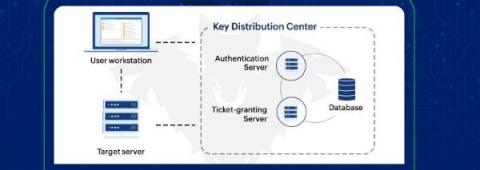
Kerberos and Active Directory

If you have been researching Active Directory (AD), chances are that you will come across the concept of Kerberos for user authentication and other service request-related functionalities. It is worthwhile to examine the Kerberos protocol in depth and, in turn, appreciate the dependency of AD on Kerberos. Given that Kerberos is an industry standard, you will see that it has become the most widely used network authentication protocol for all Windows environments with operating systems 2000 and later.

5 Telltale Signs You're Running a Cloud-Hosted - not a Cloud-Native - SIEM

The necessity of a SIEM for organizations and their security teams has evolved dramatically over time. It has gone from edge use cases and compliance to the current form of threat detection, incident response, and threat hunting. As the use cases have changed, so has the architecture. As a result, organizations that have been quite familiar with running their SIEM on-premises are now looking for modern architectures to reduce the workload on their analysts. The simple choice: SaaS, of course.

Best practices for creating secure webhooks

Webhooks are one of the best ways to transfer information about occasional events from one system to another. In contrast to methods like HTTP polling — which involves the client repeatedly asking for information from the server — webhooks are triggered by events. This makes them simple and effective. A client can subscribe to a webhook to send a message to an endpoint whenever a specific event happens.

CI/CD pipeline attacks: A growing threat to enterprise security

CI/CD pipeline attacks are a growing threat to enterprise security. In this article, we’ll provide an overview of CI/CD for non-developers, discuss the cybersecurity issues involved, and offer some recommendations for developers, companies, and security teams.