Ensuring PCI DSS 4.0 Compliance with Feroot: A Deep Dive into Requirement 6.4.3

The Payment Card Industry Data Security Standard (PCI DSS) 4.0, issued a comprehensive set of requirements, to safeguard online payment systems against breaches and theft of cardholder data. Requirement 6.4.3 is one of the critical components for businesses that take online payment and focuses on the management and integrity of scripts on webpages that take payment card (i.e.m credit card) payments.
Breaking: What is Going on with the NVD? Does it Affect Me?

Headed by NIST, an American government institution, the National Vulnerability Database (NVD) contains vulnerability data that’s been key to protecting organizations both within and without the US borders for more than 20 years. Many security policies from both commercial and government organizations require that vendors take care of vulnerabilities of a particular severity as given by the NVD within a certain number of days.

Streamlining Security with Notion, Torq, and Slack

Security teams using legacy SOAR platforms often face struggles with scattered information, limited collaboration tools, and inflexible response playbooks. Managing knowledge, automating tasks, and communication can be complex and resource consuming. Let’s see how integrating Torq, Notion, and Slack address these challenges to improve and streamline security processes.

How to Align Your Security Strategy with NIST Cybersecurity Framework 2.0

After a decade in the making – or waiting, as the case may be – the National Institute of Standards and Technology (NIST) has released the first major revision to its Cybersecurity Framework (CSF), a set of voluntary standards and best practices for managing cybersecurity risks. NIST CSF 2.0, released on Feb 26, 2024, expands the scope and applicability of the framework to cover more types of organizations and industries, including the private sector, government and nonprofits.

Data Subject Access Request (DSAR): The Meaning, Procedures, and Challenges

Privacy is the individual’s right to control the use of their personal data, and DSAR is the mechanism by which individuals can enforce this right. This right to their own information, as used by an organization, is guaranteed by privacy laws like Europe’s General Data Protection Regulation (GDPR) and the California Consumer Protection Act (CCPA). If your organization collects and uses personal data, especially for European or Californian customers, you should be prepared to respond to DSARs.

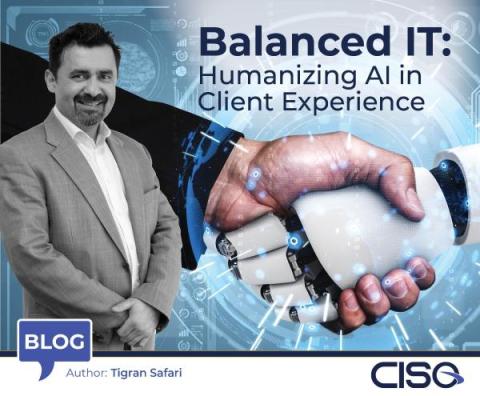
Balanced IT: Humanizing AI in Client Experience

How can we clear our minds of preconceived notions about Artificial Intelligence? How can we approach this ongoing technological revolution without apprehension? AI has integrated into our lives more swiftly than a lawyer’s “Objection, Your Honor!” in a surprise courtroom confession. We ask AI to do a multitude of things: write email responses, research our homework, inquire about recipes, complain about our tough days, compose school papers, and create art.

Turning Insight into Action: Data Modernisation in Banking

Financial institutions are struggling to keep pace with technological advancements while ensuring data security and compliance with stringent regulations. Data modernisation has emerged as a critical strategy for banks to remain competitive, enhance customer experiences and fortify data security measures. In this blog post, we’ll discuss the importance of data modernisation in banking.

Detect secrets in Slack channels with GitGUardian

Good news! GitGuardian can now help you find and remediate secrets exposed in Slack channels. You already know us for accurately detecting secrets in your code base. And now, we have extended the real-time detection capability to cover the world's most popular communications platform. Add Slack to your GitGuardian monitored perimeter, and help keep secrets sprawl out of your team communications channels!

Using webhooks to boost cloud-native application security

In the ever-evolving landscape of cloud-native applications built with containers and Kubernetes, webhooks serve as the communication backbone, facilitating seamless integration between various components, especially in the realms of security, networking, and troubleshooting. This is further amplified when combined with popular collaboration tools such as Jira and Slack.