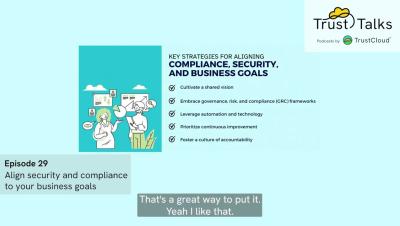
Align security and compliance to your business goals | TrustTalks - Ep 29 | Security and GRC Podcast

This podcast focuses on aligning business goals with compliance and security. It details strategies for successful alignment, including using GRC frameworks, automation, and continuous improvement. Numerous best practices and case studies illustrate how to integrate these elements effectively, ultimately fostering a culture of accountability and enhancing organisational success. Tools and resources are also highlighted to support this integration. The pursuit of success is a multifaceted endeavour.


Fireblocks unlocks liquid ETH staking for 2,000+ institutions via Liquid Collective

As Ethereum ETFs gain traction, Fireblocks offers clients direct access to LsETH—combining ETH staking rewards with liquidity and compliance. Fireblocks has joined Liquid Collective as a Platform, adding support for Liquid Collective’s Liquid Staked ETH (LsETH). This integration enables institutions to stake ETH and access Ethereum network rewards while preserving liquidity and capital efficiency.

What to do if the 16 billion password data leak impacted you

Around 16 billion login credentials have been leaked online, potentially affecting services like Apple, Google, Facebook, and more. Learn how to check if you’re impacted and discover practical steps to secure your accounts with tools like 1Password. Sixteen billion leaked login credentials. That’s the number of records security experts at Cybernews recently identified, making this one of the most significant credential leaks ever discovered.

Reclaiming analyst time: Smarter investigations with AI in defence

How the MOD can reduce investigation fatigue and boost operational efficiency Security analysts at the UK Ministry of Defence (MOD) — and everywhere — face an overwhelming challenge: They can receive thousands of alerts daily, and distinguishing genuine threats from false positives in a timely fashion has become nearly impossible without technological intervention.

What is MXDR? A Modern Approach to Cyber Threat Detection and Response

While organizations deploy various security technologies, modern cyberattacks are often intricate, involving kill chains composed of numerous low-fidelity signals. A key challenge is correlating these alerts across siloed security solutions to gain a complete, enterprise-wide view of the threat.

CMMC readiness: How AI-powered platforms accelerate DoD compliance

Defense contractors and organizations involved in Department of Defense (DoD) projects are facing growing pressure to comply with stringent cybersecurity standards. The Cybersecurity Maturity Model Certification (CMMC) represents a transformative initiative aimed at enhancing the security posture across the defense industrial base. As organizations embark on this compliance journey, AI-powered platforms are emerging as critical enablers to accelerate CMMC readiness.

Four Ways to Prevent Credential Theft and Credential-Based Attacks

When it comes to cybercrime, there are few threat actor tactics as useful and widespread as credential theft, and the subsequent use of stolen credentials, to maliciously gain access to an IT environment. As hybrid work models and the widespread use of web-based applications further the digitalization of corporate environments, user credentials have proliferated. In turn, credential theft has risen as a low-tech way for threat actors to gain easy access to target environments.

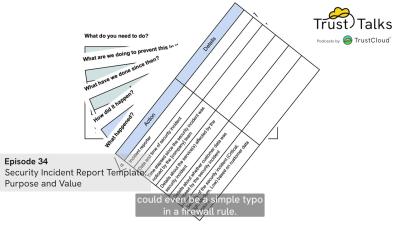
Security Incident Report Template | TrustTalks - Ep 34 | Security and GRC Podcast

This podcast focuses on a downloadable security incident report template, explaining its importance, use, and value in maintaining organizational security. A security incident report is a document that outlines the details of any security incident that occurs within an organization. This report serves as an official record of the incident and is used for documentation, analysis, and future prevention.

How to Enhance the Workflow: Tips for Using Jira with Azure DevOps

Consider a typical scenario. Your development department scales along with the company. Your needs grow, so teams plan to adopt specialized tools for different purposes. The decision is to use Jira for product and issue tracking. Elements like version control, pipelines, and deployments will be managed in Azure DevOps (ADO). Each platform excels in its domain, but running them in isolation is a different story.