Upwork is a freelancing platform that connects a global base of clients to freelancers via job postings. Since going public on the New York Stock Exchange in 2019, the company has become one of the leading freelance platforms worldwide and was named on Time’s list of the 100 Most Influential Companies of 2022.
Today we’re excited to announce Risk Management customization, a collection of new capabilities in our platform that enhance the existing Risk Management solution and give you more flexibility to enable custom risk management scoring and prioritization. Currently in beta, Risk Management customization will be generally available in the coming months.
Hello friends, it’s Troy, your friendly neighborhood automation engineer, here to guide you through a really cool feature, or product-within-our-product, which is the Tines Toolkit. We launched the toolkit back in May, and this guide will help you navigate the features available today.
When the Public Sector wins, we all win. Rooting for the security of Public Sector software is something that comes naturally to Veracode. Federal agencies are tackling an incredibly difficult job, and the road to success is meaningful to us all – regardless of our sector or industry. The push for software security came strongly via specific requirements in the Executive Order on Improving the Nation’s Cybersecurity in 2021.
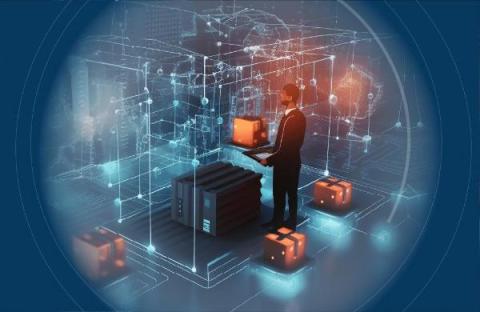
Increasingly, security teams are tasked with identifying, understanding, and managing risk around devices that may live outside the traditional IT umbrella. Operational Technology (OT) refers to computing systems that are used to manage and process operational functions as opposed to administrative operations, with Industrial Control Systems (ICS) being a major segment of that OT sector.
In an era of increasingly sophisticated cyber threats and identity fraud, ensuring robust security measures has become paramount for large banks and organizations. As traditional authentication methods prove vulnerable, biometric integration emerges as a game-changing solution.
Biometrics revolutionizes the authentication landscape by leveraging unique biological characteristics, such as fingerprints, iris patterns, and facial features. Unlike traditional methods, biometrics provides a highly reliable and secure means of identity verification. Among these modalities, face recognition emerges as a convenient and non-intrusive approach that ensures robust security while enhancing user experience.
Network complexity is at an all-time high. Between legacy technology, hybrid-multi-cloud environments, and networks cobbled together by mergers and acquisitions, it’s impossible for people to keep track of the network, its topology, and behavior. The idea of trying to trace a path through a multi-cloud network seems akin to being asked to pull a rabbit out of your hat.