Security | Threat Detection | Cyberattacks | DevSecOps | Compliance

New: Add a location to any 1Password item and access what you need, exactly where you need it

Passwords, PINs, and codes aren’t just part of your online world. From hotel safes and Wi-Fi passwords to gym lockers and alarm codes, you often need access to data that’s tied to a specific location in the real world (and in the case of alarm codes, you need it in a hurry). Wouldn’t it make life so much easier if you had a simple, quick way to find those items exactly when and where you need them? Well, now you can, thanks to a new capability in the 1Password app.

What's Coming in Exposure Management and Remediation in 2025

In December 2024, the Cybersecurity and Infrastructure Security Agency (CISA), National Security Agency (NSA), Federal Bureau of Investigation (FBI) and International Partners published a guide for “protecting communications infrastructure” in response to the discovery that a stealthy Chinese government threat actor, Salt Typhoon, had infiltrated a number of US telecommunications firms.

What are Software and Data Integrity Failures? How to Prevent?

Software security is not a set-it-and-forget-it process, but regular monitoring is important. Now, the Open Web Application Security Project (OWASP) is a non-profit foundation that provides a wealth of information about web application security. They have provided a list of the Top 10 Web Application Security Risks.

What is Azure RBAC? Roles, Benefits, Best Practices and Implementations

Azure RBAC is basically a mature system of fine-grained access management for the Azure resources. Azure RBAC enables you to grant users, groups, service principals, and managed identities access to Azure resources, as a scope specifies. These scopes can be a subscription, a resource group, or even a single resource. RBAC assists in making sure that only approved users can control or manipulate particular resources and therefore shields Azure settings.

Breaking Down Ransomware-as-a-Service

Ransomware-as-a-service is a business model where ransomware operators and third parties, called “affiliates,” work together to launch ransomware attacks. RaaS was first identified in 2012 with the Reveton ransomware strain, and in the subsequent decade it has exploded into a sophisticated and ever-evolving cybercrime tactic.

Egnyte on Azure Marketplace: A Powerful Partnership

With collaboration and efficiency a top priority, Egnyte’s partnership with Microsoft is revolutionizing the way teams work together. Many organizations are already leveraging Microsoft Office products, and now it’s easier than ever for them to streamline their procurement process and get the most out of their technology investments. Starting today, Egnyte is available through the Microsoft Azure Marketplace!

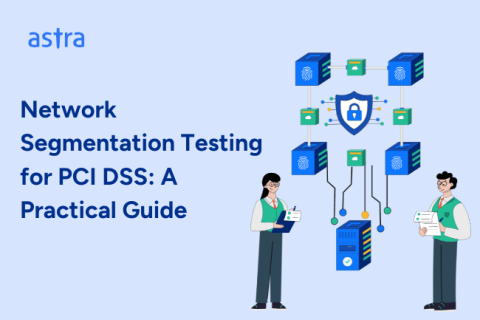
What is PCI DSS?

The Payment Card Industry Data Security Standard (PCI DSS) is a global security framework established by major credit card brands that outlines security requirements for any organization handling cardholder data, including encryption, access control, and network security. PCI DSS is regularly updated, and Version 4.0, effective March 2025, focuses on allowing organizations to tailor security controls to their specific needs.

Byte Back: Next-Generation Malware Classification Using Binary Transformers

In recent years, Transformer models have been the backbone of the revolution within the artificial intelligence sector. They are the basis of large language models (LLMs) and responsible for LLMs’ ability to understand and generate text of a human-like quality. Transformers are able to learn long-range interactions between words and sentences, allowing them to retain high-level concepts and insights into their training data.