Security | Threat Detection | Cyberattacks | DevSecOps | Compliance

Why the Defense Industrial Base is Prioritizing CMMC

As global tensions and AI-driven threats accelerate, the "trust but verify" model of the past has been replaced by a "verify then trust" mandate. At the heart of this shift is the Cybersecurity Maturity Model Certification (CMMC); a framework that has transformed from a roadmap into a non-negotiable requirement for doing business with the Department of Defense (DoD).

GA4 Is Collecting PHI from Your Website and a BAA Won't Fix Your HIPAA Problem

Conversations about GA4 in healthcare tend to stay strangely shallow, circling the same procurement question: “Is there a BAA?” It’s as if GA4 creates risk at the contract layer, when the truth is that the risk is born earlier and lower, in the collection layer, where ordinary telemetry becomes sensitive the moment it is attached to health context and allowed to leave your site.

HIPAA Compliance for Dental Offices

When we talk about HIPAA compliance for dental offices, we’re not talking about theory or paperwork. We’re talking about patient privacy, regulatory exposure, and whether a practice can keep operating when something goes wrong. HIPAA is no longer a “back-office” concern—it’s a core part of running a modern dental practice.

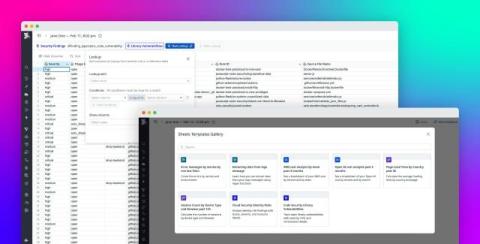
Generate audit-ready vulnerability and compliance reports with Datadog Sheets

Security teams are frequently asked to provide clear, time-bounded evidence of their organization’s security posture. Whether the request comes from external auditors validating SOC 2, ISO 27001, PCI DSS, or internal governance reviews, they typically require collecting vulnerability data from multiple tools, reconciling resource lists, and manually generating spreadsheets for auditors. This process is slow, error-prone, and difficult to repeat consistently.

NIS2 vs DORA: Your Complete EU Cybersecurity Compliance Guide

By January 2025, over 160,000 EU organizations became subject to new cybersecurity regulations—NIS2, DORA, or both. If you operate in the EU or serve EU clients, you’re likely affected. This guide clarifies which regulations apply to you and what you must do to comply. Contents hide At-a-Glance Comparison Is Your Organization Affected? Question 1: Where Do You Operate? Question 2: What Sector Are You In? Question 3: What’s Your Company Size? What is NIS2?

Vendor Risk Response: What Happens After a Vendor Risk Is Identified?

In today's interconnected business environment, the relationship between organizations and their third-party vendors is crucial. However, it also introduces a range of risks. Vendor risk refers to the potential vulnerabilities or threats that arise from working with external suppliers, service providers, or partners. These risks can manifest in various forms, including data breaches, financial instability, operational disruptions, or non-compliance with regulations. Once a vendor risk is identified, it's essential to understand the steps that need to be taken to manage and mitigate that risk effectively.

The 2026 Compliance Countdown: Navigating RBI & SAMA External Threat Mandates

For the financial sector, 2026 isn’t just another year on the calendar—it’s a regulatory crossroads. With the RBI’s April 2026 deadline approaching in India and the increasingly stringent SAMA Cybersecurity Framework updates in the Middle East, “check-the-box” security is officially dead. Regulators have shifted their focus from internal controls to external visibility.

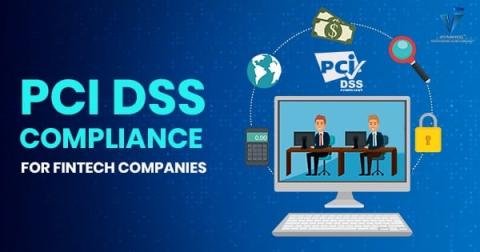
PCI DSS Compliance for Fintech Companies

PCI DSS compliance is a mandatory, revenue-critical requirement for fintech companies that touch cardholder data—directly or indirectly. This guide is written for fintech founders, CISOs, CTOs, and security leaders building or scaling payment-enabled platforms in the US and globally. If your fintech stores, processes, or transmits cardholder data, PCI DSS compliance for fintech companies is not optional—it is a baseline operating requirement. With PCI DSS v4.0.x now fully in force.

Why Your MSP Could Disqualify Your CMMC Assessment

Now that CMMC is a mandatory part of participating in the defense supply chain, a lot of businesses are starting to grapple with the requirements and what they mean for operations. One of the biggest roadblocks is the use of an MSP, or Managed Services Provider. MSPs are the backbone of many businesses that don’t have the resources to spin up entire architectures on their own. It’s a huge benefit and allows companies to exist when otherwise the investment to get started would be way too high.