Security | Threat Detection | Cyberattacks | DevSecOps | Compliance

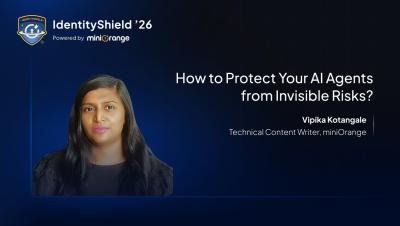
How to Protect Your AI Agents from Invisible Risks? | IdentityShield '26

AI agents power innovation but face hidden hacks, leaks, and tricks. This session uncovers 7 key risks, like cyberattacks, insider threats, bias abuse, and rogue actions, with best practices and real demo videos. Speaker: Vipika Kotangale Technical Content Writer, miniOrange Pune, India.
How to choose the right AI standard: A 7-point guide

AI adoption has accelerated across sectors today as the technology becomes easier to access and deploy. Most organizations embed it in at least one aspect of their daily operations, but doing so has also introduced new risks, such as model bias and outcome drift. ‍ There’s a growing gap between AI use and responsible oversight, and keeping up demonstrable AI governance practices is a challenge.

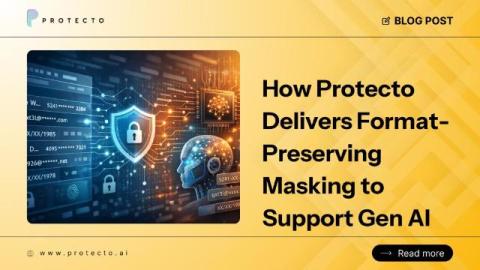
How Protecto Delivers Format Preserving Masking to Support Generative AI

Generative AI systems are designed to work with real data that expects structure, rely on patterns, and infer meaning from formats, relationships, and consistency across inputs. While real data facilitates better outputs and advanced training, making these systems useful has a tradeoff – it carries privacy, security, and compliance risk. This puts business on a difficult conundrum – either you block sensitive data entirely and lose context, or accept the privacy risks of using real data.

7 AI Video Tools Security Teams Are Using for Training and Awareness Campaigns

Security awareness isn't just about policies and procedures anymore. Modern security teams know that engaging visual content dramatically improves message retention and behaviour change among employees. The challenge has always been production. Creating professional training videos and awareness content traditionally required budgets and expertise most security departments don't have. Static presentations and wall-of-text emails get ignored, but quality alternatives seemed out of reach.

The Hidden Security Risk of Enterprise Documents and Why AI Amplifies It

For years, enterprise security strategies have evolved around visible and measurable threats: network intrusions, endpoint compromise, identity misuse, and cloud misconfigurations. These domains are well understood, heavily monitored, and continuously audited. Yet one of the most critical security risk surfaces in modern enterprises remains largely under-governed: documents and unstructured data.
Featured Post

The new-age SOC analyst in 2026: tier 1.5

The role of the tier 1 SOC analyst has always been critical. It's the function responsible for holding the line day-to-day and responding when incidents happen. It's also the training ground for analysts, training them in a wide range of basics to prepare them to advance to tier 2. It's a role that has never been static but with the pace of change noticeably faster than ever before, the role of the tier 1 SOC analyst is evolving once again.

Ingress Security for AI Workloads in Kubernetes: Protecting AI Endpoints with WAF

For years, AI and machine learning workloads lived in the lab. They ran as internal experiments, batch jobs in isolated clusters, or offline data pipelines. Security focused on internal access controls and protecting the data perimeter. That model no longer holds. Today, AI models are increasingly part of production traffic, which is driving new challenges around securing AI workloads in Kubernetes.

As AI supercharges phishing scams, 1Password introduces built-in protection

Phishing attacks are everywhere these days. People encounter them while shopping, job hunting, reading work emails, and checking personal texts. Thanks to AI-powered scammers, phishing has become both more common and harder to spot, leading to disastrous consequences. A phishing attack on a business costs an average of $4.8 million, and attacks on individuals can drain bank accounts and wreck credit scores.