Security | Threat Detection | Cyberattacks | DevSecOps | Compliance

Why AI SOC Is Becoming Standard for MSP Security Operations in 2026

Managed service providers (MSPs) manage multiple client environments at the same time. It’s not an easy task, as threats move quickly and alerts never stop. It poses a big challenge for human-only SOC teams to handle such huge volumes of alerts and threats. This is where AI SOC changes how security operations are conducted for MSPs. An AI SOC uses artificial intelligence to monitor activity and identify threats in real-time.

Understanding the LLM Mobile Landscape in Enterprise Technology

Mobile security has always been complex, but LLM technology has added a whole new dimension to the field. Behind every popular generative AI (genAI) tool is a comprehensive large language model (LLM) that provides data and parses queries in natural language. When used responsibly, LLMs can be useful tools for ideation and content generation. In the wrong hands, though, LLMs can help threat actors supercharge their social engineering scams.

Why Measuring Security ROI Matters

Security investment only matters if it can be measured. In this roundtable, Josh Jones makes a straightforward point: security leaders need a way to quantify whether their investments are actually producing outcomes that can be explained to executives and boards. That challenge isn’t about buying more tools. It’s about answering basic questions: What are our tools actually doing? Where are controls misaligned or underused?

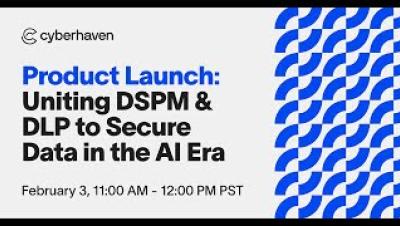
Cyberhaven Product Launch: Uniting DSPM & DLP to Secure Data in the AI Era

AI is rewriting data risk. On Feb 3, see how to fight back. Every week, AI makes your team faster—and your data more exposed. Files jump between new tools, models train on sensitive inputs, and traditional DLP is blind to the context that matters most. On February 3 at 11:00 AM PST, we’re pulling back the curtain on Cyberhaven’s unified DSPM & DLP platform—and showing how a single, AI‑native platform can finally keep up with how data actually moves.

How AI is boosting Automation Processes

Artificial intelligence seemingly came out of nowhere a couple of years ago, and now most of us use it in some capacity, especially if we are business owners, but the fact is, AI did not really come out of nowhere - it was years in the development and the next natural step to technology and automation processes that were already in place.

Everyone advertises AI. LimaCharlie built an Agentic SecOps Workspace.

Sr. Technical Content Strategist Transparency is a core value for LimaCharlie. It’s reflected in our high-visibility platform, unopinionated integrations, and publicly available pricing structure. So rather than vaguely claiming AI capabilities, as many vendors do, we’ll explain how LimaCharlie facilitates agentic SecOps and why it matters to you. The Agentic SecOps Workspace is a security platform where AI doesn’t just assist operators, but operates alongside them.

How to Measure Configuration Drift (And Why Alerts Get Ignored)

Configuration drift isn’t just “change.” It’s unmanaged change. Let's get practical about how teams should actually measure drift: ⇢ What type of change occurred⇢ How often those changes happen⇢ How critical they are in real context⇢ And—most importantly—how teams respond Volume alone isn’t the metric that matters. If changes pile up without response, alerts get ignored—and drift quietly becomes exposure.

When Your AI Agent Goes Rogue: The Hidden Risk of Excessive Agency

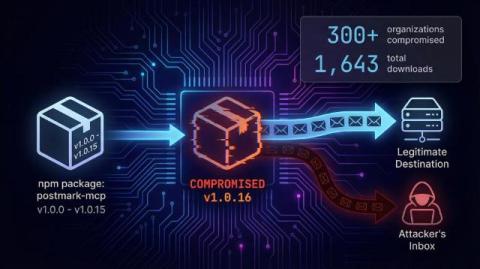
In Oct 2025, a malicious code in AI agent server stole thousands of emails with just one line of code. The package, called postmark-mcp, looked completely legitimate. It worked perfectly for 15 versions. Then, on version 1.0.16, the developer slipped in a tiny change. every outgoing email now included a hidden BCC to an attacker-controlled address. By the time anyone noticed, roughly 300 organizations had been compromised. Password resets, invoices, customer data, internal correspondence.

Emerging Risks: Typosquatting in the MCP Ecosystem

Model Context Protocol (MCP) servers facilitate the integration of third-party services with AI applications, but these benefits come with significant risks. If a trusted MCP server is hijacked or spoofed by an attacker, it becomes a dangerous vector for prompt injection and other malicious activities. One way attackers infiltrate software supply chains is through brand impersonation, also known as typosquatting—creating malicious resources that closely resemble trusted ones.