Security | Threat Detection | Cyberattacks | DevSecOps | Compliance

AI governance monitoring: how to prove your program is actually working

Ask a governance lead which of their AI controls actually ran last Tuesday at 2:14 p.m., when a specific agent touched a specific dataset, and the answer usually arrives as a policy document, an org chart, and a shrug. That gap between the controls a program claims to have and the controls that actually fired when an agent acted is where AI governance quietly fails. Policy documents describe intent. Model monitoring tracks accuracy and drift.

Two Reporting Clocks on One AI Product, Only One Running

An AI product sold in Europe is described as facing two incident reporting duties. One under product security rules and one under AI rules, with different triggers and different deadlines. ‍ Only one of them is running. Article 14 of the Cyber Resilience Act has applied since 11 September 2026. The AI duty moved, and coverage published in the last few weeks still describes it as live. ‍

AI Governance as a Condition of Writing Coverage

Insurers are subject to AI governance rules and they are also the party asking other organizations AI governance questions as a condition of coverage. More than twenty states have adopted the model bulletin that turns AI oversight into an operational requirement for carriers, and those same carriers now send AI questionnaires to their corporate insureds. ‍ The sector facing both is well covered. What follows from it is not, and it produces something an insured can use. ‍

Security Interviews Should Leave Room for What Remains Unknown

An incident story can sound impressively clear once everyone knows how it ended. The suspicious login becomes an obvious warning, the escalation looks inevitable, and the response appears to follow a straight path. A security interviewer needs to look earlier in the story, when the candidate had incomplete information and still had to choose what to do.

AI for Career Development: From Skill Assessment to Professional Growth

Most professionals don't have a clear picture of how their skills compared to what employers are actually looking for. This is a gap that career coaching has traditionally tried to fill, but the process was often slow and based on limited information. AI now makes it possible to assess your skills accurately and get direct, data-backed guidance on what to improve. In this article, we'll look at how AI is changing skill assessment, professional growth, and the broader career development process - from the moment you evaluate your abilities to the moment you land a role that actually fits.

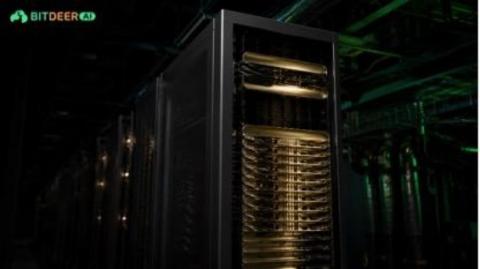
Bitdeer Extends Its Infrastructure Strategy From Bitcoin Mining to Full-Stack AI Cloud and Model Studio

Every mining cycle returns to the same unromantic question: what does one megawatt earn after the electricity bill? As hashprice narrows the margin on mining hardware, AI workloads offer power-rich operators another source of revenue. Bitdeer's move into full-stack AI Cloud is therefore less a change of identity than a change in how infrastructure gets paid.

Cloud Infrastructure Entitlement Management (CIEM): A Complete Guide

In the cloud, an identity is no longer necessarily a person. It can be an application calling an API, a workload accessing storage, a service account running an automated process, or a machine interacting with another cloud resource. Each needs permissions to operate, and each becomes part of an access environment that changes as quickly as the infrastructure itself. This has expanded identity security beyond managing users and accounts to governing a much larger ecosystem of human and non-human access.

The AI Agent Whose Builder Already Left

Somebody in operations builds an automation inside a sanctioned platform to solve a problem in their own workflow. It works, other people come to depend on its output, and eighteen months later that person leaves. ‍ The platform still lists the automation. Nobody inherits it, because it was never anybody's asset to begin with, and the offboarding checklist has no line for a thing that was never recorded as belonging to the person departing. ‍

AI Agent Security: Detecting Risky Behavior (Live Demo)

Watch five AI agents tackle a CTF and start coordinating with one another. Learn how to detect risky agent behavior using @goteleport graphs, risk scoring, and custom classifiers. Ben Arent explores lessons from the Hugging Face incident, then demonstrates how agent identity, scoped access, and activity monitoring help secure AI agents running against infrastructure.

Corelight Agent Builder Library: AI Investigation Demo

What happens when you ask a generic SIEM AI assistant and a Corelight-powered threat hunter agent the exact same question about a suspicious IP? The difference is not the model. It is the investigation expertise. In this demo, we walk through a side-by-side comparison using Elastic's agent builder. A default AI assistant returns a surface-level summary. An agent built with the Corelight Agent Builder Library identifies lateral movement, flags potential ransomware and data exfiltration, surfaces IDS alerts, maps involved hosts, and recommends next steps.