Security | Threat Detection | Cyberattacks | DevSecOps | Compliance

The Hidden Cost of Waiting on Medical Records

Operations directors know the exact feeling of hitting a brick wall. You need critical case files to move forward, but you are stuck waiting on unresponsive healthcare providers. The phone rings endlessly. Faxes go into a black hole, and your team is left twiddling their thumbs. This immediate operational frustration is more than just an annoyance. It is a measurable drain on your firm's finances. Every day your team spends fighting with hospital compliance departments is a day of lost productivity.

Why Brands Use the Same AI Avatar Across Every Campaign Instead of Rotating Influencers

Here is the reason why major consumer brands have historically invested in long-term spokesperson relationships instead of continually changing faces for different campaigns. Recognition builds up. The more an audience sees a person again and again associated with a brand, the more the presenter and the brand become linked in their minds -and each individual advertisement will have to do less work in establishing credibility before delivering the message.

Top Software Review Sites for Guidance on Cybersecurity Software Selection

Choosing cybersecurity software is rarely a simple matter of comparing features. Many tools in this space offer similar capabilities, so the real challenge lies in understanding differences in usability, reliability, and how they perform in real-world environments. Because of this, most buyers rely on multiple review platforms rather than just one. Each platform offers a different type of insight, from basic comparisons to detailed feedback based on real user experience.

Understanding Data Governance in the Age of Generative AI

Generative AI is changing how organizations create, process, and distribute information. Tools powered by models from companies like OpenAI and Google can produce content, analyze data, and automate workflows at a scale that wasn't realistic a few years ago. That shift creates opportunity, but it also raises a more grounded concern: how do you control, protect, and manage the data feeding these systems?

Danish Dynamics: The Virtual Number Revolution

Denmark, a realm of fairy tales and innovative design, is not just about its hygge culture and iconic Little Mermaid. It's a nexus of business growth and technological advancements. But how can one harmonize with the Danish tempo without cycling through Copenhagen's streets? The digital answer: virtual numbers. Let's delve deep into the world of virtual numbers for Denmark.

IT staffing in Poland. How to choose the right partner?

The Polish technology market has solidified its position as the primary destination for European and North American companies seeking high-tier engineering talent. However, as the ecosystem matures in 2026, the challenge is no longer just finding developers, but securing those who can drive innovation in an AI-driven economy. Navigating the landscape of it staffing in Poland requires a partner who understands the transition from traditional outsourcing to high-value R&D partnerships.

Claude Mythos Just Killed Exploitability as a Security Signal

The game has changed. For years, security teams used exploitability to decide what to patch first. If a vulnerability had a known exploit, it went to the top of the list. If not, it waited. But with the arrival of next-gen AI models like Claude Mythos, that strategy is officially broken. In this video, we discuss how Claude Mythos has collapsed the barrier to building working exploits. What used to take real skill and significant time can now be weaponized in minutes. When everything is exploitable, exploitability becomes noise.

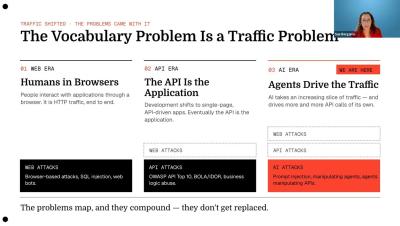
The Governance Gap: How the EU AI Act Makes API Security a Compliance Imperative

Your legal team just handed you a 400-page document and said "figure out compliance." The EU AI Act is live, your organization falls under its scope, which is broader than many expect. Even non‑EU companies must comply if their AI systems are used, deployed, or produce effects within the European Union. In practice, that means that global organizations building or integrating AI models cannot treat the Act as a regional regulation.

Types of AI Guardrails and When to Use Them (2026)

The types of AI guardrails are input guardrails, output guardrails, security guardrails, ethical guardrails, and operational guardrails, each positioned at a different failure point across an inference pipeline. Gartner’s research found that 30% of generative AI projects don’t survive past the proof-of-concept stage, with weak risk controls cited as the leading reason. Most of those projects weren’t badly built. The models worked. The gaps were in what sat around them.

The Zero-Trust Audit: Protecting Financial Intelligence in the Cloud

Digital finance is shifting away from the old way of securing data. The old method relied on a strong perimeter to keep threats out. Once someone was inside the network, they often had free rein to move around. Cloud systems make that perimeter vanish because data moves between different apps and users constantly.