Security | Threat Detection | Cyberattacks | DevSecOps | Compliance

An API for MoQ: provision your own isolated relays

Last year, we enabled Media over QUIC (MoQ) on every Cloudflare server and opened the network for anyone to test. It provided a global MoQ endpoint, but not the isolation and access controls needed to run an application. Today, we’re adding those isolation and access controls. The new MoQ provisioning API lets you create an isolated relay for your application and issue separate credentials for publishers and subscribers.

The Hugging Face Incident: A CISO Wake-Up Call for the Agentic Era

Earlier this month, Hugging Face, an AI and machine learning platform company, revealed that an autonomous AI system had breached part of its production environment. The intrusion began in the platform’s dataset-processing environment and eventually involved higher-level access, credential exposure, and movement into internal clusters.

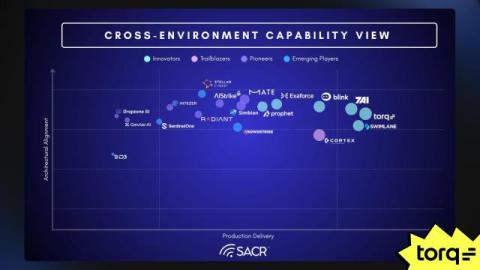
Torq Named a Leading Innovator in SACR 2026 AI SOC Market Report

Software Analyst Cyber Research (SACR) just published its 2026 AI SOC Market Report, offering an independent assessment of vendors competing in what has rapidly become the most consequential category in enterprise security. Torq features prominently, and the report’s framing is worth unpacking because it illuminates what makes the AI SOC category hard to evaluate and why Torq’s approach is consequential.

Building and Enforcing an AI Acceptable Use Policy

An AI acceptable use policy (AUP) is a formal set of rules that defines how employees can safely and responsibly use AI tools in the workplace. Its purpose is to encourage AI-driven productivity while protecting the organization from data leaks, intellectual property exposure, compliance violations, and the security vulnerabilities that unsanctioned AI usage introduces. Every organization deploying or permitting AI tools needs one. ‍

5 Best Sustainable Mailers for E-Commerce Businesses in 2026

Sustainable packaging has become a priority for ecommerce brands, but finding mailers that are genuinely eco-friendly is not always straightforward. The best sustainable mailers need to balance several factors: protecting products during shipping, representing your brand professionally, and meeting real environmental standards instead of relying on unclear "green" claims.

Best Custom Poly Mailer Providers for Online Retail Businesses in 2026

Your poly mailers are doing more work than you think. The best custom poly mailer providers don't just ship your product, they ship your brand. After reviewing dozens of options across the ecommerce packaging space, a clear pattern emerged: brands that struggle most are dealing with MOQ minimums that don't match their order volume, print colors that shift between runs, and "eco-friendly" claims that fall apart under shipping stress. This guide covers five providers worth knowing, with honest context on what each one actually does well.
Featured Post

Four Excuses That Are Leaving Your Data Exposed to AI Risk

The generative AI revolution isn't on the horizon. It's already reshaping the way your employees work. Across every industry, workers are adopting AI-powered productivity tools at a pace that far outstrips most organisations' security and governance programmes. The question is no longer whether your organisation will use AI, but whether you're prepared to use it securely. The challenge is real, but so are the misconceptions that keep organisations from acting. Let's break down the four most common excuses and explore what it takes to build a data security foundation ready for the AI era.

OpenMatter Network Calls on Enterprise Leaders to Rethink AI Security Before the Next Rogue AI Crisis

The growing number of high-profile AI security incidents making headlines around the world are not simply cybersecurity failures. They are architectural failures, according to OpenMatter Network Co-Founder and CEO Renee Davis. Davis said that instead of asking how to make artificial intelligence more secure, enterprise leaders should be asking a far more fundamental question: Is the architecture itself capable of governing autonomous intelligence?