Security | Threat Detection | Cyberattacks | DevSecOps | Compliance

Generative AI security risks every enterprise should prepare for

Over time, we have become increasingly accustomed to using AI in our daily work. We send customer data to ChatGPT for analysis, share customer emails to draft responses, or ask Claude to generate code for enterprise applications. All of this can happen within an enterprise environment. This is what generative AI is designed to do. It creates content for us, from text and code to images and videos.

Record of Processing Activities (RoPA): How to build and maintain it

Accelerating security solutions for small businesses‍ Tagore offers strategic services to small businesses. A partnership that can scale‍ Tagore prioritized finding a managed compliance partner with an established product, dedicated support team, and rapid release rate. Standing out from competitors‍ Tagore's partnership with Vanta enhances its strategic focus and deepens client value, creating differentiation in a competitive market.

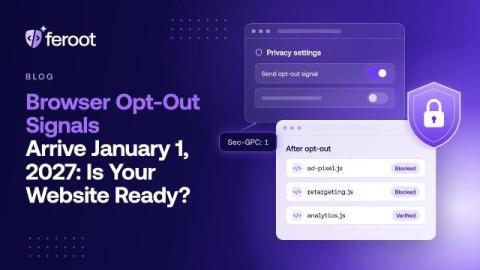
Browser opt-out signals arrive at scale on January 1, 2027. Here is how to know your site honors them.

If the CCPA covers your business, you must treat an opt-out preference signal as a valid request to opt out of the sale or sharing of personal information. "Sharing" includes disclosures for cross-context behavioral advertising, which is what most advertising pixels do.

CIPA for websites in 2027: what the law still covers, and how to show what your site does

If people in California use your website or app, assume CIPA applies. CIPA was written for telephone wiretapping, and courts have applied its "technology-neutral" terms to online communications for years. The business's location does not matter; the visitor's does.

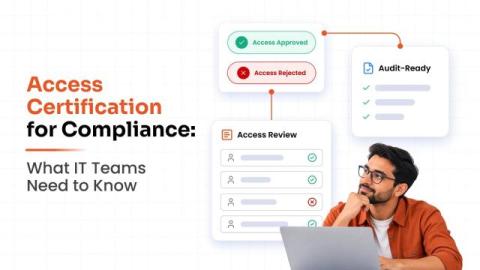
Access Certification For Compliance: What IT Teams Need To Know

An access review can look complete on paper. The campaign closed, reviewers made their decisions, and the records were saved. Then an auditor asks: Who reviewed this access, what did they decide, and what happened afterward? That question can reveal problems that a completed review does not show. A rejected permission may still be active. An exception may have no clear reason. The team may also struggle to show when the review happened.

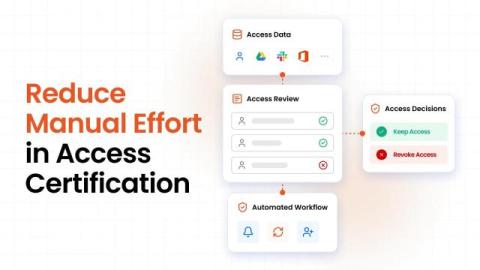
How to Reduce Manual Effort in Access Certification

Access certification can take more time than the actual review. A manager may need to review access for 50 employees. Before that happens, someone has to gather the access data, identify the right reviewer, send the requests, and track the responses. If the reviewer revokes access, someone may also need to remove it from the application. Now repeat that across hundreds of users and several applications. The workload adds up quickly.

Under CPS 234, Your APIs Are Information Assets. Can You Prove You're Protecting Them?

APRA's information security standard already covers the APIs your agents run on. Most institutions cannot yet evidence it. All APRA-regulated institutions in Australia are bound to meet CPS 234. This is the Prudential Standard for Information Security. Whether that's a bank, insurance provider, or super fund, they all fall under CPS 234, as do their third-party providers. Together, these institutions hold trillions of dollars in assets.

Ep. 87 - Citrix NetScaler Zero-Days: Code Execution on Your Edge Box, No Login, No Special Config

Two Citrix NetScaler zero-days, CVE-2026-88771 and CVE-2026-88772, were exploited in the wild before a patch existed, and 88771 hits every configuration with no login required. Tova Dvorin and Adrian Culley break down Citrix bulletin CTX697096 and all eight CVEs, why this is NetScaler’s third CISA KEV entry in five weeks, and why patching won’t tell you whether you were already breached.

CISO Risk Intel Brief: Record Patch Volume, Edge Zero-Days, and AI-Accelerated Supply Chain Pressure

This briefing examines material developments across the most recent seven-day period and the preceding thirty days. It is written for executive and board consumption and focuses on residual risk, control effectiveness, material exposure, and the practical implications for application security programs, software supply chain integrity, edge and identity systems, and the accelerating role of AI in both attack and defense.