Security vs. Compliance: What's the Difference?

Security and compliance – a phrase often uttered in the same breath as if they are two sides of the same coin, two members of the same team or two great tastes that go great together. As much as I would like to see auditors, developers, and security analysts living in harmony like a delicious Reese’s cup, a recent gap analysis that I was part of reminded me that too often the peanut butter and chocolate sit alone on their own separate shelves.

How to Marie Kondo Your Incident Response with Case Management & Foundational Security Procedures

Marie Kondo, a Japanese organizational consultant, helps people declutter their homes in order to live happier, better lives. She once said: Similarly, in security, operational teams are constantly bogged down by a “visible mess” that inhibits their ability to effectively secure their organization.

Honeypods: Applying a Traditional Blue Team Technique to Kubernetes

The use of honeypots in an IT network is a well-known technique to detect bad actors within your network and gain insight into what they are doing. By exposing simulated or intentionally vulnerable applications in your network and monitoring for access, they act as a canary to notify the blue team of the intrusion and stall the attacker’s progress from reaching actual sensitive applications and data.

ECS Fargate threat modeling

AWS Fargate is a technology that you can use with Amazon ECS to run containers without having to manage servers or clusters of Amazon EC2 instances. With AWS Fargate, you no longer have to provision, configure, or scale clusters of virtual machines to run containers. This removes the need to choose server types, decide when to scale your clusters, or optimize cluster packing. In short, users offload the virtual machines management to AWS while focusing on task management.

Effective Cyber Crime Investigations Demand Thoughtful Disclosures

The lifecycle of a cyber security incident can be broken up into three stages: investigation, remediation and notifications/disclosures, the latter often being the most complex, time consuming and costly. Disclosure challenges are compounded due to breach notification laws that require initial statements before the investigation is completed and the incident is fully contained. They can also stem from improper interpretation of digital forensics findings.

Automate container security with Dockerfile pull requests

Integration with your source code managers and issuing pull requests to fix issues has been part of Snyk’s success in helping our customers fix application dependencies for several years. Now, we want to help you address container security in a similar way. We’re happy to share that we are extending Snyk Container by helping you automatically fix issues in your Dockerfile to keep an up-to-date base image at all times.

Detecting Cobalt Strike with memory signatures

At Elastic Security, we approach the challenge of threat detection with various methods. Traditionally, we have focused on machine learning models and behaviors. These two methods are powerful because they can detect never-before-seen malware. Historically, we’ve felt that signatures are too easily evaded, but we also recognize that ease of evasion is only one of many factors to consider.

How to Fix The Top 10 Critical CVEs That Can Lead To A Data Breaches

A typical organization’s environment consists of a myriad of applications and services, each with its own unique set of ongoing vulnerabilities and flaws that could ultimately lead to a data breach. This can make IT security and operations’ job difficult, as different departments and groups within a company may utilize specific software offerings to accomplish their job functions.

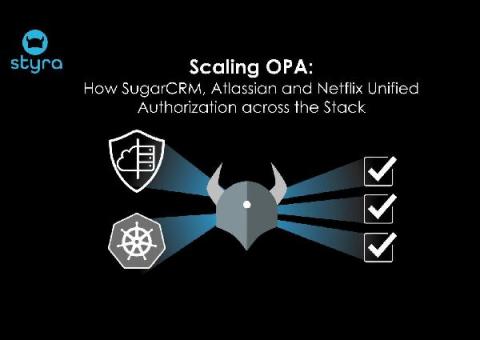
Scaling OPA: How SugarCRM, Atlassian and Netflix Unified Authorization across the Stack

Open Policy Agent (OPA), now a graduated project from the Cloud Native Computing Foundation, has become the open-source tool of choice for millions of users, who leverage it as a standard building block for policy and authorization across the cloud-native stack. Given the flexibility of OPA — with practically limitless deployment options — it has been adopted for dozens of use cases across hundreds of companies.