Splunk SOAR Feature Video: Playbooks
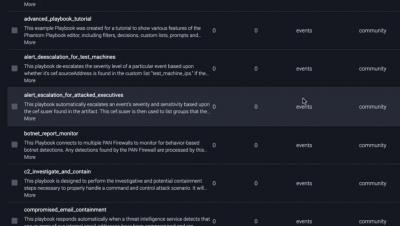
Playbooks are the codification of your Security Operations (SecOps) plan. In practice, they’re high-level Python scripts that Phantom interprets in order to execute your mission.

The last 12 months have seen massive upticks in the frequency, sophistication, and intensity of cyberattacks. This comes at a time when business operations have changed drastically with shifts to more cloud resource use in order to increase access, availability, productivity, and profits.
Companies and organizations of all sizes need mobile technology built for the rigors of business—it’s a must for businesses seeking to stay competitive. Enterprise-grade mobility offers additional business options, features, and services, helping companies perform functions beyond just enabling employees to work remotely.
If you’re responsible for stopping cyber threats within your organization, your job is more challenging than ever. The exposure to threats for any organization continues to escalate, and breaches are occurring every day. Consider: If your company doesn’t have a security operations center (SOC), it may be time to change that. In fact, a recent study indicates 86% of organizations rate the SOC as anywhere from important to essential to an organization's cybersecurity strategy.
It should come as no surprise that the federal government takes cybersecurity compliance quite seriously. After all, federal agencies manage massive stores of data related to national and international security and public health, as well as the personal information of most residents of the country. FISMA (the Federal Information Security Management Act) defines a set of security requirements intended to provide oversight for federal agencies on this front.
In early March, Microsoft reported a large, coordinated attack that exploited critical vulnerabilities in Exchange Server 2010, 2013, 2016 and 2019 in an attempt to exfiltrate credentials and other sensitive information from organizations’ mailboxes. Microsoft attributed this attack to a sophisticated Chinese group code-named HAFNIUM. The first detected attempts date back to January 2021.
According to DBIR, in 2020, 22% of the data breaches involved phishing attacks. Phishing attacks are one of the oldest and most loved tricks of cybercriminals to manipulate humans with the illusion of reliability to gain access or execute malicious activities for their privileges on the target.
The FBI is reminding organisations of the serious threat posed by business email compromise (BEC) scams, declaring that it caused over $1.8 billion worth of losses to businesses last year. The newly-published annual cybercrime report from the FBI’s Internet Crime Complaint Center (IC3) reveals that it had received a record number of complaints and claims of financial loss – with internet crime causing more than $4 billion in losses.