Journey to Impactful Intelligence
Join Cyberint's CEO as he takes on a journey to Impactful Intelligence.

Roughly 212.4 million Americans were affected by data breaches in 2021, according to a report by Surfshark. Using a weak password is one of the root causes of a data breach. Passwords that contain dictionary words may be easier to memorize, but this also makes them much less challenging for attackers to crack. A password generator removes the task of creating unique passwords for each platform.
The CashApp data breach was caused by a former employee who accessed customer financial reports as an act of revenge against the company after their employment was terminated. According to the April 2, 2022 filing with the Securities Exchange Commission by Block (CashApp’s parent company), the employee required access to the financial reports as part of their daily duties.
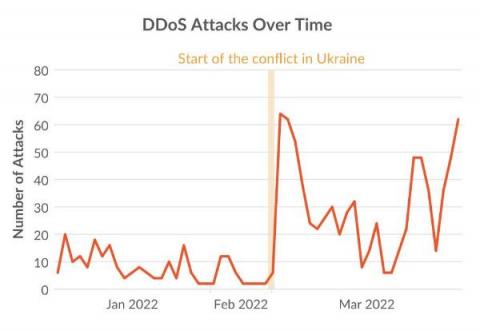
The conflict between Russia and Ukraine includes a cyberwarfare component with government-supported threat actors and civilian hacktivists taking sides. The goals of disrupting IT infrastructure and utilities have led to a 4-fold increase in DDoS attacks between 4Q21 and 1Q22. Over 150,000 volunteers have joined anti-Russian DDoS campaigns using container images from Docker Hub.
HIPAA compliance is regulated by the Department of Health and Human Services (HHS) and enforced by the Office for Civil Rights (OCR). In 2013, the final Omnibus rule was enacted, binding business associates - or third-party vendors - to the Health Insurance Portability and Accountability Act. This modification added another level of compliance complexity to an industry not accustomed to operating in the cybersecurity domain - the healthcare industry.
Google Drive is an integral part of Google Workspace (formerly known as G Suite). With over 6 million customers and over 2 billion monthly active users, Google’s platform is the world’s largest collaboration tool for companies both large and small. In Google Drive, employees across the world create, edit, and share files on a daily basis. This, however, does not occur without the risk of data leakage.
We are pleased to announce that Netskope Private Access (NPA) is now available to test drive, meaning you can experience a truly modern zero trust network access (ZTNA) solution firsthand with no commitment and no software to download or install. Selecting and implementing the right ZTNA solution is a crucial part of the SASE journey, and our goal is to make your process of evaluating Netskope Private Access as easy as possible.