How Cyberwar is Wreaking Havoc on Small Businesses

As the world continues to change, so does the nature of warfare, where the Internet has become the main battleground for most of the world’s conflicts. But where is this headed? Cyberattacks have been around for much longer than you may think. The first worm was created by Bob Thomas in 1971: a malicious software that replicates itself, using some of the first world computers to spread to others.


Bypassing MFA with the Pass-the-Cookie Attack

Multi-factor authentication (MFA) is a great way to increase both on-premises and cloud security. With MFA in place, when a user logs on, they are required to provide not only their user ID and password but another authentication factor, such as a code sent to their phone. This process reduces the attack surface by preventing adversaries with stolen user credentials from logging on. However, MFA is not a cybersecurity panacea.

The Cost of Stolen Credentials

Credentials are a set of attributes that uniquely identify an entity such as a person, an organization, a service or a device. According to IBM’s Cost of a data breach report, compromised credentials were the primary attack vector of 19% of the data breaches the study highlights. A 2021 data breach report by ITRC reveals that cyberattacks, including credential stuffing, made up 88% of data breaches in Q3 of 2022.

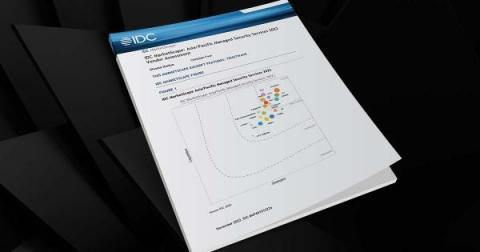
Trustwave Recognized as a Leader in IDC MarketScape: Asia/Pacific Managed Security Services

Trustwave has been named as a Leader the IDC MarketScape: Asia/Pacific Managed Security Services 2022 Vendor Assessment (doc #AP4910122e, October 2022). According to the IDC MarketScape, “Trustwave has been aggressively working with enterprises and midmarket customers to offer effective MDR services that are easy and simple to implement with affordable pricing options.”

The Simply Cyber Report: November 29, 2022

Most commonly used passwords in 2022. A new red teaming tool called Nighthawk. Avast has published a report on the Venomsoft malware chrome extension. WhatsApp data leak: 500 million user records for sale. Recommendations that statistically reduces the number of cyber incidents experienced by a business by a whopping 85%.

Digital Strategies For A Fast Approaching Future

The future is arriving faster than you think. By 2030, fully automated vehicles are expected to account for 12% of global vehicle sales—a number that hikes to 20% for new vehicle sales in China. Tomorrow, 1st December, the first electric, semi-autonomous lorries with a range of 500 miles roll off the Tesla production line – headed to Pepsi.

Hackathon! How can blockchain solve supply chain visibility challenges?

PA Consulting recently joined forces with RKVST to host a Hackathon, looking to identify new and innovative propositions for digital supply chains. Could the teams of PA consultants and analysts identify opportunities to help their clients using RKVST technology? Short answer: YES! Many of today’s business challenges can be addressed with a reliable evidence ledger. If you want the long answer, read on.

Adventures in Open Source: A conversation about the journey and lessons learned

Open source as a philosophy was born alongside the Internet at a time when the world was much more optimistic. The naysayers said it couldn’t be done, that it wasn’t secure, and that it was just a matter of time before all these projects failed. Fast forward 30-40 years and the open source ecosystem is thriving. Linux runs on the top 500 super computers in the world, almost 95% of the world’s servers, and 85% of all smart phones.

Data Encryption Methods & Types: Beginner's Guide To Encryption

Data encryption is one of the many ways organizations can protect their data. Encryption turns plaintext (readable data) into ciphertext (randomized data), which requires the use of a unique cryptographic key for interpretation. In other words, encryption is a security measure used to scramble data so that it can only be read by authorized personnel.

Fuzzing Java Applications With CI Fuzz | Gradle

In this tutorial, I will show you how to set up and run a fuzz test on a Java application, with the CI Fuzz CLI using the Gradle integration. The CI Fuzz CLI is an easy-to-use fuzzing tool, that enables you to integrate and run fuzz tests directly from your command line. I chose this tool for this tutorial, on how to set up a fuzz test, as it is particularly user-friendly, and as it allows developers to set up and run a fuzz test with only three commands.