
How Modern POS Platforms Help Retailers Reduce Operational Risk
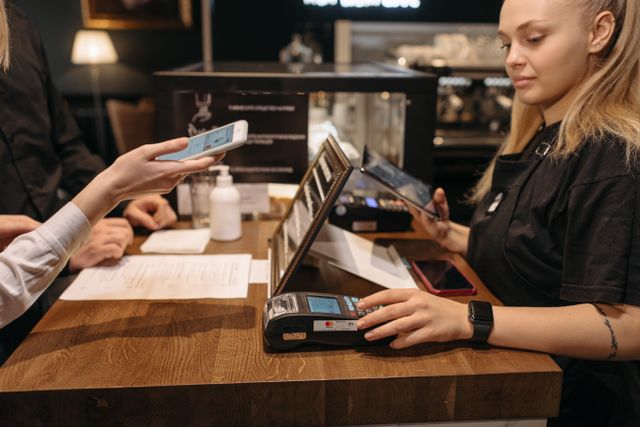
Ask a store owner to name their biggest operational risk, and you'll usually hear about the dramatic stuff. A break-in. A card-skimming scam. The walk-in cooler that quits at 2 a.m. on a holiday weekend. Those things happen, and they hurt. But they're rarely what bleeds a retail business dry.
The real damage is quieter. A miscounted case here. A refund that never made it into the system there. A premium bottle that was left through the back door with someone's cousin. A permit that lapsed weeks ago, noticed only when the inspector points at it. None of these make for a good story. All of them add up.
Stop Treating The POS As A Register
See the terminal as a glorified cash drawer, and you'll shop on price, asking only how fast it rings people up. See it as the nervous system of the operation, and the questions get sharper. What does it record? Who's allowed to override it? What does it flag on its own, before anyone asks?
Retail tech has been drifting this way for years, pulling payments, inventory, and reporting into one place instead of a row of tools that don't talk to each other. Technology is reshaping retail operations through consolidation, and lower risk is mostly a side effect of it.
Layer One: Inventory And Shrink
The National Retail Federation put annual shrink at roughly $112 billion, about 1.6% of sales. Theft gets the headlines. But a real chunk of that total isn't theft at all. It's process: sloppy counts, pricing slips, deliveries logged wrong, breakage that nobody wrote down.
That difference is the whole point. You can't fix what you can't see, and a register that only adds up sales tells you nothing about why your shelf count and your system count keep wandering away from each other.
For a beverage shop, that means counting singles and full cases as different things, capturing the breakage that rides in on every delivery, and seeing which high-end spirits move versus which just gather dust. When the physical count and the recorded count disagree, you get a number worth chasing instead of a shrug at quarter's end.
Layer Two: Cash And Transaction Integrity
The second layer is the one owners least want to talk about, because it tends to involve their own people. Voids. No sales. Manual discounts. The 11 p.m. refund. Everyone is a legitimate function, and everyone is a side door. A drawer with no audit trail runs on the honor system, and honor systems leak.
The security world has covered insider threats for years, and a retail floor is almost the perfect setup: trusted access, routine transactions, slim odds of getting caught. A good POS shrinks that gap by stamping every exception with a time and an employee ID. A run of odd refunds on one cashier's login stops being a hunch and turns into a report you can do something about.
Age checks, restricted hours, excise filings. A missed ID isn't a slap on the wrist. It's the kind of slip that costs a license. This is where category-specific tools earn their keep. A purpose-built liquor store POS, for example, can freeze a sale until an ID gets scanned or a manager signs off.
Layer Three: Payment And Data Security
Then comes the layer the rest of the security field loses sleep over. The second you take cards, you're holding something criminals want, and you've picked up PCI DSS obligations whether or not you've ever read them. A breach isn't a rounding error either. IBM's research puts the average cost of a data breach in the millions, which is enough to close a small shop for good.
Old terminals are usually the soft spot. They seldom receive patches, use out-of-date software, and retain card information they were never meant to. In order to prevent sensitive numbers from ever sitting on your hardware in a readable form, more recent platforms rely on tokenization and point-to-point encryption.
The broader cyber threats facing the retail sector keep shifting, and plenty of retailers have been breached through a third party they trusted. But holding less data means a smaller prize, and a smaller prize draws less effort.
Where The Risk Doesn't Just Disappear
Anyone pitching a POS as a cure-all is overselling, and saying so out loud is part of why this matters.
Lose your connection on a busy Friday, and you'd better know the platform keeps ringing sales offline and syncs later. Uptime is part of your risk picture, which is why operational resilience, the plain ability to keep running through a disruption, belongs in the buying conversation and not only in a security memo.
The market's crowded, too. Square, Clover, Lightspeed, and a long bench of niche vendors all swear they'll cut your friction. They aren't the same. A system tuned for restaurants thinks in tables and tickets. One tuned for regulated retail thinks in age gates, deposits, and case-break pricing.
And software never fixes a broken habit. Share one login across the staff, and the audit trail is worthless. Ignore the exception reports, and the data just stacks up unread. Technology lowers the floor on risk. It can't raise the ceiling on discipline.
A Short Buying Checklist
If you're weighing systems with risk in mind, not just features, a handful of questions cut through the sales talk fast:
- Does every transaction, void, and override trace back to one employee login?
- Can it enforce compliance rules like age checks and selling hours, or only nag staff to remember them?
- How does it treat card data, and can the vendor explain their encryption and PCI stance in plain words?
- Does it keep selling when the internet drops, and how does it recover afterward?
- Can you reconcile system inventory against a physical count without dumping it into a spreadsheet and crossing your fingers?
Conclusion
Operational risk in retail rarely shows up as a single catastrophe. It's a hundred small leaks, and most of them run straight through the counter. That's the part worth sitting with. On their own, the leaks are manageable, but if they are not monitored, they compound and, by the time they show up in the year-end figures, the money has already been lost.
The best thing a modern point-of-sale system can do is make those leaks evident while you still have time to take action and transform compliance from something you hope employees remember into something the system performs automatically.
Instead of using the terminal as your quickest cash register, think of it as your least expensive risk management tool. Purchase the one that best suits your real sales process and pay attention to what it says.