Choosing Cyber Risk Remediation Software in 2023 (Key Features)

Effective remediation management is critical as it has the greatest positive influence on your cybersecurity risk management lifecycle. Efficient remediation ensures vulnerabilities are completely addressed, supporting compliance management efforts and a healthy security posture, reducing overall data breach risks. Poor remediation burdens security teams with avoidable incident responses, distracting them from emerging cyber threats bloating remediation backlogs.


New Feature: Risk Evaluation

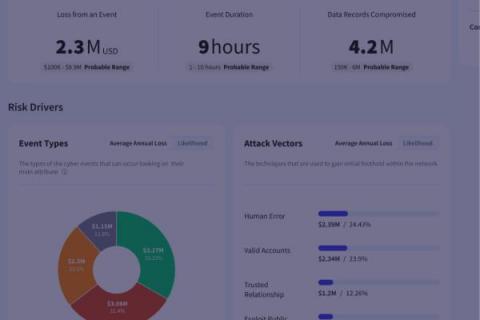
Our latest update incorporates risk evaluation built upon financial quantification. A critical component of the risk evaluation feature is the top risk matrix, which provides risk metrics for tracking, benchmarking, and reporting. By analyzing risk drivers through the ATT&CK MITRE framework’s initial vectors and event types, Kovrr provides a comprehensive breakdown that enables a detailed understanding of the likelihood and the potential of risks.

The Growth in Job Posting Spear Phishing Techniques: A Case Study

In recent years, fake job hiring scams have become a common form of social engineering. Threat actors use these scams to steal money, launder money, commit identity theft, or carry out other fraudulent or illegal activities. The motives of threat actors behind fake job hiring scams vary. Some are simply looking to make a quick buck, while others are more interested in stealing personal information or committing identity theft.

Cyber Security Risk Modeling: What Is It And How Does It Benefit Your Organization?

As cyber security threats proliferate, cyber risk conversations are no longer limited to the Security Operations Center (SOC); they command the attention of the C-suite and the boardroom. Ultimately, cyber-crime is a significant and prominent issue. The average cost of a data breach in the U.S. has soared to nearly $9.44 million this year. Since 2018, cyber insurance carriers report that incident-related claims increased by an astonishing 486%, the majority being ransomware-related.

Unlocking efficiency: a strategic approach to handling Kubernetes security findings

Kubernetes has emerged as the de facto standard for container orchestration, enabling organizations to manage and scale their applications efficiently. However, with this increased adoption comes the need to address security concerns within Kubernetes environments. The following blog post will explore the concept of ignoring security findings as a means of prioritizing fixes effectively.

Darknet Diaries host Jack Rhysider talks about hacker teens and his AI predictions

It’s human nature: when we do something we’re excited about, we want to share it. So it’s not surprising that cybercriminals and others in the hacker space love an audience. Darknet Diaries, a podcast that delves into the how’s and why’s and implications of incidents of hacking, data breaches, cybercrime and more, has become one way for hackers to tell their stories – whether or not they get caught.

AI at Egnyte: The First Ten Years

In the 1960s, Theodore Levitt published his now famous treatise in the Harvard Business Review in which he warned CEOs of being “product oriented instead of customer oriented.” Among the many examples cited was the buggy whip industry. As Levitt wrote, “had the industry defined itself as being in the transportation business rather than in the buggy whip business, it might have survived. It would have done what survival always entails — that is, change.”

The power of self-service and just-in-time access in PAM

The concept of privileged access management (PAM) has evolved over time, starting with the idea of role-based access control (RBAC) where permissions are assigned based on job roles. However, organizations soon realized that defining concrete roles for individuals was challenging due to the flexible and evolving nature of businesses. This led to the need for automating the access request process and empowering employees to self-serve and elevate their access based on their needs.