Identity Is the New Root Access: Rethinking Zero Trust in DevOps Environments

Amal Mammadov is a cloud security and detection engineering specialist working at the frontlines of identity-driven threats in modern cloud environments. His work focuses on how attackers exploit permissions, tokens, and machine identities, often without triggering traditional security controls. In this conversation, he breaks down why Zero Trust is no longer about networks but about controlling identity in fast-moving DevOps systems.

Risks of Using Public Wi-Fi for Crypto Transactions

As cryptocurrency adoption continues to rise, the ease of managing assets through mobile wallets and trading platforms has brought a new layer of convenience. However, this accessibility can also lead to overlooked security risks, especially when users rely on public Wi-Fi networks for transactions. Airports, coffee shops, hotels, and public transportation hubs may offer free internet access, but these networks present significant vulnerabilities that can expose sensitive information.

How to Keep Your Business Running When Tech Goes Down

Picture this: It's a regular Tuesday morning. Your team is logging in, emails are starting to fly, and then-boom-your network crashes. The phones stop ringing, orders can't be processed, and your employees are left staring at loading screens. It's frustrating, it's costly, and it happens more often than many businesses like to admit. Technology is the backbone of most operations today, but it's far from infallible. Power outages, hardware failures, cyberattacks-any of these can grind your systems to a halt. The worst part? It never seems to happen when it's convenient.

From Code to Clients: Turning Tech Expertise into Market Presence

You've spent years mastering your craft-writing clean, efficient code, solving gnarly backend problems, or architecting secure IT infrastructures. But here's the rub: even the most technically gifted professionals often hit a wall when it's time to grow beyond the code and into the client space. You're not alone if you've ever thought, "I'm good at what I do-why aren't clients lining up?"

Embeddings vs. Generative Models #AI #RAG #AIExplained #MachineLearning #OpenAI #LLMs #AIsecurity

Not all AI models are made to generate. Some are built to understand. Here’s the key difference: Generative models take in text and produce new text (think ChatGPT). Embedding models take in text and translate it into numbers, vectors that capture meaning. Why does that matter? Because embedding models let you turn documents into searchable vectors. That means when someone asks a question, you don’t need to search the whole doc, you just find the most relevant chunks based on meaning. And that’s what makes things like RAG (Retrieval-Augmented Generation) powerful and efficient.

Continuous Threat Exposure Management (CTEM)

Continuous threat exposure management (CTEM) is a structured framework for continuously assessing, prioritizing, validating, and remediating vulnerabilities across an organization’s attack surface, enabling you to respond effectively to the most pressing threats over an ever-expanding attack surface. Reactive security is a temporary fix, not a sustainable solution.

Container Security is Hard - Aikido Container Autofix to Make it Easy

Container security starts with your base image. But here’s the catch: In this post, we’ll explore why updating base images is harder than it seems, walk through real examples, and show how you can automate safe, intelligent upgrades without breaking your app.

A Subtle Form of Siege: DDoS Smokescreens as a Cover for Quiet Data Breaches

DDoS attacks have long been dismissed as blunt instruments, favored by script kiddies and hacktivists for their ability to overwhelm and disrupt. But in today's fragmented, hybrid-cloud environments, they've evolved into something far more cunning: a smokescreen. What looks like digital vandalism may actually be a coordinated diversion, engineered to distract defenders from deeper breaches in progress.

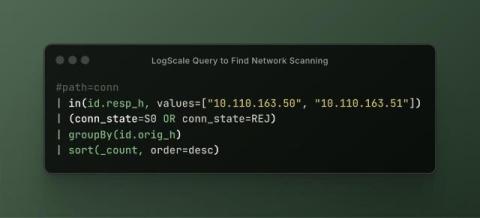
How to Threat Hunt for Volt Typhoon Using NDR

Whether they use custom implants for persistence, zero days for initial access, or live off the land (LOTL) to avoid detection, finding a state-sponsored adversary group can be a challenging proposition for defenders. This can be particularly true for adversaries that are sponsored by the People’s Republic of China (PRC). Historically, their focus has been on espionage and intellectual property theft.