OWASP Dependency Check: How Does It Work?

The Open Web Application Security Project (OWASP), is an online community that produces free, publicly available articles, methodologies, documentation, tools, and technologies in the field of web application security. Open source components have become an integral part of software development. According to Mend’s Risk Report, 96.8% of developers rely on open source components.
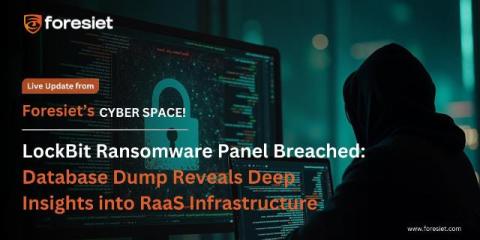
LockBit Ransomware Panel Breached: Database Dump Reveals Deep Insights into RaaS Infrastructure

The LockBit ransomware group's dark web infrastructure has suffered a major blow following a significant breach on May 7, 2025. This cyberattack targeted LockBit's onion-based infrastructure—including their affiliate and admin panels—and resulted in the complete defacement of the sites. The attackers left behind a taunting message: "Don't do crime, CRIME IS BAD xoxo from Prague," along with a link to a leaked MySQL database dump.

5-Step Plan for Prevention of Social Engineering Attacks

Cyber threats aren’t always about complex code or advanced hacking tools. Often, they start with a simple trick—convincing someone to click a link, share a password, or let someone into a secure area. This tactic is called social engineering. Social engineering is when attackers trick people into breaking security rules. Instead of hacking systems, they use lies, pressure, or fake trust to get what they want. These attacks work well because they target human emotions, not technology.

AI Just Rewrote the Rules of BEC: Are Your Defenses Ready?

Today, the average phishing email that lands in your CEO's inbox is flawless. It uses perfect grammar, contains an intimate understanding of your organization’s current business landscape, and ends with an urgent, contextually relevant request. This isn't the work of a typical cybercriminal; it's the hallmark of generative AI being weaponized, transforming social engineering from a numbers game into a targeted strike.

How Poor User Experience (UX) Can Undermine Your Enterprise Security

For years, cybersecurity has been chasing a future where passwords no longer exist. And yet, here we are in 2025—still resetting them, reusing them and getting breached because of them. The reality is this: despite all the talk about passwordless authentication, we still live in a password-dependent world. Credentials remain the No. 1 attack vector.

The MemcycoFM Show: Episode 1 - Disrupting AI-Powered Phishing, What CISOs Must Do Now

Welcome to the inaugural episode of our sparkling new podcast, The MemcycoFM Show. Your new go-to for everything digital deception, brandjacking, and real-time cybersecurity defense. In our first episode, two of our own Memcycans discuss why AI-powered phishing is changing the threat landscape and what CISOs must do to stay ahead. Powered by Memcyco’s mission to protect trust in the digital world.

The Forgotten Threat: How Supply Chain Attacks Are Targeting Small Businesses

When people hear "supply chain attack," their minds often go to headline-grabbing breaches. But while analysts, CISOs, and journalists dissect those incidents, a more tactical and persistent wave of attacks has been unfolding in parallel; one that's laser-focused on small businesses as the point of entry. This isn't collateral damage. It's by design.