Security | Threat Detection | Cyberattacks | DevSecOps | Compliance

The New Security Risks of the Agentic Development Lifecycle

For years, application security ran on a simple assumption: software moves through a lifecycle, and security inspects the artifacts as they travel from development to production. Developers plan, write code, commit it, test it, scan it, and ship it. Every control built, including pull request reviews, CI/CD gates, and post-commit scanning, assumed a human was sitting between each step, making decisions a tool could later check.

Why Your Security Investment Isn't Reducing Risk (+What Actually Does)

Security budgets have never been higher. The average enterprise now runs 50 security tools, and most teams added more last year than the year before. And yet, alert fatigue is at the breaking point. Coverage gaps in mobile and API environments continue to widen. The exploitability problem at the center of most AppSec programs remains unsolved. Breaches keep happening. Risk scores don't move.

Five Signals, One Answer: Why Single-Signal AI Security Always Fails

The security industry hasn’t been wrong about agentic AI risk. It’s been incomplete. There’s no shortage of single-signal solutions for the problem: tools that analyze prompts for malicious content, platforms that monitor data access patterns, capabilities that assess model behavior for signs of manipulation. Each captures something real. None is sufficient on its own.

How strategic CISOs innovate with AI despite limited resources

In previous Strategic CISOs sessions, I’ve spoken with security leaders from Andesite, IMO Health, and Cribl. They’ve built trusted programs where GRC functions as a business driver and customer assurance accelerates revenue. But every CISO I speak with is still fighting some version of the same fight. They have more obligations, more scrutiny, and more AI-related risk, but they do not have more people, more budget, or more hours in the day.

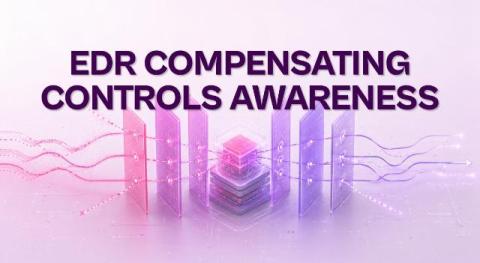
EDR Compensating Controls Awareness

Seemplicity’s new EDR Compensating Controls Awareness feature reduces vulnerability backlogs by embedding live, asset-level endpoint telemetry directly into remediation workflows. By automatically mapping EDR policy configurations against specific CVE attack techniques, the platform determines if an active endpoint control already neutralizes a threat. Each finding is dynamically assigned a clear protection outcome, complete with an auditable evidence trail.

How Autonomous Pentesting Finds What Scanners Miss

The pitch is familiar enough that most security leaders tune it out. It sounds like marketing language, just an updated way of saying “a better scanner.” This post is here to bust the myth behind that framing. Both scanners and autonomous pentesting agents look the same from the outside. Both crawl your application, both send payloads, and both produce findings. But they operate on completely different assumptions of what constitutes a vulnerability.

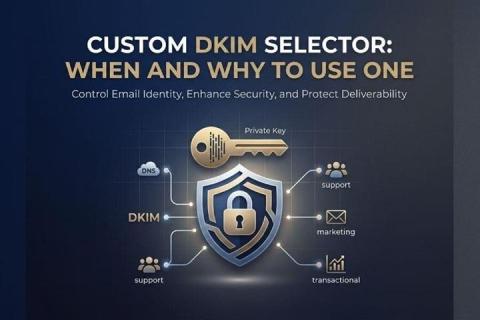
Custom DKIM Selector: When And Why To Use One

A DKIM selector is a label used by DomainKeys Identified Mail to locate the correct public key in DNS during the email authentication process. DKIM works by adding a DKIM signature to outgoing messages. That digital signature is created with a private key controlled by the sending service, while receiving systems use the matching public key published in your DNS records to validate the message.

Unauthorized Drones at Stadiums: a Security Checklist for Major Event Venues

Unauthorized drones have been a persistent security planning challenge for stadiums, arenas, and major event venues in recent years. A single UAS near or over a packed venue can disrupt operations, trigger public safety concerns, delay programming, or force security teams into fast decisions in a complex environment.

Cloudpepper Review: The Best Managed Odoo Hosting in 2026

Most Odoo hosting gets sold to you as a feature list. Workers, storage, a price next to a checkmark. Then you actually run the thing and discover the list never mentioned the parts that hurt: backups you can't download, a database you can't touch, a server you don't really control, and a bill that climbs every time you add a user. Cloudpepper takes the opposite approach. It is managed Odoo hosting where the platform handles the operational work and you keep the control. This review walks through what that means in practice, where it fits, and where it doesn't.