Security | Threat Detection | Cyberattacks | DevSecOps | Compliance

Automated vulnerability remediation: A governance, validation, and rollout guide for enterprise teams

Automated vulnerability remediation uses policy-driven workflows to execute approved remediation actions, including patch deployment, software updates, and configuration changes, consistently across managed assets. Within a broader vulnerability management program, it helps teams close the gap between identifying an exposure and safely resolving it at scale.
Arctic Wolf Product Updates: May 2026

Security teams are being asked to operate at machine speed while still making decisions they can trust. Attackers move faster. Exposure changes continuously. Manual workflows struggle to keep up. Following the recent announcement of the Aurora Superintelligence Platform and Aurora Agentic SOC, Arctic Wolf continues to advance its portfolio with new capabilities that help teams see risk clearly, prioritize what matters, and act with confidence.

Miasma: Red Hat Cloud Services npm Packages Hit by a Mini Shai-Hulud-Style Campaign

On June 1, 2026, multiple npm packages in the @redhat-cloud-services scope were published with malicious versions. Each tarball ships a 4.1 MB obfuscated JavaScript file added to package.json as a preinstall hook. The hook runs a multi-stage loader that ends in a Bun-executed credential stealer hitting AWS, Azure, GCP, HashiCorp Vault, Kubernetes, GitHub Actions OIDC, npm, Bitwarden, and 1Password.

AI-SPM Tools for Attack Detection: Where Posture Meets Runtime

Every AI-SPM tool runs posture and detection with a single arrow: runtime evidence flowing back to rank posture findings. The load-bearing direction runs the opposite way, and almost nothing runs it — posture flowing forward to tell the detection layer what an attack even looks like.

What to Log for AI Agent Activity: The Minimum Viable Audit Trail

The first time a security team needs an AI agent audit trail is usually 72 hours after the agent has already done something it shouldn’t have. Detection fires. Someone pulls every relevant log from the SIEM (Kubernetes audit, container runtime, cloud audit) and three hours in realizes the events that actually matter were never written. Which prompt triggered the tool call. Which parameters the agent passed. Which output left the cluster.

Why Your Detection Latency Budget Determines Blast Radius

Most teams buy detection on a single number. The datasheet says “millisecond detection,” the proof-of-concept fires the instant a test payload lands, and the box gets checked. Then a real AI agent incident runs in production, and the postmortem shows the attack completed its objective well before anyone contained it, even though the alert, technically, fired in milliseconds. The number was real. It just measured the wrong thing.

Simplifying Global Connectivity: How 11:11 Circuit Management Transforms IT Operations

Managing global connectivity is a lot like trying to assemble a puzzle, where the pieces come from different manufacturers, each with its own shapes, colors, and instructions. You might eventually fit them together, but not without significant time, effort, and potential gaps. For IT teams tasked with navigating the complexities of global connectivity, these obstacles can slow progress and create inefficiencies that ripple across an organization.

How BlueVoyant's ASIM-First Strategy Simplifies Threat Detection in Microsoft Sentinel

Earlier this year, BlueVoyant adopted a new detection strategy built on the Advanced Security Information Model (ASIM). For those unfamiliar, ASIM is Microsoft's normalisation layer that standardises log data across products into consistent schemas. Our approach is simple: The result? Dramatically faster use case development and cleaner, more maintainable detection logic.

MCP vs. Traditional API Security: Why Your Existing Controls Don't Protect MCP-Powered AI Agents

Traditional API security protects deterministic systems with known endpoints and explicit actions, while MCP-powered AI agents operate through inferred intent, dynamic tool chaining, and natural language interactions. This requires MCP-specific security controls such as tool governance, behavioral monitoring, and semantic anomaly detection.

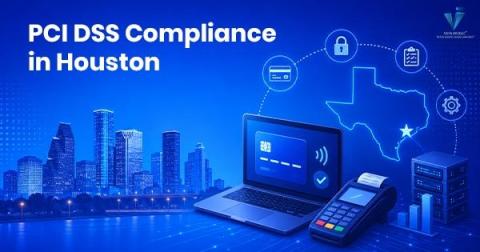
PCI DSS Compliance in Houston: The Complete 2026 Guide for Texas Businesses

Houston is one of America’s most commercially active cities — a Fortune 500 corridor, a booming technology sector, and tens of thousands of small and mid-size businesses processing credit and debit card payments around the clock. Every one of those businesses is legally bound by a set of security standards that most owners know surprisingly little about: the Payment Card Industry Data Security Standard, universally referred to as PCI DSS.