Security | Threat Detection | Cyberattacks | DevSecOps | Compliance

Command and Control Attack Detection: How to Stop Them

To defeat the enemy, you must first disarm their ability to communicate. Command and Control (C2) attacks remain one of the most persistent cybersecurity threats, enabling adversaries to communicate with compromised systems undetected. Attackers use C2 servers to send commands, exfiltrate data, and maintain long-term access to networks. These stealthy techniques allow them to deploy ransomware, steal sensitive information, and even conduct cyber espionage.

Understanding the Brute Force Attack Playback and Defense Strategy

A brute force attack is a trial-and-error technique used by cybercriminals to gain access to sensitive information such as passwords, encryption keys, or login credentials. Essentially, it involves systematically attempting every possible password combination until the correct one is found. It’s akin to a thief trying to open a combination lock by testing every possible number sequence.

Stop API Attackers in Their Tracks: Real-Time Blocking of API Attacks

No one needs more security alerts! Wallarm is designed from the ground up to actually block API attacks in real time. Learn how you can defend against API attacks, not just detect them in this webinar. We'll review the basics of API security, along with a demo of the Wallarm platform in action.

The Rise of Email Marketing Platforms for Business Email Compromise Attacks

In a statistical report published in September 2024 by the Federal Bureau of Investigation (FBI), it was revealed that more than US$55 billion was lost to business email compromise (BEC) attacks between October 2013 and December 2023. This profitability drives attackers to further their techniques and adapt to security filters. BEC is a highly sophisticated and researched scam that aims to bait a specific type of employee or department in a company.

An Overview of the MGM Cyber Attack

If you have ever been to a Las Vegas casino, then you know that they are literally money-making machines as people bet money on a variety of games on a continuous basis. Modern casinos exemplify digitally transformed businesses, with customers engaging through multiple digital channels, from gaming systems to mobile apps and loyalty programs.

The Threat Within: Understanding the Role of Malicious Insiders in Cyberattacks

The Financial Industry Regulatory Authority (FINRA) recently released the 2025 FINRA Annual Regulatory Oversight Report, which observed an increase in the variety, frequency, and sophistication of insider threats by threat groups.

What is an SQL injection and how to prevent it?

SQL Injection (SQL) also known as SQLI is a severe security vulnerability that allows attackers to interfere with the queries and applications made to its database. By inserting malicious SQL code into input fields, attackers can manipulate the database, leading to unauthorized data access, data corruption, or even complete system compromise. This attack technique is made possible because of improper coding of web applications.

Gcore Radar report reveals 56% year-on-year increase in DDoS attacks

Gcore, the global edge AI, cloud, network, and security solutions provider, today announced the findings of its Q3-Q4 2024 Radar report into DDoS attack trends. DDoS attacks have reached unprecedented scale and disruption in 2024, and businesses need to act fast to protect themselves from this evolving threat. The report reveals a significant escalation in the total number of DDoS attacks and their magnitude, measured in terabits per second (Tbps).

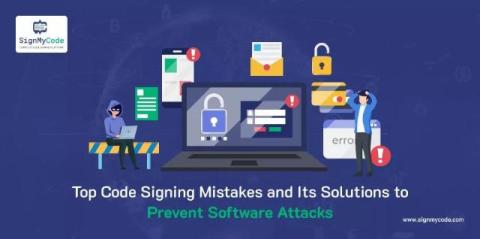
Top Code Signing Mistakes & Its Solutions: Prevent Software Attacks

In the era of the digital world, implementing software security measures is not only crucial but also a time-consuming and expensive process. More often, these security measures are implemented by humans prone to making mistakes. These mistakes cause security breaches in the software, ultimately causing nasty consequences to the company’s revenue. As per a report published in 2024, 68% of data breaches were caused by human errors.