Security | Threat Detection | Cyberattacks | DevSecOps | Compliance

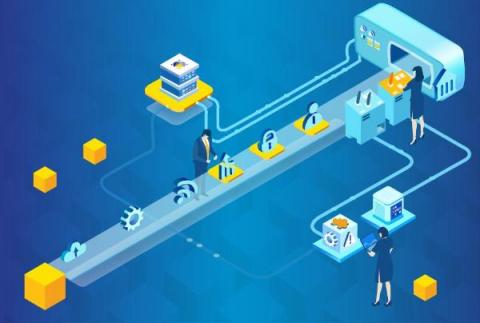
Predict Cyber-attacks via digital twins

Several of the digital twin technologies out there have grown fast in only a few years. Picture establishing a virtual model of IT infrastructure where one can identify loopholes, create attack scenarios, and prevent catastrophic attacks before the system is officially put in place. Using digital twins, it's no longer a silly idea for organizations to follow. Let's get knowledge of Digital Twin technology and how it can help to assess the loopholes in your security posture.

Fileless attacks: a cybersecurity insight to be taken into account

Hackers are highly trained cybercriminals with access to resources capable of compromising a system in an organization without being detected. And malwareless attacks – where cybercriminals access critical business networks without malware – are on the rise.

What is a Formjacking Attack and How to Prevent It?

Last year, as most people were stuck at home, many of us became even more dependent on e-commerce sites than we were already. Unfortunately, that includes cybercriminals too. In 2020, scams targeting the checkout forms of online retailers rose by 20%, according to reports.

What is an Enumeration Attack? How they Work + Prevention Tips

An enumeration attack is when cybercriminals use brute-force methods to check if certain data exists on a web server database. For simple enumeration attacks, this data could include usernames and passwords. More sophisticated attacks could uncover hostnames, SNMP, and DNS details, and even confirm poor network setting configurations. Every web application module that communicates with a user database could potentially become an enumeration attack vector if left unsecured.

How businesses can protect themselves from DDoS attacks

In Distributed Denial of Service (DDoS) a system or network is flooded with online traffic from multiple sources in an attempt to make it unavailable. Cybercriminals take advantage of protocol or DNS server vulnerabilities that they exploit to launch attacks. Moreover, in larger scale attacks, they may use malware that infects thousands of hosts that target the victim to block it, all of them with different IP addresses, which is known as a botnet.

How Sweet It Is - Thinking About SBOMs In Relation to Chocolate

The SolarWinds attack in late 2020 exposed the data of more than 18,000 businesses and governmental departments – many of which are gatekeepers for the country’s most vital infrastructure. While attacks against the software supply chain aren’t new, they are increasing exponentially.

Cybersecurity in the Year Ahead: The Trustwave 2022 Cybersecurity Predictions

In 2021, the cybersecurity industry was truly tested. Most notably, we uncovered the deeper fallout from the SolarWinds attacks, combatted the proliferation of advanced ransomware gangs and a surge in vulnerability exploitation, and saw fragile supply chain and critical infrastructure more targeted by attackers than ever. As global cyber defenders, predicting where the broad industry could be heading is a daunting task.

What's New for 2022: Long Shots and Safe Bet Predictions

It is prediction time once again, and we’ve polled some of our esteemed experts here at Netskope to see what’s piquing their interest with 2022 on the horizon. Much like our predictions last year, we’ve broken the list out into some longer shots and some pretty safe bets. Here’s what we think is in store for 2022.

The Importance of Speed During Detection and Response: Iranian-Backed Hackers Targeting U.S. Companies with Ransomware

Iranian government-sponsored advanced persistent threat (APT) actors are exploiting known Microsoft and Fortinet vulnerabilities to attack targets with ransomware in the transportation, healthcare and public health sectors, according to an alert issued on Nov. 17 by the Cybersecurity and Infrastructure Security Agency (CISA).

As ransomware attacks rise, US government advice to protect K-12 schools is "vastly outdated"

A recently published report from the US Government Accountability Office (GAO) has warned that official security guidance from the Department of Education is out-of-date, and needs to be refreshed to address the increasing reports of ransomware and other cyber threats.

The Top Cyber Attacks of October 2021

October marked a dubious milestone for cybersecurity. A report from the Identity Theft Research Center confirmed that the number of cyber attacks reported through the first nine months of the year exceeded the total recorded for the entirety of 2020. And not by a small margin either—attacks are up 17% in 2021 compared to last year. Clearly, hackers have been busy, as have the cybersecurity experts tasked with mitigating the damage.

10 Predictions About Cybersecurity Threats in 2022

The number of ransomware attacks continues to grow, and that trend will likely continue in 2022. Organizations will be attacked, files will be encrypted, and victims will need to decide whether to pay ransom or try to implement expensive and painful recovery techniques on their own. That much, unfortunately, should come as no surprise, but what will be different is how those attacks are carried out.

FIN7 Tools Resurface in the Field - Splinter or Copycat?

FIN7 is a well-organized criminal group composed of highly-skilled individuals that target financial institutions, hospitality, restaurant, and gambling industries. Until recently, it was known that high-level individuals of this criminal enterprise were arrested — specifically 3 of them — and extradited to the United States. This criminal group performed highly technical malicious campaigns which included effective compromise, exfiltration and fraud using stolen payment cards.

Stories from the SOC - Powershell, Proxyshell, Conti TTPs OH MY!

In the second half of 2021 the AT&T Managed Threat Detection and Response (MTDR) security operations center (SOC) observed an increasing number of attacks against vulnerable Exchange servers. A number of these attacks were attempting to leverage proxyshell vulnerability to gain access to customer’s networks.

Invest in Cyber Awareness to Prevent Attacks

Today’s cyber threat landscape is extremely challenging. Ransom this, ransom that, ransom everywhere – information technology (IT) professionals must work to protect organizations against the next big ransomware attack. Over the years, the sophistication of ransomware attacks has increased as well as the amount of money demanded and paid out in exchange for the ransom-held information.

How to effectively detect and mitigate Trojan Source attacks in JavaScript codebases with ESLint

On November 1st, 2021, a public disclosure of a paper titled Trojan Source: Invisible Vulnerabilities described how malicious actors may employ unicode-based bidirectional control characters to slip malicious source code into an otherwise benign codebase. This attack relies on reviewers confusing the obfuscated malicious source code with comments.

What is a Keylogger? How they Work and How to Stop Attacks

A keylogger is a type of spyware that monitors and records user keystrokes. They allow cybercriminals to read anything a victim is typing into their keyboard, including private data like passwords, account numbers, and credit card numbers. Some forms of keyloggers can do more than steal keyboard strokes. They can read data copied to the clipboard and take screenshots of the user's screen - on PCs, Macs, iPhones, and Android devices. Keyloggers are not always the sole threat in cyberattacks.

Exploring extensions of dependency confusion attacks via npm package aliasing

Dependency confusion attacks are a form of open source supply chain security attacks in which an attacker exploits how package managers install dependencies. In a prior post, we explored how to detect and prevent dependency confusion attacks on npm to maintain supply chain security. In this article, we will present an extension of the dependency confusion problem utilizing npm’s package aliasing capabilities.

Ransomware Recovery: Langs Building Supplies "We've Been Hacked!"

It was 4:00 in the morning, May 20, 2021. Matthew Day, CIO of Langs Building Supplies (Langs) was excited for a long-anticipated holiday after 14 months of lockdown due to COVID-19. His wife was thrilled. His friends, ecstatic. But the day took an unexpected turn. Instead of waking up delighted to leave for his getaway, Day woke up to every CIO’s worst nightmare, the dreaded phone call: “We’ve been hacked.”

The Attack is Coming from Inside the House | The Insider Threat Persists

Looking back at the past year, there have been some downright spooky trends facing cyber security professionals. Ransomware attacks have skyrocketed, impacting organizations from healthcare to critical infrastructure to the suppliers of MSP suppliers and everyone in between. APT crews and criminal gangs have taken advantage of the pandemic that pushed everyone to remote work, making 2020/2021 the year that bad cybersecurity preparedness came home to roost.

The Dark Web & the rise of sophisticated attacks

Wondering what the underground world of cybercrime looks like following after a year of unprecedented events? Bad actors capitalize on these events - from political unrest and economic instability to changing workforce dynamics and ongoing public health concerns - putting organizations of all sizes and across all industries at increased risk. Learning more about these new and innovative exploits, which take advantage of unprecedented global circumstances, allows you to make more informed decisions regarding your security posture.