Security | Threat Detection | Cyberattacks | DevSecOps | Compliance

New MFA Bypass Phishing Method Uses WebView2 Applications with Hidden Keylogger

mr.d0x, a security researcher who previously released phishing tactics such as browser-in-the-browser (BitB) and utilized NoVNC to circumvent two-factor authentication (2FA), has released a new phishing attack method that exploits WebView2 applications to steal cookies and credentials. The code base utilizes a modified version of Microsoft’s WebView2 Samples repository. Microsoft has developed a new module called “Microsoft Edge WebView2 control”.


$10 million reward offered for information on foreign government-linked malicious hackers

A $10 million reward is being offered for information leading to the identification or location of malicious hackers working with North Korea to launch cyber attacks on US critical infrastructure. The offer comes from the US State Department which is understandably eager to disrupt the activities of hacking gangs linked to foreign governments who may have engaged in espionage, cryptocurrency theft, and other malicious activities.

CIS Implementation Group 1 (IG1): Essential Cyber Hygiene

Cybercrime has become more prevalent since the start of the COVID-19 pandemic. Indeed, 81% of organizations worldwide experienced an uptick in cyber threats and 79% suffered downtime due to cyberattacks during peak season, according to a 2021 report by McAfee Enterprise and FireEye. Attacks have also become more complex. IBM and the Ponemon Institute report that the average time to spot and contain a data breach in 2021 was 287 days, a week longer than in 2020.

How to defend against third party cyber-attacks

In this blog post, we discuss the different types of challenges that third party relationships present and outline specific ways to defend against them. Third party risk is created when companies in an organisation’s supply chain have access to its data, systems or privileged information. This can lead to issues such as data breaches, IP theft or other security incidents. Organisations can be held accountable for security breaches even if they originate from a third party.

Buffer overflow attacks in C++: A hands-on guide

A buffer overflow is a type of runtime error that allows a program to write past the end of a buffer or array — hence the name overflow — and corrupt adjacent memory. Like most bugs, a buffer overflow doesn’t manifest at every program execution. Instead, the vulnerability is triggered under certain circumstances, such as unexpected user input.

How attackers leverage example apps/reproduction scripts to attack OSS maintainers

A possible method of attacking your code base is a bit of social engineering that involves using open source to report potential bugs in software that provides reproduction applications. These applications can include malicious code that can compromise your software and applications. In the blog post, we’ll briefly look at why and how they operate, and how to mitigate this practice.

A practical approach to Active Directory Domain Services, Part 9: An AD reality check

Have you looked into some of the most well-known Active Directory (AD) attacks from around the world? Do you understand the nuances of these popular attacks and can you put the AD fundamentals you learned in the earlier parts of this blog series to good use?

Featured Post

Three Hard Truths About Organizational Cybersecurity

In recent years, many business and IT decision-makers have missed key opportunities when it comes to essential organizational cybersecurity practices - from not properly segmenting networks and not deactivating unused accounts (or protecting them with multi-factor authentication), to not implementing proper password security controls. As a result, organizations are increasingly falling victim to costly and damaging data breaches, replete with the associated disruption to operations and issues with both legal and public relations departments.

What is Typosquatting? Learn how to defend against it.

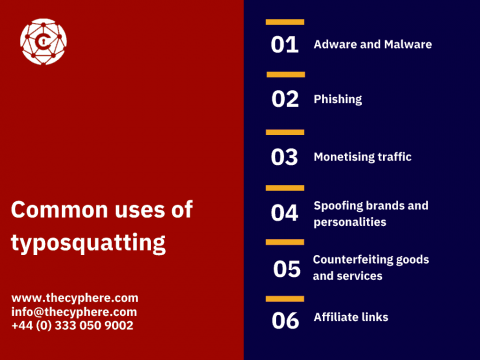
Typosquatting forms the basis of cyber attacks that aim to take advantage of users who mistake a malicious website for a legitimate one. Attackers register domain names that are similar to popular brands or products in the hopes that users will mistype the name and end up on their malicious site instead. Once on the site, users may be tricked into providing sensitive information or installing malware.

Dissecting Supply Chain Attacks: A Report on a Growing Sensitive Data Exposure Vector

Third-party risk has always been a concern for organizations, but since COVID and the rise of remote work, we’ve seen a dramatic acceleration in campaigns leveraging software supply chain attacks. Not just through open source vulnerabilities, but through closed source applications and services as well. To adapt to this new normal, it’s important to develop an understanding of supply chain attacks and protect yourself from them.

Netskope Threat Coverage: Microsoft Discloses New Adversary-in-the-Middle (AiTM) Phishing Attack

On July 12, 2022, Microsoft researchers disclosed a large-scale phishing campaign that has targeted more than 10,000 organizations since September 2021. The campaign used adversary-in-the-middle (AiTM) phishing sites to proxy the authentication process and hijack the victims’ Office 365 session cookies.

A practical approach to Active Directory Domain Services, Part 8: AD attacks

How and why do attackers target an organization’s Active Directory (AD)? This blog, which is part 8 of the series A Practical approach to Active Directory Domain Services, will provide you with the answers. In this part, we will examine what attackers gain by compromising the AD setup. We will also look at some of the most noted means by which AD is compromised. There are two main sections to this blog.

GhostSec Raising the Bar

In June 2022, Cyberint observed a new hacktivist campaign targeting multiple Israeli organizations and enterprises coordinated via different social media platforms. The campaign is led by hacktivists originating in a group called GhostSec. GhostSec was first identified in 2015 and was initially founded to attack ISIS in the cyber realm as part of the fight against Islamic extremism.

Testing resiliency against malicious package attacks: a double-edged sword?

The JFrog Security research team continuously monitors popular open-source software (OSS) repositories with our automated tooling to avert potential software supply chain security threats, and reports any vulnerabilities or malicious packages discovered to repository maintainers and the wider community. At times, we notice trends that are worth analyzing and learning from.

Cyberattack framework: What is the cyber kill chain?

In the early 2000s, Lockheed Martin defined the cyberattack chain framework to identify what adversaries must complete in order to achieve their objective. Today, we look at how the growing sophistication of adversaries and sheer number of threats is intensifying pressure on CISOs and IT teams and is increasing their workloads, which all has negative impacts on businesses and organizations.

Ransomware as a Service: Behind the Scenes

During the recent Rootedcon conference in Spain, we delivered a talk about ransomware, and this blog post serves as a commentary of the insights presented about Ransomware as a Service (RaaS): how it really works; how the threat actors operate these attacks; and how organizations can analyze the attacks and take preemptive measures in the event of future attacks.

The Top Cyber Attacks of June 2022

Temperatures rose in June, and the threat of serious cyber attacks soared along with them. The start of summer saw revelations of major breaches in confidential medical information, a case study for changing-up hacked passwords, another round of victimization for people whose data has already been sold once before, and one high-profile threat to undermine an entire democracy. Let’s take a closer look at these troubling instances, plus one controversial effort to rein in the crimewave.

Webinar: Top Security Threats Worldwide: Q1 2022 - 30 June 2022

Join WatchGuard CSO Corey Nachreiner and Security Engineer Trevor Collins as they cover the latest Internet Security Report from the WatchGuard Threat Lab. In this session, Corey and Trevor will dive into the attack trends and latest malware variants targeting WatchGuard Firebox and Endpoint customers worldwide.

Lockdown Mode: Apple to protect users from targeted spyware attacks

Apple has previewed a new feature which aims to harden high-risk users from the serious threat of being spied upon by enemy states and intelligence agencies. “Lockdown Mode” is scheduled to arrive later this year with the release of Apple iOS 16 and macOS Ventura. It’s an optional feature for users who believe their computers and smartphones face a real risk of being targeted by sophisticated state-sponsored spyware.

Detectify Security Advisor explains account hijacking attack scenarios using abnormal OAuth-flows

While the attack needed for such a single-click account takeover would be complex, the research by Frans Rosén, Security Advisor at Detectify, discovered that some of the most popular consumer and business websites in the world currently are not following the OAuth specification best practices and thus are vulnerable to the attack chain. Rosén recently undertook extensive research on how OAuth tokens could be stolen.

CI/CD pipeline attacks: A growing threat to enterprise security

CI/CD pipeline attacks are a growing threat to enterprise security. In this article, we’ll provide an overview of CI/CD for non-developers, discuss the cybersecurity issues involved, and offer some recommendations for developers, companies, and security teams.

Key cybersecurity measures for the fashion industry

Cyberattacks often target the retail sector, although many of these threats are aimed at the e-commerce channel, businesses have also reported incidents where in-store Wi-Fi access points and even IoT devices are exploited as attack vectors. This is reflected in several studies, which reveal that, together with the education sector, the fashion industry was one of the hardest hit last year and 60% of retail companies are at risk of suffering an attack.