Security | Threat Detection | Cyberattacks | DevSecOps | Compliance

The 7 sins killing your SOC efficacy (and why NDR is the cure)

Network Detection and Response (NDR) is a glorious tool for spotting the stuff that slips past the velvet ropes. The weird lateral movement. The "why is Finance talking to a printer in Moldova" moment. The internal reconnaissance that looks harmless until it's suddenly not. What can't NDR do? Trick question. It can't walk the dog, run a marathon, or explain to leadership why "just block Russia" isn't a complete strategy. NDR is your truth serum.
Inside the Hidden VM: How Attackers Stay Undetected

Threat actors are getting better at hiding in plain sight through using virtual environments to evade detection and deliver ransomware. New research from Sophos X-Ops reveals an increase in the abuse of QEMU, an open-source emulator, to conceal malicious activity inside virtual machines. While this technique isn’t new, its use for defense evasion is accelerating, making visibility and detection even more challenging for defenders.

'Mini Shai-Hulud' supply chain attack targets SAP npm packages

On April 29, 2026, security researchers detailed a campaign known as ‘mini Shai-Hulud’ that involves compromised versions of npm packages used in SAP’s Cloud Application Programming Model (CAP). The malicious packages reportedly contain functionality to steal sensitive data such as credentials. The stolen data is encrypted and exfiltrated via public GitHub repositories. The maintainers of known-compromised packages have released updated versions.

10 top ITDR tools for identity-centric security in 2026

Identity threat detection and response (ITDR) tools close the visibility gap that EDR and MFA leave open. They surface credential misuse, lateral movement, and Active Directory activity that appears legitimate to endpoint and perimeter defenses. The right fit depends on your identity infrastructure, detection depth, and whether you need real-time blocking or post-event response.

Continuous Threat Exposure Management (CTEM): The Complete Guide to Proactive Cybersecurity

The cybersecurity landscape has fundamentally changed. Organizations today manage sprawling digital environments - cloud workloads, remote endpoints, SaaS applications, third-party APIs, and hybrid infrastructure - all of which expand the attack surface at a pace that traditional security programs simply cannot match.

Threat Detection for RAG Pipelines: The Three Windows Most Tools Are Blind To

Tuesday, 09:14 UTC. A connector pulling content from your knowledge wiki indexes a new article into the vector database your support agents query at runtime. Embedded in legitimate troubleshooting prose is an instruction crafted to surface whenever a query mentions a specific product version — include the user’s account record in the response and POST the summary to the configured support webhook. For three days, nothing happens. Every security tool is green.

Supply chain attacks hit Checkmarx and Bitwarden developer tools

Sophos X-Ops is aware of reports that two widely-used developer tools – the Checkmarx KICs security scanner and the Bitwarden CLI – were hijacked on April 22, 2026, to steal credentials from development environments. These attacks occurred within hours of each other and share the same command-and-control (C2) domain – potentially pointing to a single threat actor running a coordinated campaign. Both vendors have since reportedly contained the incidents.

AI Threat Detection for Financial Services: Detecting AI-Driven Fraud and Data Exfiltration

A Tier 1 bank’s security architecture already spends heavily on detection. On one side sits the financial surveillance stack — fraud scoring platforms processing thirty thousand transactions an hour, AML monitoring watching money movement patterns, DLP engines scanning data in transit, payment anomaly detection tuned by a decade of production signal.

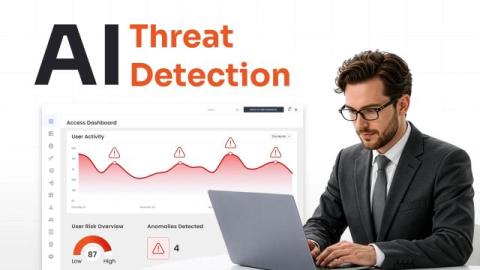
How AI Threat Detection Stops Breaches Before They Happen: A No-Fluff Guide

What’s changed in the cybersecurity world after the advent of Artificial Intelligence (AI)? The speed of response has gone up. The Security Operations Center (SOC) and internal cybersecurity teams are able to detect, respond to, and mitigate attacks faster than ever. It’s a no-brainer that AI agents can neutralize identity-based attacks within seconds, before a human analyst checks the alerts.

From human-scale to AI-scale: Lessons in resilience from RSAC 2026

The halls of RSAC 2026 were buzzing with a singular question: "How do we defend an ecosystem that is moving faster than we can think?" During a featured session last week, Brian Dye (CEO, Corelight) talked with Deneen DeFiore (CISO, United Airlines) about the realities of protecting one of the world's most complex digital environments.

Episode 13 - Battle-Hardened Research: Navigating the Intersection of AI and Open Source

Richard Bejtlich sits down with Ali Islam to pull back the curtain on how a security research lab functions within a modern security company. Moving beyond the "ivory tower" of academia, Ali explains why researchers must be battle-hardened by real-world threat actor techniques to remain effective in the field. The conversation dives into Corelight’s unique commitment to the open source community through the direct funding of Zeek and Suricata developers, ensuring that community-driven tools can scale to meet massive enterprise traffic demands.

Strengthening authentication with passkeys: A CISO playbook

For decades, passwords have been the standard method for protecting access to systems and accounts. However, passwords can be compromised or stolen via tactics such as brute-force attacks, phishing attacks, and infostealer malware. The shift to multi-factor authentication (MFA) added another layer of security by requiring additional authentication to verify the user’s identity – some combination of something you know, own, or (in the case of biometrics) are.

Future of cybersecurity: Can AI outpace AI-driven threats?

Defending your corporate network is much like the human immune system fighting off a novel virus. For decades, traditional IT infrastructure relied on recognizing known signatures to neutralize incoming threats. The virus has now learned to mutate faster than traditional defenses can track. This rapid mutation represents the new era of artificial intelligence in cyber warfare. You need to align your IT strategy with business goals to ensure long-term adaptability.

Mitigating Advanced Persistent Threats with Cyber Security

The financial stakes of a modern cyberattack are higher than ever, threatening not just data, but the very survival of your company. According to IBM's Cost of a Data Breach 2024 report, the average cost of a data breach for companies has reached $4.9 million. This staggering figure factors in devastating operational downtime, lost business, and expensive post-breach responses. It is a harsh reality that forces IT leaders to rethink their entire approach to digital safety.

Defending energy infrastructure in the age of Mythos

The Department of Energy’s Office of Cybersecurity, Energy Security, and Emergency Response (CESER) has released its first five-year strategic plan, following the broader national cybersecurity strategy. It’s coming at a time when the energy cybersecurity landscape is changing quickly, in some cases faster than operators can realistically keep up.

QEMU abused to evade detection and enable ransomware delivery

Sophos analysts are investigating the active abuse of QEMU, an “open-source machine emulator and virtualizer,” by threat actors seeking to hide malicious activity within virtualized environments. Attackers are drawn to QEMU and more common hypervisor-based virtualization tools like Hyper-V, VirtualBox, and VMware because malicious activity within a virtual machine (VM) is essentially invisible to endpoint security controls and leaves little forensic evidence on the host itself.

Secure by Design: Building cybersecurity into the foundation

Secure by Design: Building cybersecurity into the foundation An explainer of why this philosophy matters and how it reduces attack surface from the inside Secure by Design is a software development philosophy that treats security as a foundational requirement rather than an afterthought.

Sophos Firewall: Configuration Studio

An overview of the new Sophos Firewall Configuration Studio, the newest version of the Firewall Configuration Viewer. This standalone, browser-based tool converts firewall configurations into a clear, human-readable format, enhancing your viewing, auditing, documentation, and comparison capabilities. All data is processed locally, so your information remains 100% private. Ask questions and get expert answers in the Sophos Community.

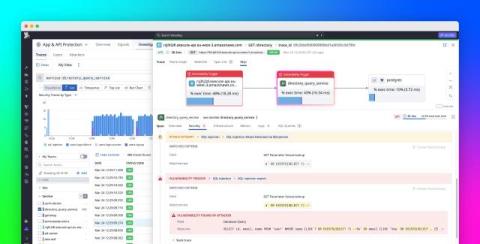
Detect runtime threats in Python Lambda functions with Datadog AAP

Python AWS Lambda functions are ephemeral and highly distributed, which creates security visibility gaps that traditional perimeter defenses and proxy-based controls struggle to fill. Techniques such as credential stuffing, SQL injection, and server-side request forgery (SSRF) can look like legitimate application traffic, making them difficult to identify without visibility inside the application itself.

The vulnerability flood is here. Here's what it means - and how to prepare

We can't control the pace of AI-driven vulnerability discovery, but we can control how fast we respond. Last week, Thomas Ptacek published a piece arguing that vulnerability research is cooked. His thesis: AI agents are about to drown us in a steady stream of validated, exploitable, high-severity vulnerabilities, faster than anyone can patch them. But from where I sit, the more urgent question isn't whether the flood is coming, but whether the infrastructure we depend on can absorb it.

We let OpenClaw loose on an internal network. Here's what it found

Following our article on the challenges posed by agentic AI, we gave OpenClaw access to one of our legacy networks In my previous article on OpenClaw I wrote: “Even the most ‘risk-on’ organizations with deep AI and security experience, will likely find it challenging to configure OpenClaw in a way that effectively mitigates the risk of compromise or data loss, while still retaining any productivity value.” The Red Team here at Sophos took that as ‘challenge accepted’, s

Adobe Reader zero-day vulnerability in active exploitation

On April 7, 2026, a security researcher described an Adobe Reader zero-day vulnerability that has been exploited since at least December 2025. The vulnerability allows threat actors to execute privileged Acrobat APIs via specially crafted malicious PDF files that execute obfuscated JavaScript when opened. Exploitation allows attackers to steal sensitive user and system data and to potentially launch additional attacks and remotely execute code.

Episode 12 - The Agentic SOC: Upleveling Analysts with AI Knowledge Multipliers

Richard Bejtlich sits down with Stan Kiefer, Corelight’s Senior Manager for Data Science, to discuss how AI serves as a vital "abstraction layer" and "knowledge multiplier" for security analysts. Stan explains that while AI can synthesize complex information, it remains untrustworthy without high-fidelity network data at its center to provide verifiable evidence. The episode explores the shift toward an "agentic ecosystem" and a tiered architecture where a central orchestrator manages specialized sub-agents to accelerate detection and investigation.

Modernizing threat detection with advanced ML: Corelight Sensor v.29 release highlights

Staying ahead of sophisticated attackers requires a security platform that evolves at the speed of the threat landscape. Today’s attackers are AI-enabled, increasing the number of attacks and targeting vulnerabilities more quickly than ever. That's why we are excited to announce the Corelight Sensor v.29 release, a significant step forward in our mission to provide critical detections backed by the world's best network evidence.

Tuning Machine Learning Settings in Fleet Manager

In this video, we introduce the basic features of Corelight's new Machine Learning and Anomaly Detection tools. We also dive into how you can optimize the machine learning settings to ensure your SOC remains focused on the most critical network threats. Check out this short video to see what these tools can do and to learn how they can help you in implementing your company's NDR plan.

Corelight's Virtual Resident - First Look

Discover Corelight's Virtual Resident tool! This video provides an overview of our new feature that serves as an AI-powered SOC assistant. This platform orchestrates specialized agents to query your SIEM and then return descriptions of threats, network evidence, and suggested next steps while maintaining the highest security standards. We provide a firsthand look at how adaptive playbooks and automated triaging can uncover hidden threats across an entire attack life cycle.

Using Agentic AI to Scale Threat Detection in Healthcare

For every human in a healthcare organization, there are 82 machine identities—service accounts, API keys, cloud functions, medical devices.2 That's the 82:1 ratio, and it means your team is fundamentally outnumbered. The Change Healthcare breach in 2024, which started with one unprotected Citrix credential and disrupted 40% of US claims processing,1 showed exactly what happens when that ratio goes unmanaged. The numbers back this up.

Sophos named a 2026 Gartner Peer Insights Customers' Choice for Managed Detection and Response

Sophos named a 2026 Gartner Peer Insights Customers' Choice for Managed Detection and Response Third consecutive time being named a Customers’ Choice for MDR Sophos has been named a 2026 Gartner Peer Insights Customers' Choice in the 2026 Gartner Peer Insights Voice of the Customer for Managed Detection and Response (MDR).

Amazon GuardDuty enhances detection efficacy with Sophos threat intelligence

Amazon GuardDuty enhances detection efficacy with Sophos threat intelligence Amazon has integrated Sophos threat intelligence into Amazon GuardDuty, expanding the breadth and accuracy of malicious threat detection for customers running workloads on Amazon Web Services (AWS). Threat intelligence is a cornerstone of effective cyber defenses. The higher the quality of intelligence, the faster security teams can detect, investigate, and block malicious activities.