Security | Threat Detection | Cyberattacks | DevSecOps | Compliance

From Initial Access to Ransomware Attack: An Analysis of Timelines from IAB Listings on Cybercriminal Forums to Extortion Attacks

Cyjax monitors and analyses the initial access broker (IAB) market on the most prominent cybercriminal forums. As noted in Cyjax’s 2024 IAB market in review, it is almost certain that extortion groups, APTs, data brokers, and other threat groups use IABs to gain initial access to targeted networks. Though at first glance it is not immediately obvious how important the IAB market is to the threat landscape, Cyjax has conducted a deep analysis of public IAB listings and extortion group DLSs.


Building Cyber Resilience: Lessons from Recent High-Profile Attacks

It is human nature to think “oh, that will never happen to us!”. Whether it is a car accident, an IRS audit, or the loss of a job, we can never really feel immune from misfortune or adversity that may come our way. Much in the same way, the threat from cyberattacks is no longer a rare occurrence confined to large corporations. Organizations of all sizes face mounting challenges in an environment where cybercrime is increasingly sophisticated and disruptive.

Trustwave SpiderLabs Insights: Cyberattack Methods Targeting Manufacturing

When it comes to choosing a manufacturer to target for attack, threat groups have a healthy list of tools from which to choose. All of which are made more powerful due to this industry’s complex cybersecurity posture, driven by the increasing integration of IT/OT environments.

The Ransomware Threat: Preparing Schools and Libraries for Ransomware Attacks

Ransomware attacks have emerged as a significant threat to educational institutions. Cybercriminals encrypt sensitive data and demand payment for its release, severely disrupting school operations and leading to exorbitant recovery costs for districts. With ransomware tactics continually evolving, the security of the entire U.S. education system is at risk.

10 Attack Vectors to Keep an Eye on in 2025

As the adage goes, time is money, and nowhere does this ring more true than in an evolving threat landscape. The faster companies detect, respond, and recover from data breaches, the better for their pockets. Using AI and security automation to shorten the breach lifecycle has been shown to save $2.2 million more on average compared to not employing these technologies.

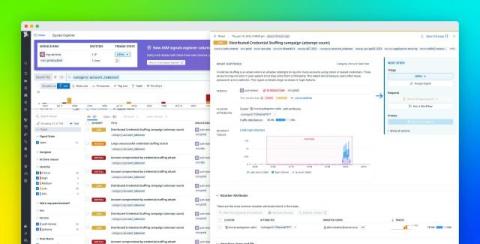
Detect and respond to evolving attacks with Attacker Clustering

In today’s threat landscape, detecting and responding to distributed attacks is more challenging than ever. Attackers often operate in stealth, using coordinated strategies to blend into normal traffic and evade detection. To address this issue, Datadog Application Security Management (ASM) has a new clustering feature designed to identify and group attacker behaviors during distributed attacks.

The Flaw in "Secure" Systems: How ByBit's Attack Exploited Blind Trust

ByBit’s recent attack has exposed a critical flaw in how many exchanges approach security. The real-time transaction manipulation that took place wasn’t just an unfortunate event—it was a direct consequence of mispurposed security architectures that sophisticated attackers are all too ready to exploit.

5 Examples of Dependency Confusion Attacks

Are you still running your package pipeline on default settings and grabbing libraries straight from public repos? Big yikes. That’s rolling out the red carpet for dependency confusion attacks to drop shady code into your project. It isn’t uncommon. Nearly half (49%) of organizations are exposed to the risks of a dependency confusion attack because they make the same mistakes. But what exactly is dependency confusion, and how do these attacks manage to infiltrate?

What Is a Watering Hole Attack? Detection and Prevention

We already know that cybercriminals exploit the weakest link in your IT networks. The best defense against these exploits comes down to safeguarding the most vulnerable entry points. But what if the weakest link in your cybersecurity defense lies beyond your IT network itself?

Prevent DDoS attacks, web scraping, & credential stuffing with Super Bot Fight Mode from Cloudflare

Is your website under attack from bots? Bots are getting smarter and more sophisticated, making it harder to distinguish between legitimate users and automated threats. Malicious bot activity can include credential stuffing, web/content scraping, DoS or DDoS attacks, brute force password cracking, inventory hoarding, spam content, email address harvesting, and click fraud. Cloudflare’s Super Bot Fight Mode is available on both Pro and Business plans, featuring.

The Russia-Ukraine Cyber War Part 2: Attacks Against Government Entities, Defense Sector, and Human Targets

In the first part of Trustwave SpiderLabs’ Russia-Ukraine war blog series, we gave a brief look at our major findings as well as the main differences between how Russia and Ukraine wage attacks in the digital frontlines. In this part of our series, we shed light on how both countries target government entities, defense organizations, and even human targets as part of their overall strategy to win the war.

The Rise of AI-Generated Attacks: Why UEBA is the Best Defense

The cybersecurity industry is facing a new challenge: AI-generated attacks. With the rapid advancement of generative AI, cybercriminals now have access to sophisticated tools that enable them to craft highly targeted attacks with minimal technical expertise. Unlike traditional attack methods that require deep programming knowledge, AI-driven attacks allow even non-technical malicious actors to create malware, exploit scripts, and launch phishing campaigns with ease.

Subdomain takeover: 12 Ways to Prevent this Attack

Subdomain takeovers don’t happen because attackers are geniuses. They happen because DNS records get messy. It’s not exactly an exciting gig to track old services or clean up unused subdomains, but ignoring it creates a security hole you can’t afford. Microsoft discovered over 670 vulnerable subdomains in a single audit. On a larger scale, 21% of DNS records out there lead to unresolved content, and 63% of those throw ‘404 not found’ errors.

Spear Phishing is the Top Cyber Threat to the Manufacturing Sector

Spear phishing was the top cybersecurity threat to the manufacturing sector over the past six months, according to a report from ReliaQuest. These attacks accounted for 41% of true-positive alerts in the sector. “Spear phishing remains a favored tactic for attackers targeting manufacturing companies—and it’s easy to see why,” ReliaQuest says.

Top 5 Benefits of Security Awareness Training for Businesses: Protecting Your Workforce and Data

In today's digital age, cybersecurity is a critical concern for businesses of all sizes. With cyber threats on the rise, organizations must invest in robust security measures to protect their data and workforce. One of the most effective strategies is implementing security awareness training for employees. This essential initiative can significantly reduce the risk of data breaches and enhance overall business security. In this article, we will explore the top five benefits of security awareness training and how it can safeguard your organization.

Command and Control Attack Detection: How to Stop Them

To defeat the enemy, you must first disarm their ability to communicate. Command and Control (C2) attacks remain one of the most persistent cybersecurity threats, enabling adversaries to communicate with compromised systems undetected. Attackers use C2 servers to send commands, exfiltrate data, and maintain long-term access to networks. These stealthy techniques allow them to deploy ransomware, steal sensitive information, and even conduct cyber espionage.

Understanding the Brute Force Attack Playback and Defense Strategy

A brute force attack is a trial-and-error technique used by cybercriminals to gain access to sensitive information such as passwords, encryption keys, or login credentials. Essentially, it involves systematically attempting every possible password combination until the correct one is found. It’s akin to a thief trying to open a combination lock by testing every possible number sequence.

Stop API Attackers in Their Tracks: Real-Time Blocking of API Attacks

No one needs more security alerts! Wallarm is designed from the ground up to actually block API attacks in real time. Learn how you can defend against API attacks, not just detect them in this webinar. We'll review the basics of API security, along with a demo of the Wallarm platform in action.

The Rise of Email Marketing Platforms for Business Email Compromise Attacks

In a statistical report published in September 2024 by the Federal Bureau of Investigation (FBI), it was revealed that more than US$55 billion was lost to business email compromise (BEC) attacks between October 2013 and December 2023. This profitability drives attackers to further their techniques and adapt to security filters. BEC is a highly sophisticated and researched scam that aims to bait a specific type of employee or department in a company.

An Overview of the MGM Cyber Attack

If you have ever been to a Las Vegas casino, then you know that they are literally money-making machines as people bet money on a variety of games on a continuous basis. Modern casinos exemplify digitally transformed businesses, with customers engaging through multiple digital channels, from gaming systems to mobile apps and loyalty programs.

The Threat Within: Understanding the Role of Malicious Insiders in Cyberattacks

The Financial Industry Regulatory Authority (FINRA) recently released the 2025 FINRA Annual Regulatory Oversight Report, which observed an increase in the variety, frequency, and sophistication of insider threats by threat groups.

What is an SQL injection and how to prevent it?

SQL Injection (SQL) also known as SQLI is a severe security vulnerability that allows attackers to interfere with the queries and applications made to its database. By inserting malicious SQL code into input fields, attackers can manipulate the database, leading to unauthorized data access, data corruption, or even complete system compromise. This attack technique is made possible because of improper coding of web applications.

Gcore Radar report reveals 56% year-on-year increase in DDoS attacks

Gcore, the global edge AI, cloud, network, and security solutions provider, today announced the findings of its Q3-Q4 2024 Radar report into DDoS attack trends. DDoS attacks have reached unprecedented scale and disruption in 2024, and businesses need to act fast to protect themselves from this evolving threat. The report reveals a significant escalation in the total number of DDoS attacks and their magnitude, measured in terabits per second (Tbps).

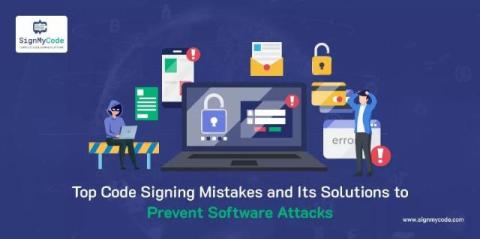
Top Code Signing Mistakes & Its Solutions: Prevent Software Attacks

In the era of the digital world, implementing software security measures is not only crucial but also a time-consuming and expensive process. More often, these security measures are implemented by humans prone to making mistakes. These mistakes cause security breaches in the software, ultimately causing nasty consequences to the company’s revenue. As per a report published in 2024, 68% of data breaches were caused by human errors.

What is a man in the middle attack? Definition & examples

A Man-in-the-Middle (MitM) attack occurs when a cybercriminal secretly intercepts and manipulates communications between two parties who believe they are interacting directly. It is currently one of the most deceptive and dangerous cyber threats. Such attacks often lead to data theft, unauthorized access and compromised privacy, to name a few consequences.

Game Development Security Trends in 2025

Game development is more exciting than ever, but with new technology comes new security challenges. In 2025, protecting games isn't just about stopping cheaters - it's about safeguarding player data, preventing cyberattacks, and ensuring fair play in an industry that's constantly evolving.

What is a Tailgating Attack? Understand This Sneaky Security Threat

Imagine yourself entering your office building and, as you open the door, someone appears right behind you, behaving as if they belong there. Without a doubt, you let them in because you believe they are an employee. What if, however, that individual is a malevolent intruder? This is the fundamental idea behind a tailgating attack, a social engineering technique in which an unauthorized person uses human decency and trust to enter a restricted location.

What to Look for in an NDR Solution: A Buyer's Guide to Cutting-Edge Features

As cyberattacks become more complex, network detection and response solutions have become essential for modern organizations. These are more than firewalls and antivirus software; instead, they make use of advanced analytics, machine learning, and behavioral modeling to detect and neutralize threats in real time.

How to Secure Cross-Application Process Attack Surfaces

The organization in today's world operates on an intricately meshed fabric of software, while conversely, that interdependence invites the hacker through more doors. A vulnerability within any component of this inner dependency chain could become an open door to unauthorized disclosure of sensitive information, interruption of critical business processes, or even the demise of an entire corporation.

8 Best Practices for Reducing the Risk of Password Attacks

Passwords to your employees’ and vendors’ accounts serve as gateways to your enterprise’s most sensitive information. Without proper password management, these accounts can fall prey to password attacks, impacting your business processes, finances, and reputation. In this article, we’ll explore the most common types of password attacks in cybersecurity and outline eight password attack prevention best practices to safeguard your organization.
Featured Post

The Core Pillars of Cyber Resiliency

As we enter a new era of cybersecurity threats, which has prompted the evolution of new vulnerabilities, organisations are challenged on how to best respond to these evolving attacks. The threat landscape is more complex than ever causing organisations to grapple with new tactics to safeguard their critical data.

Traditional Security Can't Stop LOTL Attacks. Exabeam UEBA Destroys Them.

Attackers are becoming more sophisticated and stealthier. Their methods are more advanced. Of these advanced methods, living-off-the-land (LOTL) attacks are the sneakiest and most effective. By using legitimate tools and processes already in your environment, malicious actors can get what they want without being seen. But with the Exabeam New-Scale Security Operations Platform and our industry leading user and entity behavior analytics (UEBA), security teams can stop them.

Breach and Attack Simulation: A Complete Guide

Today, cybersecurity isn’t just about protecting data but about protecting operations, reputation, and trust. Unfortunately, many organizations continue to operate under the false assumption that their security posture is strong because they’ve checked off compliance boxes—only to be blindsided when a breach occurs.

The Secret to Your Artifactory: Inside The Attacker Kill-Chain

Artifactory token leaks are not the most common, but they pose significant risks, exposing sensitive assets and enabling supply chain attacks. This article explores the dangers of leaked tokens and proposes mitigation strategies, including token scoping and implementing least privilege policies.