Happy 1st Birthday, Snyk Code!
Snyk Code is turning one! We’ve hit so many milestones in the last 12 months, and today we invite you to look back, celebrate, and peer into the future of code security with us.


Snyk Code is turning one! We’ve hit so many milestones in the last 12 months, and today we invite you to look back, celebrate, and peer into the future of code security with us.
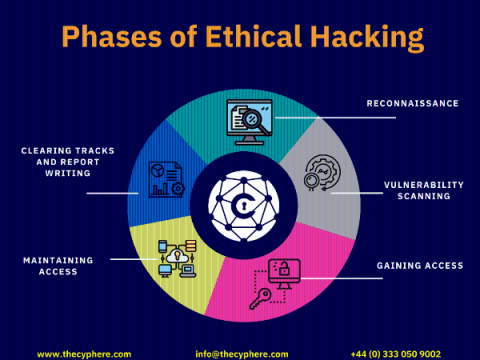
In recent times as the field of information is on the rise a new term ‘Ethical Hacking’ has emerged and opened many different avenues for IT and cyber security professionals. Now more and more people are getting familiar with the field of information security and are getting interested in learning about hacking skills.
Many companies look to CISOs or compliance teams to manage security throughout software development. But this practice usually keeps security considerations separate from developers. CISOs can assign security tasks to developers, but if developers aren’t thinking about security regularly, those tasks may be overlooked.
Have you ever wondered what vulnerabilities are exploited the most by threat actors? The answers you have been eagerly waiting for could be found inside a joint Cybersecurity Advisory (CSA) coauthored by the cybersecurity authorities of the United States (CISA), Australia (ACSC), Canada (CCCS), New Zealand (NZ NCSC), and the United Kingdom (NCSC-UK), plus the U.S. National Security Agency (NSA) and Federal Bureau of Investigation (FBI).
What’s your role in the vulnerability management process?
Over the years, as a developer, I’ve built and deployed many applications through digital agencies, side projects, startups, and freelance work. With time-sensitive deadlines, client expectations, and delivery dates to consider, security wasn’t usually top of mind when npm installing an open source package. This often led to reworking and cleanup on deployments that had let in known vulnerabilities, adding to compounding timelines and client disappointment.
The Center for Internet Security (CIS) provides Critical Security Controls to help organizations improve cybersecurity. Control 7 addresses continuous vulnerability management (this topic was previously covered under CIS Control 3). Continuous vulnerability management is the process of identifying, prioritizing, documenting and remediating weak points in an IT environment.
When Algolia’s security program manager Regina Bluman ran a Twitter poll to see how many people within the security industry understood the concept of EASM, she didn’t expect that the term is far from being on an IT security team’s radar. Moreover, most were not even aware of it.
CVE-2022-23648, reported by Google’s Project Zero in November 2021, is a Kubernetes runtime vulnerability found in Containerd, a popular Kubernetes runtime. It lies in Containerd’s CRI plugin that handles OCI image specs containing “Volumes.” The attacker can add Volume containing path traversal to the image and use it to copy arbitrary files from the host to container mounted path. The vulnerability was reported by Felix Wilhelm on Nov.