Security | Threat Detection | Cyberattacks | DevSecOps | Compliance

[Hands-On Defense] Unpatched Software Causes 33% of Successful Attacks

As you all know, KnowBe4 frequently promotes security awareness training and we also mention that unpatched software is a distant number two issue after social engineering. We generally say that unpatched software is involved in 20%-40% of successful exploits. It's been hard though to get good figures on that for years and even CISA has not published hard numbers, even though they appear to focus on it.

Log4j Vulnerability and the Importance of SBOM in Software Supply Chain Security

The Apache Log4j vulnerability has been making global headlines since it became public on 9th December 2021. The report stated that the vulnerability affects Apache log4j between versions 2.0 and 2.14.1 and is independent of the underlying JDK version. It was a full-blown security meltdown that resulted in hackers performing remote code executions and affected digital systems across the globe. In response, Apache implemented patch fixes, but some components remained unattended.

How to generate an SBOM for JavaScript and Node.js applications

SBOM is the acronym for Software Bill of Materials, which is a list of all the open source npm packages that are part of your project. But it’s not only limited to open source or software packages, and can include operating system libraries, microservices inventory and more.

Improved risk assessment with EPSS scores in Snyk

The number and complexity of software vulnerabilities is continuously growing. The ability of development and security teams to assess the threat level a given vulnerability poses and prioritize fix efforts accordingly greatly depends on access to as much context as possible about the vulnerability.

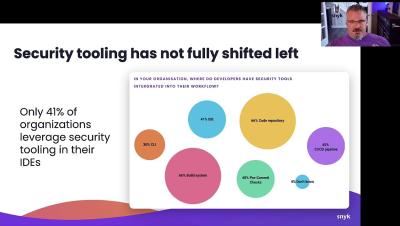
Starting With Snyk: an overview of the CLI onboarding flow

When starting with Snyk, users can import projects via Git repository or utilize CLI to run test their application code locally or via CI/CD. In this video, we will discuss the onboarding flows meant to help new users utilize the CLI to run their first source code (SAST), open source (SCA), container and infrastructure as code (IaC) tests and start fixing issues. Snyk helps software-driven businesses develop fast and stay secure. Continuously find and fix vulnerabilities for npm, Maven, NuGet, RubyGems, PyPI and more.

Setting up the Docker image scan GitHub Action

Nowadays, the final product of most Git repositories is a Docker image, that is then used in a Kubernetes deployment. With security being a hot topic now (and for good reasons), it would be scanning the Docker images you create in the CI is vital. In this piece, I’ll use GitHub Actions to build Docker images and then scan them for security vulnerabilities. The Docker image built in the CI is also pushed to GitHub’s Docker registry.

Snyk top 10 code vulnerabilities report

Earlier this year, we released a report on the top 10 open source vulnerabilities from data based on user scans — giving you an inside look into the most common (and critical) vulnerabilities Snyk users found in their third-party code and dependencies. Building on this trend, we decided to look into the most common vulnerabilities in first-party code. While OWASP served as a guiding light for open source security intel, gathering data on proprietary code was a bit more complex.

Four Critical RCE Vulnerabilities in Cisco Small Business Series Switches

On Wednesday, May 17, 2023, Cisco disclosed four critical remote code execution vulnerabilities affecting the web-based user interface of Cisco Small Business Series Switches. Cisco’s Product Security Incident Response Team (PSIRT) is aware of PoC exploit code being available for these vulnerabilities, however, they have not identified a publicly available PoC exploit.

SafeBreach Coverage for US-CERT Alert (AA23-136A) - BianLian Ransomware Group

On May 16th, Federal Bureau of Investigation (FBI), Cybersecurity and Infrastructure Security Agency (CISA), and Australian Cyber Security Centre (ACSC) released an advisory highlighting the various malicious indicators of compromise (IOCs) and tactics, techniques, and procedures (TTPs) being leveraged by the BianLian ransomware group.