Dependency confusion attacks are a form of open source supply chain security attacks in which an attacker exploits how package managers install dependencies. In a prior post, we explored how to detect and prevent dependency confusion attacks on npm to maintain supply chain security. In this article, we will present an extension of the dependency confusion problem utilizing npm’s package aliasing capabilities.
According to the National Vulnerability Database (NVD), the number of new security vulnerabilities increases steadily over the past few years. Image source: NVD The consistent rise in the number of security vulnerabilities along with headline-catching exploits like the SolarWind supply chain attack earlier this year has organizations doubling down on vulnerability management programs to ensure that they are not exposed to malicious attacks.
Forescout is proud to be recognised by Forrester in its inaugural Industrial Control Systems (ICS) Security Solutions Wave, 2021. The ability to cover the most ICS protocols allows us to provide the best visibility compared to any other vendor, making the Forescout platform the solution of choice for any organization struggling with ICS asset visibility.
For a concept that represents absence, zero trust is absolutely everywhere. Companies that have explored how to embark upon zero-trust projects encounter daunting challenges and lose sight of the outcomes a zero-trust approach intends to achieve. Effective zero-trust projects aim to replace implicit trust with explicit, continuously adaptive trust across users, devices, networks, applications, and data to increase confidence across the business.
Over the last few years, the term DevOps and DevSecOps (which stand for Developer Operations and Developer Security Operations respectively) have become synonymous with companies trying to become more agile and less monolithic.
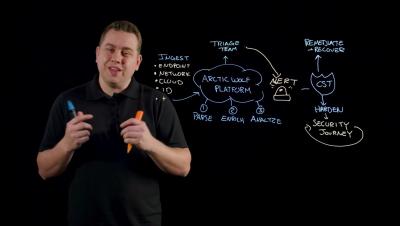
It can take just minutes, if not seconds, for an advanced threat to compromise a company's endpoint devices (laptops, mobile devices, and the like). Legacy security tools that were once adored and worshipped by many no longer cut it. These tools require manual triage and responses that are not only too slow for fast-moving and increasingly sophisticated cyber threats, but they also generate a huge volume of indicators that burden the already overstretched cyber security teams.
One of the most common questions that Corelight customers and prospects who are using our Suricata integration ask is “what signatures should I run?” While our answer has always started with the industry-standard Emerging Threats Pro feed, we recognize that other feeds - like the ones from Crowdstrike or private industry groups - often make excellent additions to the ET Pro set.
Hello, Clint Pollock, principal solutions architect here to explain how to use Veracode completely from a command prompt in your IDE or CI/CD system. I’m going to teach you how to submit a static policy scan and a static sandbox scan. Then, I’m going to clean up some builds using the API, submit a static pipeline scan, a software composition analysis scan, and a dynamic scan … all from the command prompt. Let's get started!