Mailchimp
Not subscribed to OpsMatters Newsletter


What exactly is resilience? According to the U.S. National Institute of Standards and Technology, the goal of cyber resilience is to “enable mission or business objectives that depend on cyber resources to be achieved in a contested cyber environment.” In other words, when you’re at odds with cybercriminals and nation-state actors, can you still get your job done? If not, how quickly can you get back up and running?
This tutorial details how to manage secrets effectively using Azure Key Vault. You'll learn how to create secrets and access them in both virtual machines and Kubernetes clusters.
Artificial Intelligence (AI) and companion coding can help developers write software faster than ever. However, as companies look to adopt AI-powered companion coding, they must be aware of the strengths and limitations of different approaches – especially regarding code security. Watch this 4-minute video to see a developer generate insecure code with ChatGPT, find the flaw with static analysis, and secure it with Veracode Fix to quickly develop a function without writing any code.
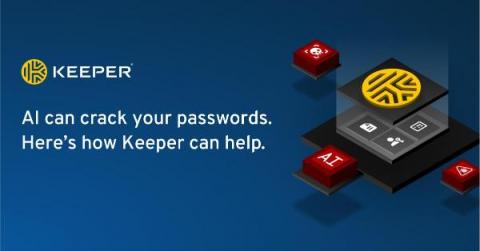
As AI becomes more advanced, it’s important to consider all the ways AI can be used maliciously by cybercriminals, especially when it comes to cracking passwords. While AI password-cracking techniques aren’t new, they’re becoming more sophisticated and posing a serious threat to your sensitive data. Thankfully, password managers like Keeper Security exist and can help you stay safe from AI-password threats.
Do your house guests still have access to your home after they’ve left, or overstayed their welcome? No, right? You would throw them out or take the keys back because they no longer require access. Guests in Azure are like house guests. Once they no longer need access, it's then time to take back the key so they no longer have access to the company's data and connected apps. Yet many organizations are inadvertently leaving themselves at risk of supply chain attacks.
Trying to convince SecOps teams they need more data is like trying to convince a drowning person they need more water. SecOps teams are so overwhelmed they can’t even respond to 67% of the alerts they receive. On average, SecOps teams receive 4,484 alerts per day and spend over three hours per day manually triaging the alerts, costing $3.3 billion annually in the US alone.
When it comes to applications and software, the key word is ‘more.’ Driven by the needs of a digital economy, businesses depend more and more on applications for everything from simplifying business operations to creating innovative new revenue opportunities. Cloud-native application development adds even more fuel to the fire. However, that word works both ways: Those applications are often more complex and use open-source code that contains more vulnerabilities than ever before.