Explore details of the most recent feature updates to Lookout SSE. May's updates include Domain Fronting, Data Integrity, Enterprise Site Context, and our new Virtual Demo Center.
The “never trust, always verify” premise of Zero Trust requires a significant shift in how agencies evaluate security risks. Every transaction demands a risk assessment across every Zero Trust pillar — a tough task when the key data is locked in different systems and tools. But a unified data platform can essentially serve as the glue that connects all your systems, making them more integrated, accurate, and trustable.
Cybersecurity Insiders’ Insider Threat Report 2023 states that 74% of organizations are moderately or more vulnerable to insider threats, which demonstrates why organizations need resilient data loss prevention strategies. Your organization needs strong access controls and detailed monitoring systems to protect sensitive information effectively.
While it’s well-known that email represents a significant source of cybersecurity threats, it’s not just the text included in emails that’s worrisome; images can be malicious as well. What’s more, images in emails may also present a threat of a different kind, including data leaks and content that’s not suitable for the workplace.
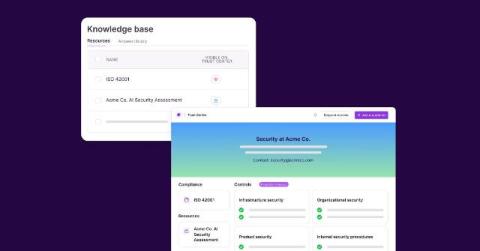
AI is a part of just about every organization—whether you're deploying AI, leveraging vendors who use it, or perhaps even building a model yourself. With AI moving faster than the pace of regulation, it’s natural for concerns around AI security and responsible usage to be top of mind. We hear from customers and prospects often who are looking for guidance to prove and demonstrate AI compliance and best practices.
The cybersecurity industry's heavy reliance on endpoint detection and response tools has created significant vulnerabilities, particularly around IoT devices and operational technology that cannot be monitored using traditional security tools, according to Vincent Stoffer, field CTO at Corelight. This growing attack surface, combined with sophisticated threat actors who exploit any available entry point, has pushed organizations to reevaluate their security strategies and consider more comprehensive network monitoring approaches.
Static secrets like API keys, tokens, and passwords have become a major security liability in modern cloud environments. These credentials introduce significant security risks, are difficult to manage at scale, and create compliance headaches. The future of cloud security lies in dynamic, cryptographic machine and workload identities, eliminating static secrets and enforcing zero-trust authentication across your infrastructure.
Compliance officers and IT executives are under constant pressure in today’s rapidly evolving regulatory landscape to ensure that their organizations not only meet current regulatory mandates but also prepare for future challenges. The integration of artificial intelligence (AI) into compliance-related operations, particularly automated audits, is transforming the approach to regulatory oversight.
In today's digital healthcare environment, data security isn't just a box to check-it's a central concern for any laboratory handling sensitive patient information. Labs are trusted with some of the most private and potentially impactful data in the healthcare system. From pathology reports to genetic testing results, these details must be handled with care, accuracy, and absolute confidentiality.
Have you ever wished for instant team communication? Modern smartphones can replace traditional walkie-talkies, offering more features on devices your team already carries. Turning your smartphone into a reliable push-to-talk radio can transform team collaboration for construction sites, event staff, outdoor adventures, and more, enhancing efficiency and productivity across various industries and work environments.