Security | Threat Detection | Cyberattacks | DevSecOps | Compliance

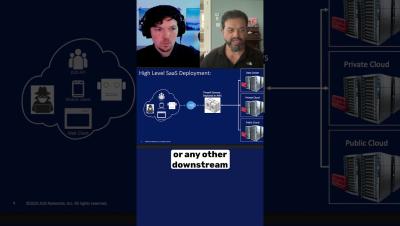
Secrets are Dead: Why Machine and Workload Identities are the Future of Cloud Security

Static secrets like API keys, tokens, and passwords have become a major security liability in modern cloud environments. These credentials introduce significant security risks, are difficult to manage at scale, and create compliance headaches. The future of cloud security lies in dynamic, cryptographic machine and workload identities, eliminating static secrets and enforcing zero-trust authentication across your infrastructure.

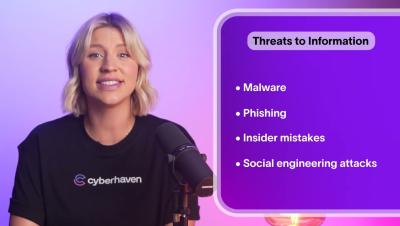
Corelight's Vincent Stoffer on Why Enterprises Can't Rely Only on Endpoint Security

The cybersecurity industry's heavy reliance on endpoint detection and response tools has created significant vulnerabilities, particularly around IoT devices and operational technology that cannot be monitored using traditional security tools, according to Vincent Stoffer, field CTO at Corelight. This growing attack surface, combined with sophisticated threat actors who exploit any available entry point, has pushed organizations to reevaluate their security strategies and consider more comprehensive network monitoring approaches.

Introducing Vanta's AI security assessment to help build trust in the age of AI

AI is a part of just about every organization—whether you're deploying AI, leveraging vendors who use it, or perhaps even building a model yourself. With AI moving faster than the pace of regulation, it’s natural for concerns around AI security and responsible usage to be top of mind. ‍ We hear from customers and prospects often who are looking for guidance to prove and demonstrate AI compliance and best practices.

Why Image Analysis is a Crucial Component of an Email Security Solution

While it’s well-known that email represents a significant source of cybersecurity threats, it’s not just the text included in emails that’s worrisome; images can be malicious as well. What’s more, images in emails may also present a threat of a different kind, including data leaks and content that’s not suitable for the workplace.

10 Best practices for enterprise data loss prevention in 2025

Cybersecurity Insiders’ Insider Threat Report 2023 states that 74% of organizations are moderately or more vulnerable to insider threats, which demonstrates why organizations need resilient data loss prevention strategies. Your organization needs strong access controls and detailed monitoring systems to protect sensitive information effectively.

Zero trust for public sector organizations

The “never trust, always verify” premise of Zero Trust requires a significant shift in how agencies evaluate security risks. Every transaction demands a risk assessment across every Zero Trust pillar — a tough task when the key data is locked in different systems and tools. But a unified data platform can essentially serve as the glue that connects all your systems, making them more integrated, accurate, and trustable.

The Data Sovereignty Imperative: The Evolution of Data Protection

In my previous blog, I covered the essentials of data sovereignty as a data protection concern for security professionals across domains. Data protection and digital trust will be paramount in the future due to data sovereignty and regulatory compliance mandates. As the Internet of Things (IoT) expands exponentially, the resultant security and privacy risk nexus further requires a holistic approach to data protection centered on both personal and enterprise data protection strategies.

Who Must Comply with CCPA? California Compliance Guide

The California Consumer Privacy Act (CCPA) is the first comprehensive California data privacy law granting consumers control over how their personal information is collected, used, and shared. It was enacted in 2018 and took effect on January 1, 2020, signaling a national shift in privacy regulations. With increasing emphasis on transparency and accountability, businesses must now adhere to a new standard in consumer data protection California.

CVE-2025-34028: PoC Released for Critical RCE Vulnerability in Commvault Command Center

On April 24, 2025, watchTowr published technical details and a proof-of-concept (PoC) exploit for a critical vulnerability in Commvault Command Center, CVE-2025-34028, which had been disclosed earlier in April. Commvault Command Center is a web-based interface used to manage data protection, backup, and recovery operations across enterprise environments.