Calico and K8s Network Policies - An Overview and Comparison

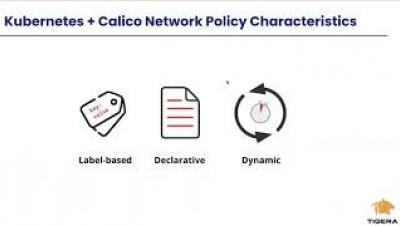
In an age where attackers are becoming more and more sophisticated, network security as a line of defense is more important than ever. Network Policy is the primary tool for securing a Kubernetes network. It allows you to easily restrict the network traffic in your cluster so only the traffic that you want to flow is allowed. In this training session, we will go over the core concepts in Kubernetes Network Policies and Calico Network Policies. Compare and contrast between the two models, and highlight when to use one versus the other.
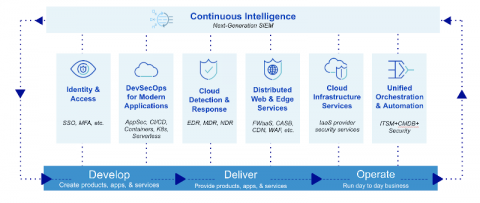
A New Framework for Modern Security

We are in the midst of an unprecedented convergence of events that are forcing enterprises to dramatically change how they secure their modern businesses. With the acceleration of digital transformation from COVID-19, work-from-home initiatives, the continued growth of SaaS and the increasing adoption of microservices-based applications, the modern enterprise threat landscaping is transforming rapidly.

Detecting & Preventing Ransomware Through Log Management

As companies responded to the COVID-19 pandemic with remote work, cybercriminals increased their social engineering and ransomware attack methodologies. Ransomware, malicious code that automatically downloads to a user’s device and locks it from further use, has been rampant since the beginning of March 2020. According to a 2020 report by Bitdefender, ransomware attacks increased by seven times when compared year-over-year to 2019.

SIEM Alerts Best Practices

Security Information and Event Management (SIEM) tools play a vital role in helping your organization in discovering threats and analyzing security incidents. Logsign’s internal team continuously makes correlation rules and alerts so that your team’s workload is minimized. In our previous posts, we discussed generating important reports and deriving maximum possible benefits from use cases. In this article, we will be discussing SIEM alerts best practices.

Zerologon: Tripwire Industrial Visibility Threat Definition Update Released

Today, we released a Threat Definition Update bundle for our Tripwire Industrial Visibility solution to aid in the detection of Zerologon. Otherwise known as CVE-2020-1472, Zerologon made news in the summer of 2020 when it received a CVSSv3 score of 10—the most critical rating of severity. Zerologon is a vulnerability that affects the cryptographic authentication mechanism used by the Microsoft Windows Netlogon Remote Protocol (MS-NRPC), a core authentication component of Active Directory.

Securing Cloud Environments: Staying on top of cloud configurations to prevent data leaks.

Securing Cloud Environments: Staying on top of cloud configurations to prevent data leaks with PJ Norris, Senior Systems Engineer. Shares new research Shows common mistakes Offers solutions that help with hardening and compliance in the cloud

File Integrity Monitoring (FIM): Your Friendly Network Detective Control

Lateral movement is one of the most consequential types of network activity for which organizations need to be on the lookout. After arriving at the network, the attacker keeps ongoing access by essentially stirring through the compromised environment and obtaining increased privileges (known as “escalation of privileges”) using various tools and techniques. Attackers then use those privileges to move deeper into a network in search of treasured data and other value-based assets.