Proactive security using Open NDR with Zeek
Watch this webcast to get the best network evidence for security threats and learn how to.

Given the spate of recent ransomware attacks, the latest of which occurred shortly before Independence Day, this topic is likely at the top of mind for most organizations. Understanding the fundamentals of security, and the most common ways ransomware gets installed, is a must if a company hopes to truly lay the groundwork required to build and operationalize their security program.
The Kubernetes community created a feature in v1.10 called Pod Security Policy (PSP) to control the security-related fields for pods defined in your Kubernetes cluster. Now that PSP is being deprecated in Kubernetes v1.21, what should you do to secure your Kubernetes cluster? In this blog, we’ll learn a bit about PSP, explore why it’s being deprecated and how Open Policy Agent (OPA) can ease the migration from PSP.
As a quick note, I have a personal history with .NET, including time working at Microsoft as a .NET evangelist. And I’ve briefly met Anders Jejlsberg, the designer of C# and Typescript, so this blog is a bit personal for me. We are happy to announce that Snyk Code scans for security vulnerabilities and provides remediation suggestions for yet another language: C#. This adds a major language to our portfolio which includes support for Java, JavaScript, TypeScript, and Python.
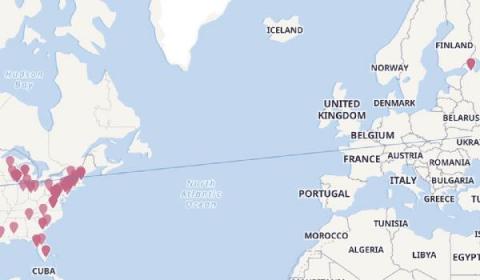
As we’ve shown in a previous blog, search-based detection rules and Elastic’s machine learning-based anomaly detection can be a powerful way to identify rare and unusual activity in cloud API logs. Now, as of Elastic Security 7.13, we’ve introduced a new set of unsupervised machine learning jobs for network data, and accompanying alert rules, several of which look for geographic anomalies.
Application security remains a top concern for organizations, making the need for skilled cybersecurity professionals as urgent as ever. Nearly half of security practitioners in high-performing enterprises who participated in a recent Ponemon Institute research report about reducing enterprise security risks stated that hacks to insecure applications are their organization’s biggest concern.