State of your attack surface, improved user permissions, and many new tests

The attack surface is inevitably going to grow. That’s why we believe it’s crucial for customers to not only know what assets they are exposing online, but knowing to what extent assets are exposed on their attack surface. Previously, it wasn’t possible to filter the attack surface view by state (you can read more about state here). This limitation made it difficult to assess some Internet-facing assets, such as those that were resolving DNS records with no reachable IPs.

IDC: Life Sciences Firms Must Embrace Digital Transformation Now

Pre-pandemic, the life sciences industry had settled into a pattern. The average drug took 12 years and $2.9 billion to bring to market, and it was an acceptable mode of operations, according to Nimita Limaye, Research Vice President for Life Sciences R&D Strategy and Technology at IDC. COVID-19 changed that, and served as a proof-of-concept for how technology can truly help life sciences companies succeed and grow, Limaye said.

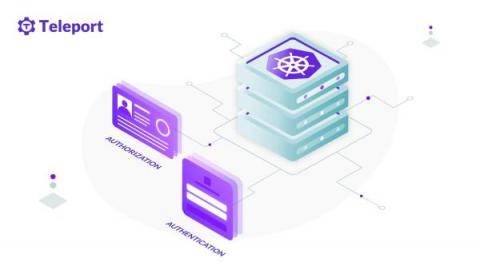
Kubernetes API Access Security Hardening.

In a Kubernetes cluster, Control Plane controls Nodes, Nodes control Pods, Pods control containers, and containers control applications. But what controls the Control Plane? Kubernetes exposes APIs that let you configure the entire Kubernetes cluster management lifecycle. Thus, securing access to the Kubernetes API is one of the most security-sensitive aspects to consider when considering Kubernetes security.

The role of AI in Cyber Security

As artificial intelligence (AI) becomes more and more prevalent in society, it is also making its way into the world of cyber security. AI can be used in a number of ways to help improve cyber security, including by automatically detecting and responding to threats, improving network efficiency, and helping to identify vulnerabilities. In this blog post, we will discuss some of the ways that AI is changing cyber security and how it can help your business stay safe online.

Tales from the Dark Web: How Tracking eCrime's Underground Economy Improves Defenses

Cybercriminals are constantly evolving their operations, the methods they use to breach an organization’s defenses and their tactics for monetizing their efforts. In the CrowdStrike 2022 Global Threat Report, we examined how the frequency and sophistication of ransomware attacks has grown in the past year.

Automating Detection-as-Code

In cybersecurity, there has been a shift to adopt more software development principles in order to create security solutions quickly and reliably. Utilization of tools like Git and Continuous Integration/Continuous Deployment (CICD) pipelines have become more common to achieve reliable deployments. At Tines, while we strive to make automation accessible to anyone without development skills, our platform is also highly flexible to accommodate developer-centric uses.

Adapting security to Amazon EKS Anywhere on Bare Metal

Amazon EKS Anywhere (EKS-A) on Bare Metal is a new deployment option for Amazon Elastic Kubernetes Service that launched this week. Why bare metal? In the age of the cloud it would seem to go against “best practices.” On the contrary. While we tend to overuse the term, “hybrid cloud,” it is a real thing. Enterprises come in all shapes and sizes — and so do their compute choices and privacy requirements.

The evidence bank: leveraging security's most valuable asset

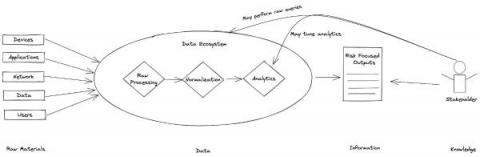
Evidence is the currency cyber defenders use to pay down security debt, balancing the value equation between adversaries and the enterprise. Defenders can use evidence proactively, identifying and protecting structural risks within our zone of control. Evidence can also be used reactively by supporting detection (re)engineering, response, and recovery activities, guiding us back to identifying and protecting structural risks.