Automating Detection-as-Code

In cybersecurity, there has been a shift to adopt more software development principles in order to create security solutions quickly and reliably. Utilization of tools like Git and Continuous Integration/Continuous Deployment (CICD) pipelines have become more common to achieve reliable deployments. At Tines, while we strive to make automation accessible to anyone without development skills, our platform is also highly flexible to accommodate developer-centric uses.
Adapting security to Amazon EKS Anywhere on Bare Metal

Amazon EKS Anywhere (EKS-A) on Bare Metal is a new deployment option for Amazon Elastic Kubernetes Service that launched this week. Why bare metal? In the age of the cloud it would seem to go against “best practices.” On the contrary. While we tend to overuse the term, “hybrid cloud,” it is a real thing. Enterprises come in all shapes and sizes — and so do their compute choices and privacy requirements.

The evidence bank: leveraging security's most valuable asset

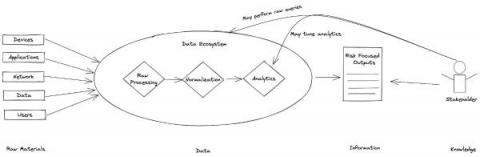
Evidence is the currency cyber defenders use to pay down security debt, balancing the value equation between adversaries and the enterprise. Defenders can use evidence proactively, identifying and protecting structural risks within our zone of control. Evidence can also be used reactively by supporting detection (re)engineering, response, and recovery activities, guiding us back to identifying and protecting structural risks.

Attacker Floods npm With Crypto-Mining Packages that Mine Monero When Installed with Default Configuration

Monero (XMR) is an open-source, privacy-oriented cryptocurrency that was launched in 2014. It uses a public distributed ledger containing technology that obscures transaction details to ensure the anonymity of its users. Monero maintains egalitarian mining, allowing anyone to participate. As tempting as it may seem, some go a step further and use the infrastructure of others to participate in mining. Cryptocurrency mining was originally performed using CPUs, and Monero was no different.]

Getting Ready for Salesforce MFA Requirement

As the leading customer relationship management platform, Salesforce is an excellent target for hackers looking to make a buck and steal sensitive data from all types of businesses. Recognizing this, Salesforce issued a requirement that takes effect on February 1, 2022, mandating all customers use MFA to access Salesforce products.

Remote Users - Protect Confidential Information

Greater care should be taken when transferring corporate data onto a remote user's managed endpoint. Certain types of data often require greater levels of authorization to leave the confines of the organization and managed app. When trying to download confidential information, we want to reverify the user's identity with step-up authentication. When the file is downloaded, in addition to file encryption, we also want to add a watermark and redact the confidential information.

Instant Zero-Trust Access to Remote IT Infrastructure

Tired of the latency, availability and reliability issues of VPNs and legacy remote desktop tools? Keeper Connection Manager (KCM) provides DevOps and IT teams with effortless access to RDP, SSH, database and Kubernetes endpoints through a web browser on any device. Watch this webinar to learn more about KCM and how you can grant access to privileged systems without exposing login credentials. During the webinar, Zane Bond, Sr. Director of Product Management, will cover.