Can You Adjust Vendor Security Ratings?

Vendor security ratings cannot be adjusted without modifying the criteria for evaluating a vendor’s security posture. Since the ability to make unmitigated adjustments violates the objectivity of security posture measurements, this functionality usually isn’t possible on security rating solutions. However, a workaround is to prevent certain discovered risks from influencing the calculation of a vendor’s security ratings.


The Lemontech story - GitGuardian customer stories

A few weeks ago, we had the pleasure of exchanging with Ezequiel Rabinovich, Lemontech's CTO, about how his teams use GitGuardian to protect their repositories. Lemontech is a company developing software for the legal industry based in Santiago, Chile. It serves more than 1,300 customers in Latin America. Ezequiel supervises a team of about 30 developers and 4 DevOps engineers for approximately 150 employees. They use GitHub for source control management, and their organization has 350 repos, 130 of which are active.

Waseda University Enables Universal Secure Remote Learning and Digital Transformation with Cato

“I see Cato SASE as a tool for digital transformation promotion. We can use it to reorganize our entire security portfolio, reduce costs, and bring out the best in our students, professors, and administrators. Being able to work productively and securely anywhere gives a great boost to all our digital transformation initiatives.” - Hitoshi Kusunoki, Information Planning Department, Waseda University.

Perform thorough packet filtering in real time with deep packet inspection to prevent hidden threats and attacks

Deep packet inspection (DPI), as the name suggests, is a type of network packet filtering and an advanced mode of examining network packets. In DPI, network packets that are transmitted through an inspection point are evaluated. At this inspection point, a DPI tool determines where the packets came from, whether a service or application. With DPI, packets are categorized, inspected, and redirected to prioritize business-critical applications and other online services.

Developer-centric DAST with Bright Security

Security testing is increasingly viewed as an essential part of the software development lifecycle (SDLC). Traditionally, agile software development has focused on development velocity, rapid market feedback, and delivering high quality products and services. However, software that's vulnerable to cyber attacks is not valuable to end users and creates huge risks for both customers and software vendors. This makes it critical to integrate security testing into the software development process.

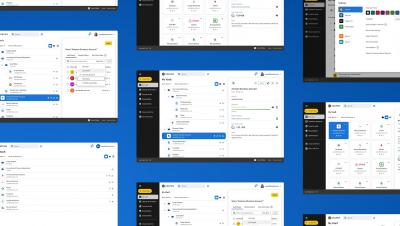
Introducing Keeper's UI Refresh

The Keeper you know and love is getting a fresh, updated look, with a friendlier, accessible and more intuitive experience. Keeper’s new user interface offers clearer distinctions between elements as well as enhanced clarity and navigation – all improving usability in order for our users to take full advantage of Keeper’s powerful features.

Exploiting Weak Active Directory Permissions with PowerSploit

Adversaries use multiple techniques to identify and exploit weaknesses in Active Directory (AD) to gain access to critical systems and data. This blog post explores 3 ways they use PowerShell PowerSploit to elevate or abuse permissions, and offers effective strategies for protecting against them.